





Ultimate Guide to Complicated Bees
Complicated Bees Mod: The Ultimate Beginner’s Guide (Start to Finish)
The Complicated Bees mod transforms Minecraft’s humble vanilla bees into a deep, rewarding progression system. From tracking down wild nests to engineering the perfect multiblock alveary, there is a lot to learn. This guide walks you through every mechanic in the mod — finding bees, building your first apiary, breeding mutations, processing combs, and unlocking the powerful alveary — so you can hit the ground running no matter your experience level.
Finding Bees in the Wild
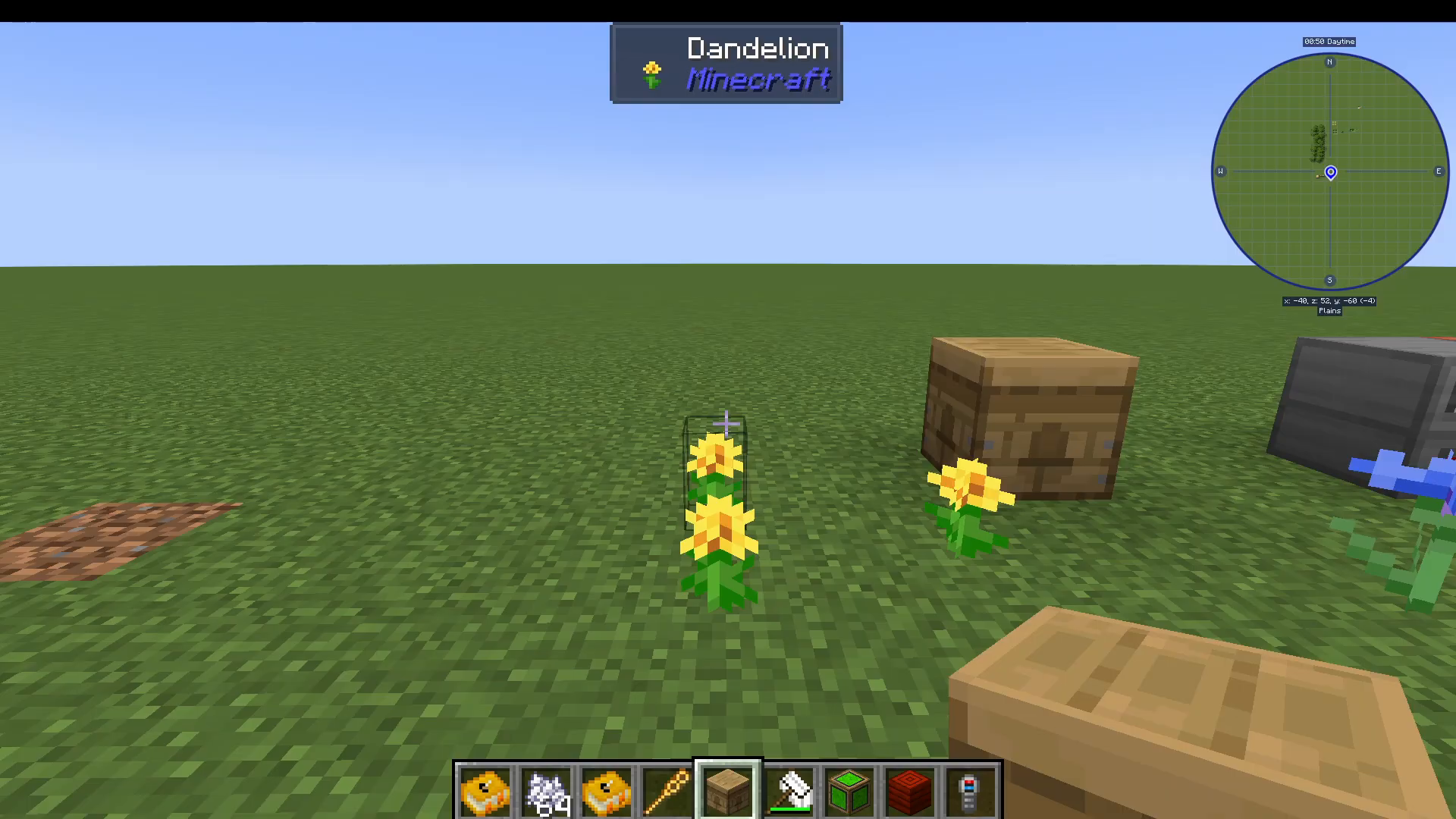
Complicated Bees are entirely separate from vanilla Minecraft bees. To get started, you need to find a naturally spawning nest in the world. If you open JEI (Just Enough Items) or whichever recipe mod you are using and search for “complicated,” you will see a large number of hive types listed.
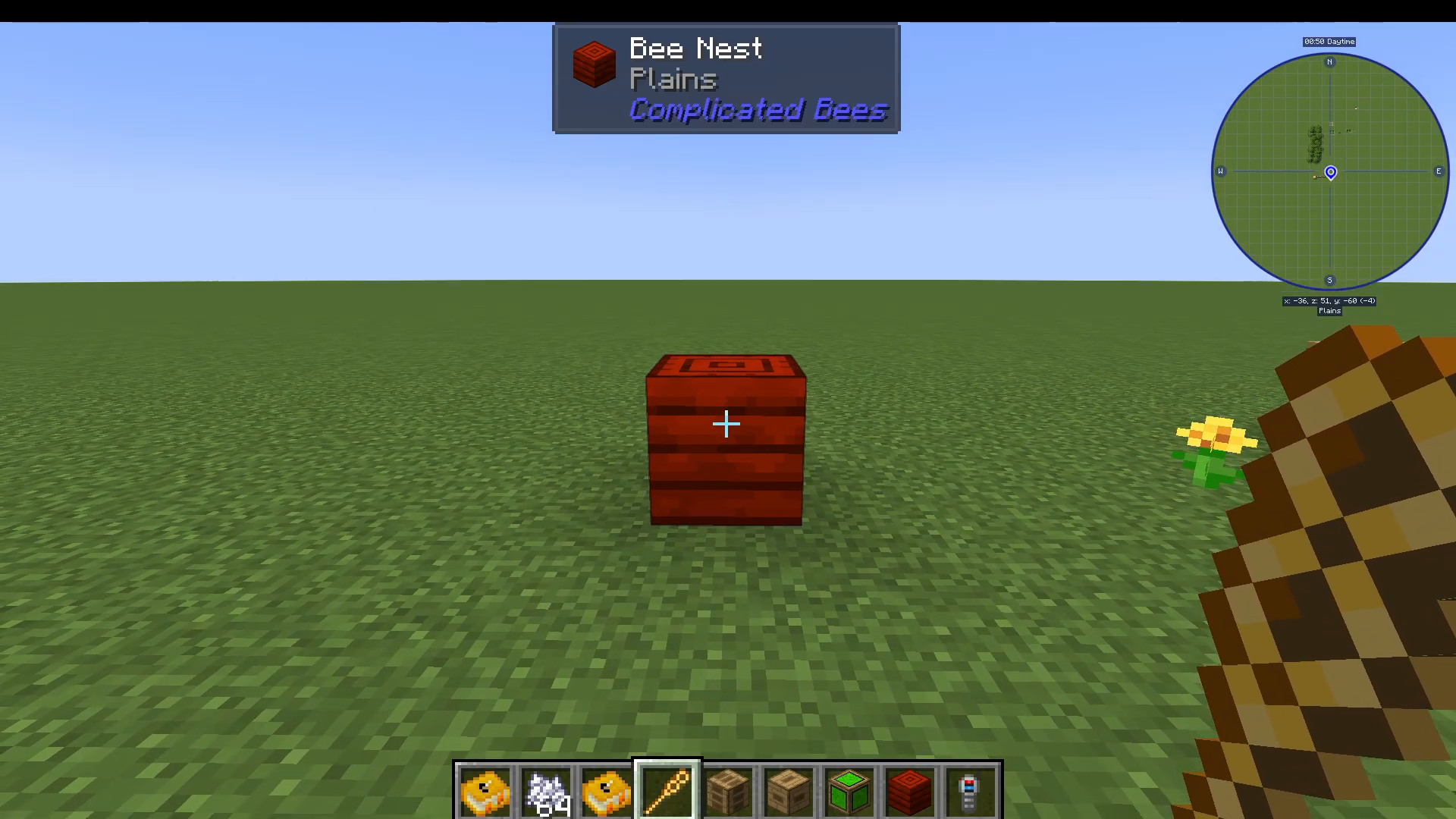
Do not be misled by that long list — not all of those hives generate naturally. Many of them exist specifically so modpack creators can assign custom recipes or biome spawns to them. In the default version of the mod, only the following hives spawn in the wild:
Crimson Bees — Crimson Forests
Desert Bees — Deserts
End Bees — The End
Forest Bees — Forests
Jungle Bees — Jungles
Plains Bees — Plains
Rocky Bees — Lush Caves
Warped Bees — Warped Forests
Every other bee species is obtained through breeding, which is covered later in this guide. The mod also includes compatibility with Biomes O’ Plenty and Terralith, which add additional nest spawn locations.
Getting Your First Bees: The Scoop
To harvest a nest, the first item you need to craft is a Scoop, made from a piece of wool and some sticks. Equip the scoop and break a wild hive with it.
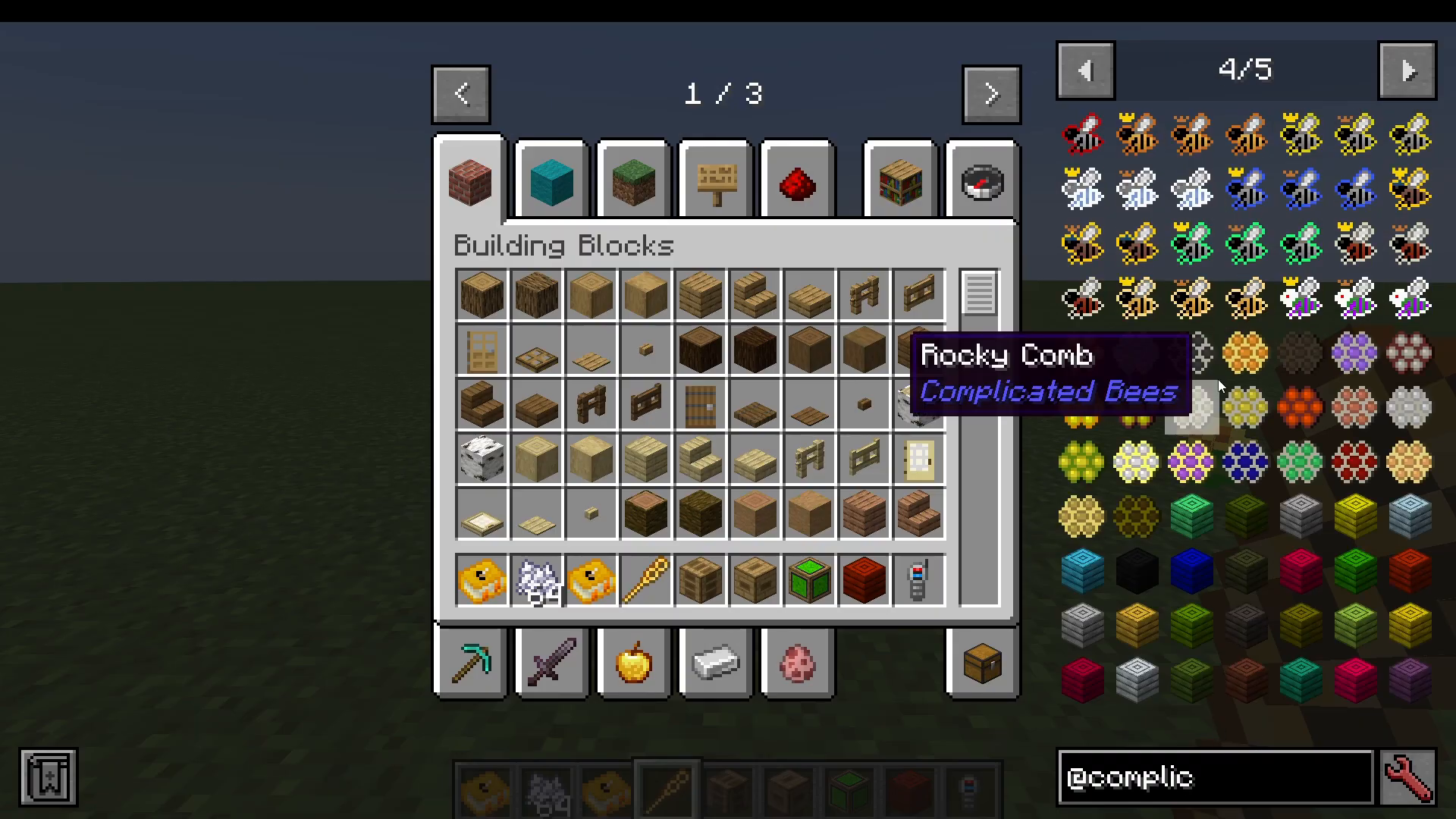
Breaking a hive with the scoop will drop several items. At minimum you will receive one or more drones and one princess. For example, breaking a plains hive gives you a Plains Princess and a Plains Drone. You may also get lucky and receive a comb as a bonus drop.
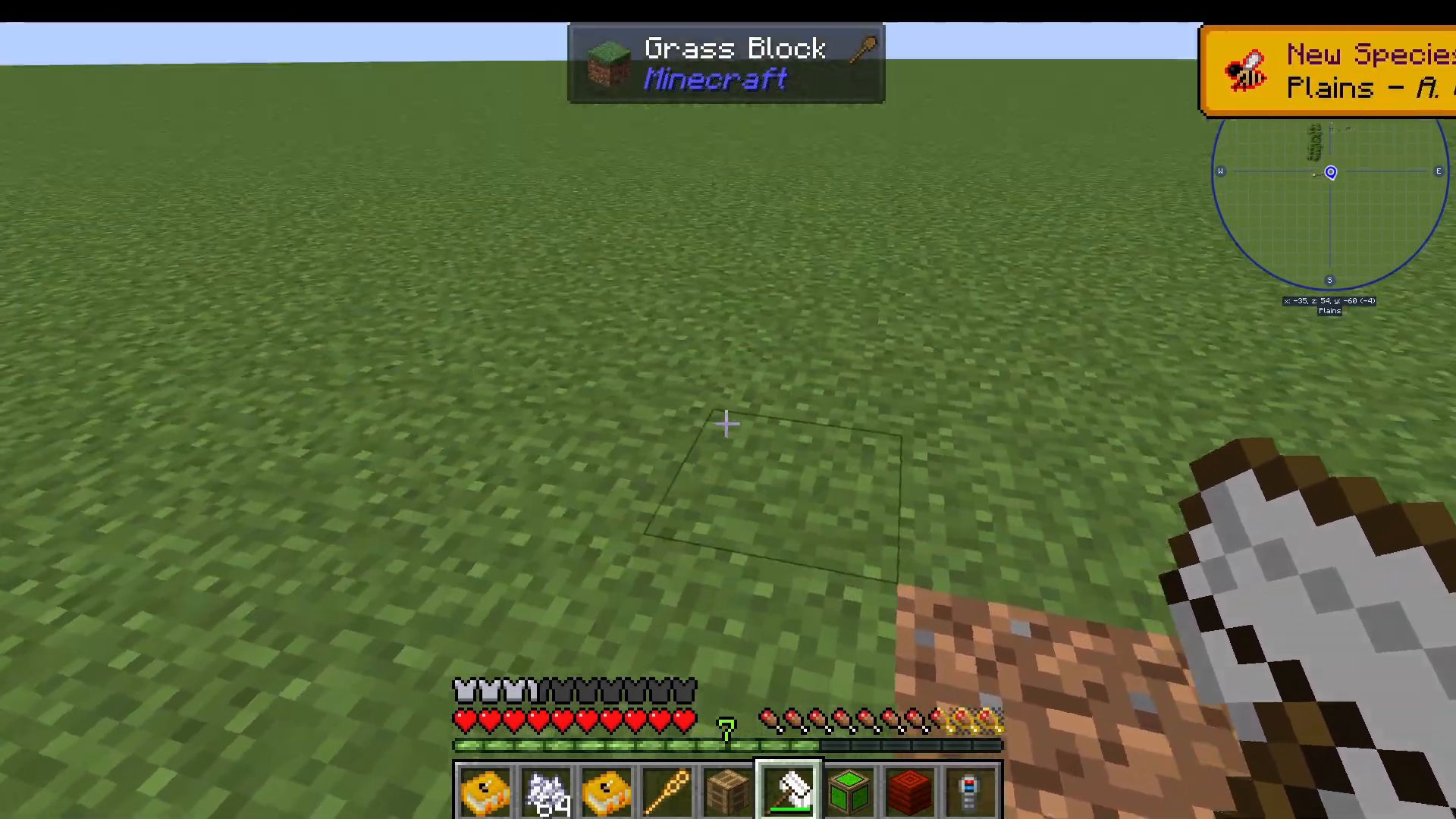
Combs are important: they are required to craft the apiary (your bees’ home). If you are wondering how to get a comb before you have an apiary, the answer is exactly this — keep breaking wild nests with your scoop until one drops. The mod developer has noted that plans may exist to allow vanilla combs in some recipes in a future update, but at the time of writing only Complicated Bees combs work.
Building and Using the Apiary
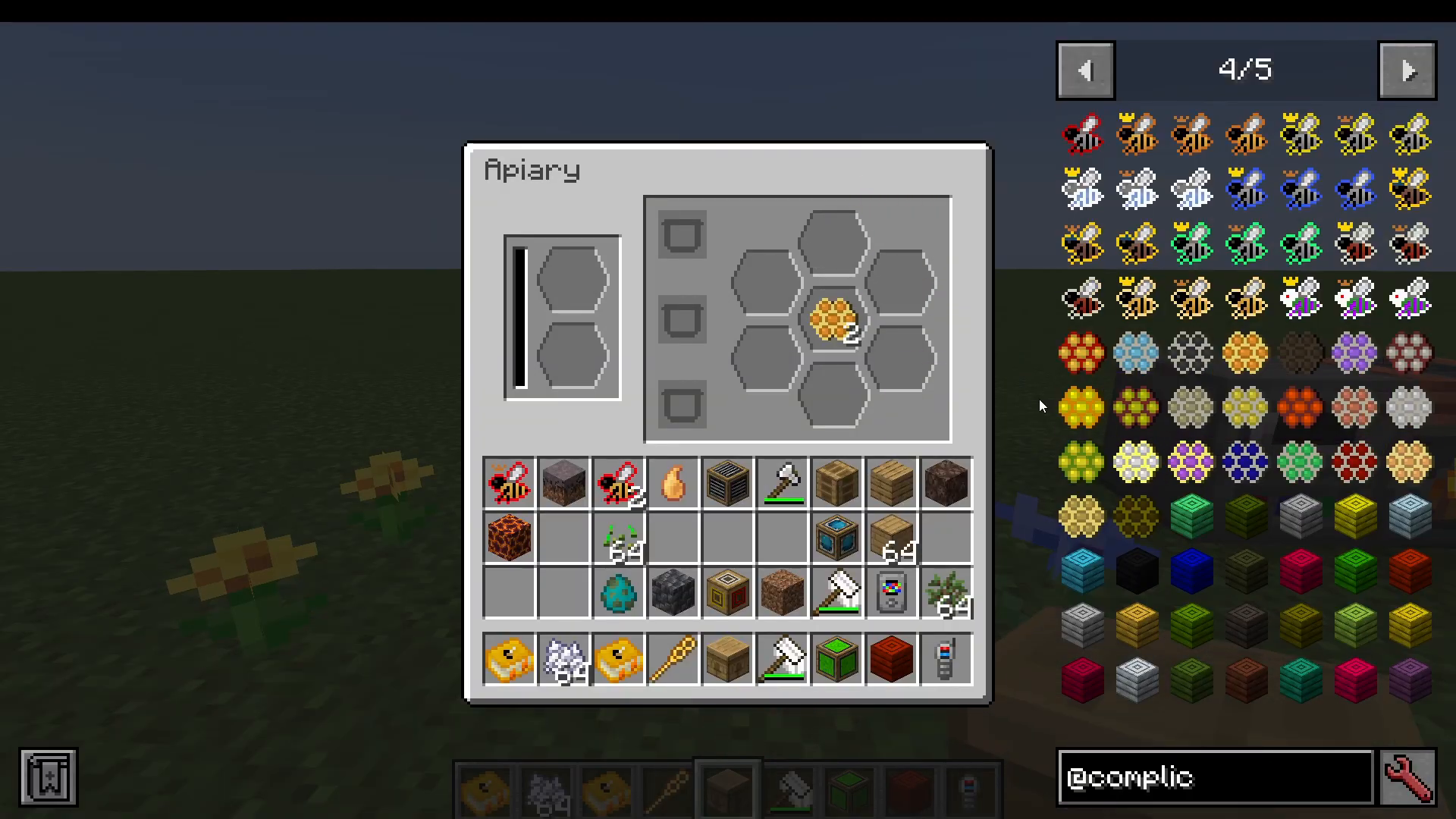
The Apiary is where your bees live and produce resources. Its recipe requires a comb, so securing that first wild comb drop is your gateway into the full mod. Once crafted, place the apiary down in the world.
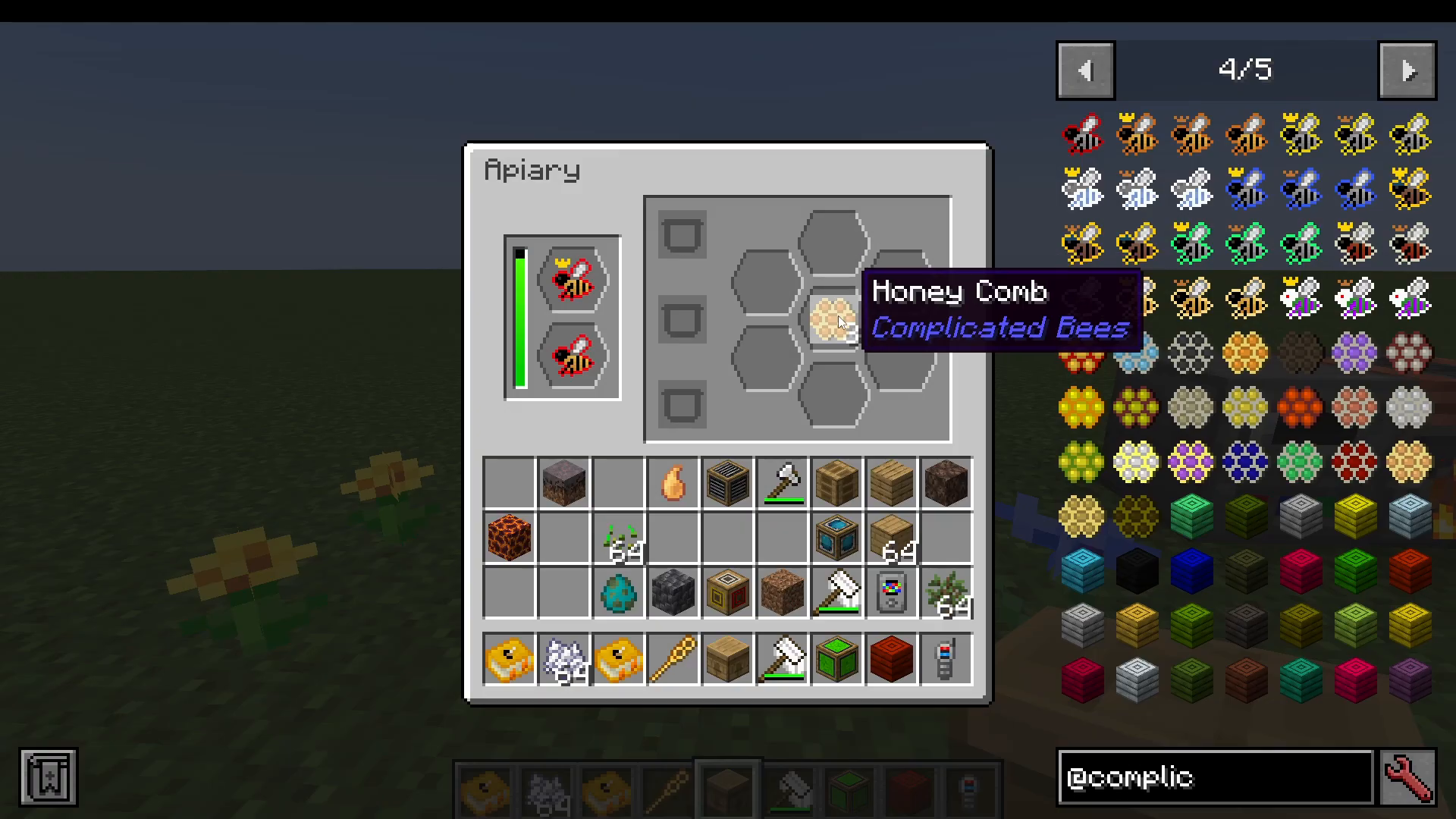
Open the apiary’s interface and insert your princess into the princess slot and a drone into the drone slot. A progress bar will appear, the bee will become active, and it will begin producing honey. When the bar depletes, the queen dies. At that point, a new princess moves into the princess output slot and new drones are generated — along with a chance to receive honeycombs.
Apiary Frame Slots
The apiary has three frame slots that let you modify your bee’s behaviour. The default mod includes the following frames:
Productivity Frame (1.25 / 1.5) — Increases the number of combs and products produced. Crafted using wax sticks (made from beeswax).
Honeyed Frame — Very high productivity, but reduces the bee’s lifespan.
Twisting Frame — Greatly increases mutation chance; reduces productivity. Ideal when breeding new bee species.
Soothing Frame — Extends lifespan; reduces both productivity and mutations.
Icy Frame — Lowers the temperature of the hive. Useful for cold-climate bees placed in warm biomes.
Hot Frame — Raises the temperature of the hive.
Dry Frame — Reduces hive humidity.
Wet Frame — Increases hive humidity.
Deadly Frame — Reduces lifespan to 0.1. Cycles through bees extremely fast, enabling rapid mutations.
Restrictive Frame — Reduces the territory size in which bees pollinate flowers.
Processing Combs: The Centrifuge
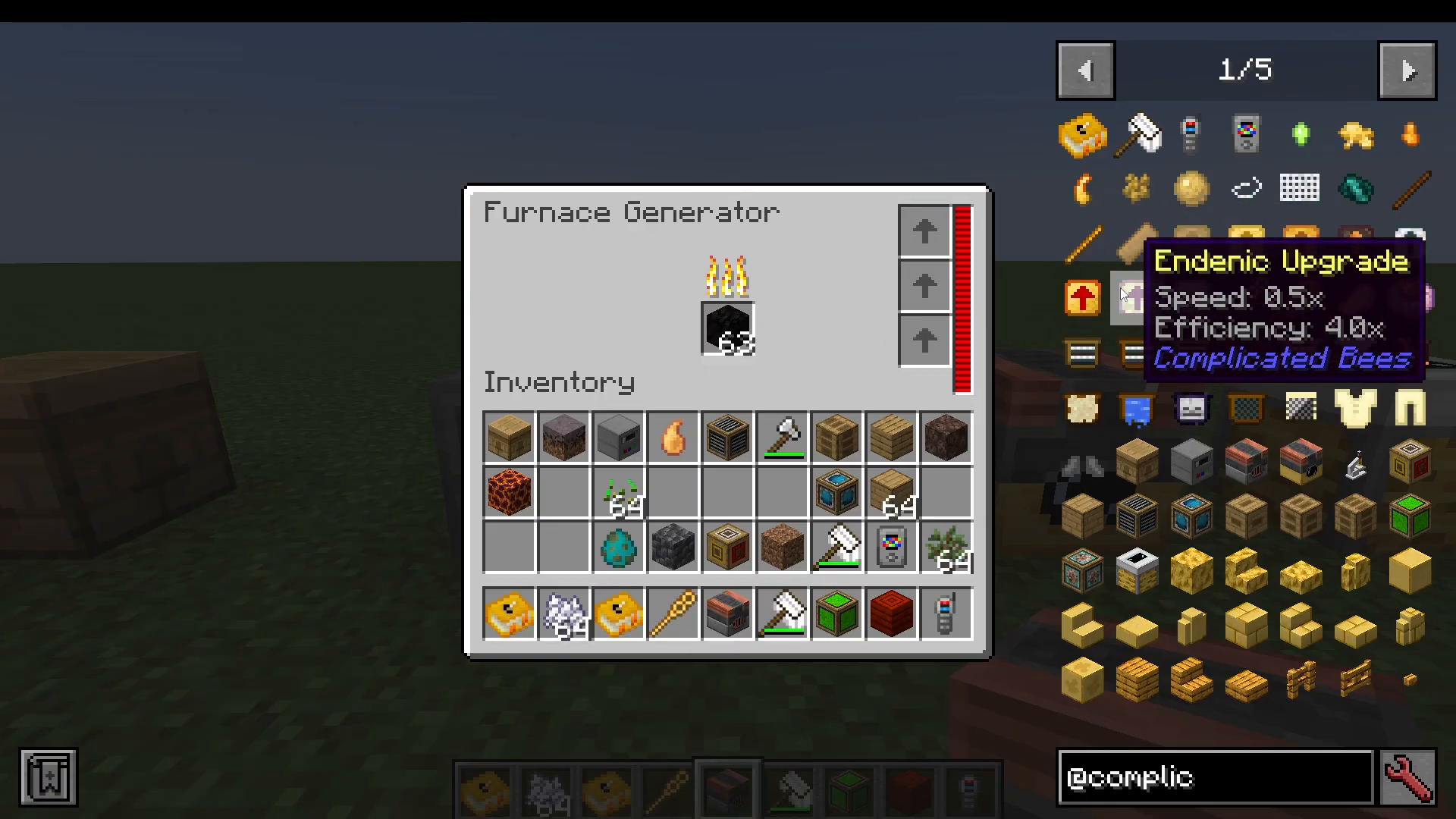
Raw combs on their own are not useful — you need to process them in the Centrifuge to extract their products such as honey droplets and beeswax. The centrifuge requires power to operate. The easiest way to supply that power is with a Furnace Generator, which runs on any solid fuel. Place the generator next to the centrifuge, or connect power from another mod if you prefer.
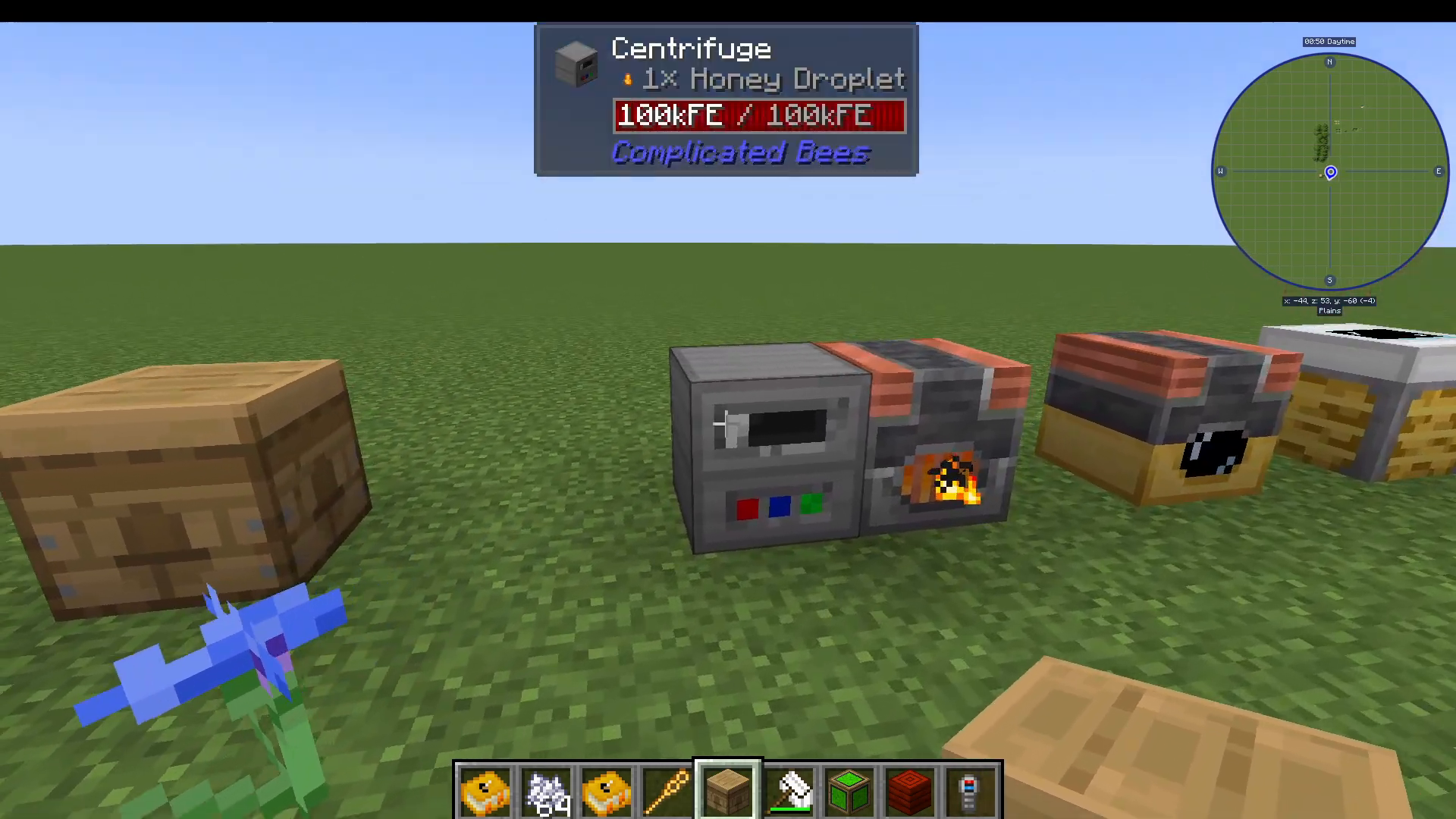
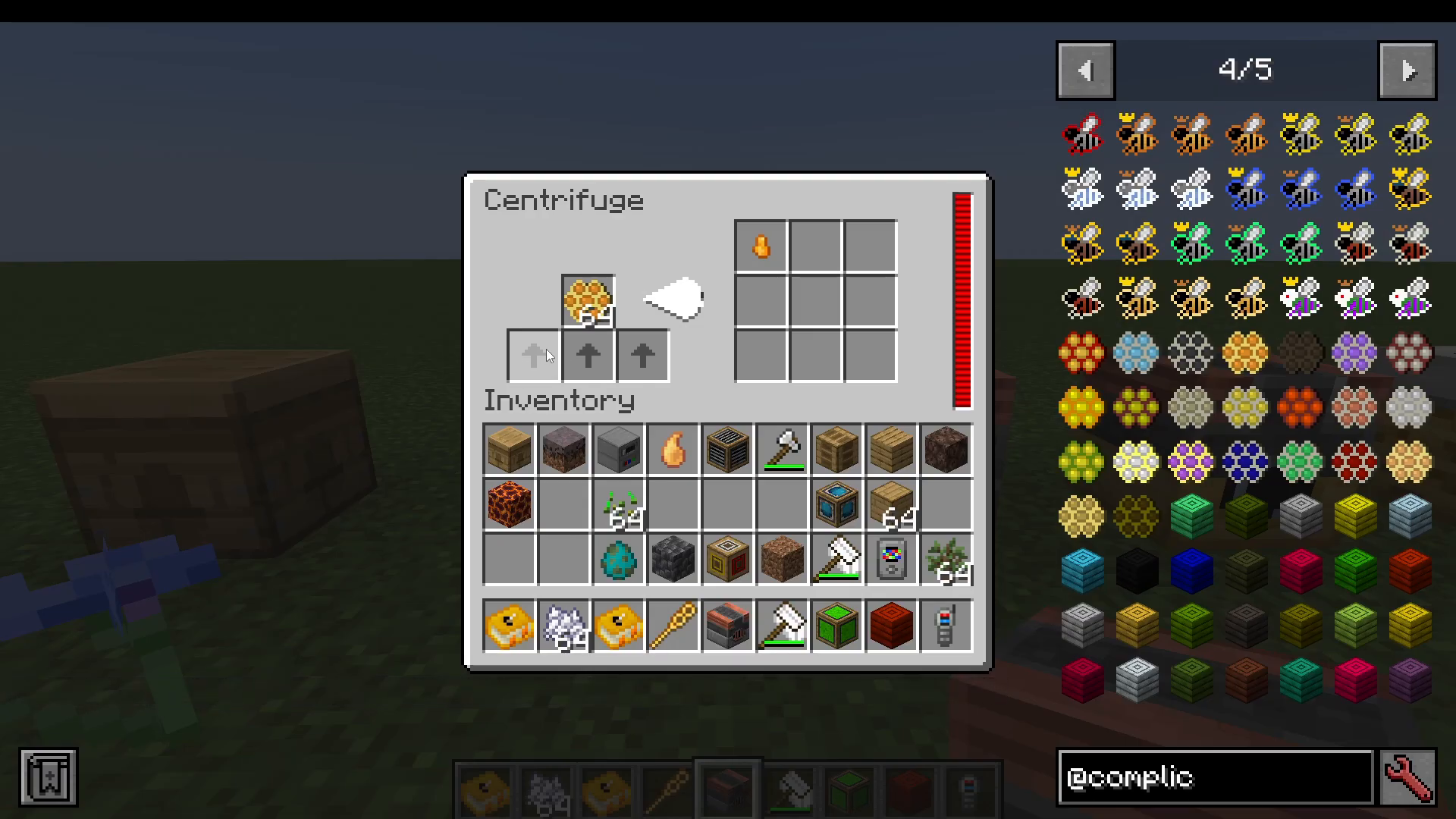
Load your combs into the centrifuge and it will begin processing them. For example:
Honey Comb → Honey Droplet (70% chance) or Beeswax (40% chance)
Amethyst Comb → Amethyst Shard (25% chance)
Each bee species produces a unique comb, and each comb yields different items when centrifuged. You can check exact drop rates at any time by looking up the comb in JEI.
Centrifuge Upgrades
The centrifuge has upgrade slots that improve its speed and efficiency. Available upgrades (in ascending order of cost and power) are: Basic, Wax, Honey, Twisted, Silky, Royal, and Enderic. Each tier is more expensive to craft but provides greater performance gains.
Breeding Bees and Unlocking Mutations
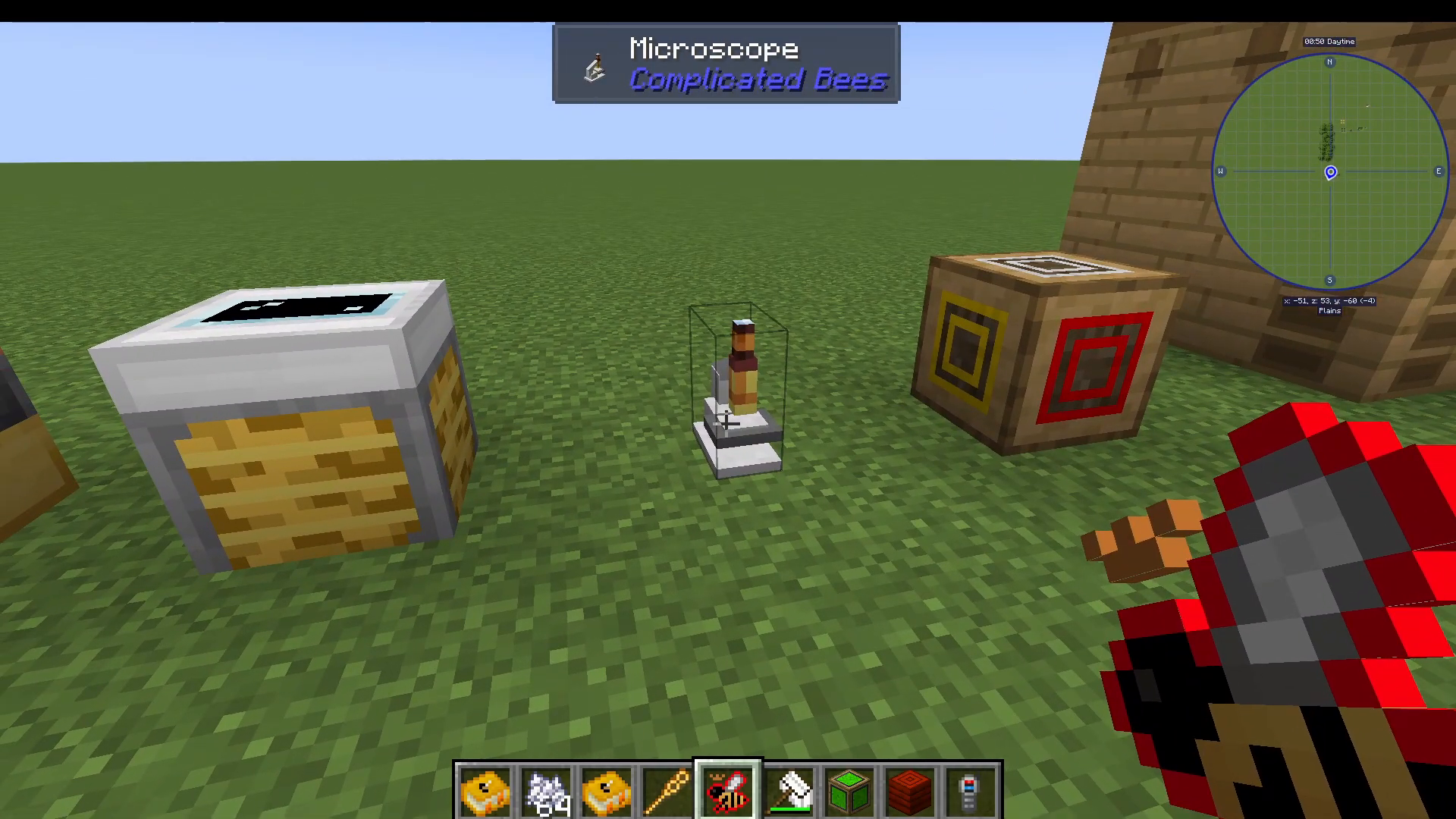
Breeding is how you unlock the full catalogue of bee species in Complicated Bees. The process starts with the Microscope. Place a princess into the top slot of the microscope and press Begin Sequencing to start a mini-game that reveals that bee’s possible mutations.
The Sequencing Mini-Game
The mini-game presents a set of connection boxes. You can place royal jelly or drones into the analysis slots and press Analyze Material to reveal two confirmed connections, highlighted in blue. Click those two blue nodes to connect them. The remaining connections must be guessed at random. Completing a full sequence unlocks one mutation entry. You need to complete six sequences to fully research all mutations for that bee.
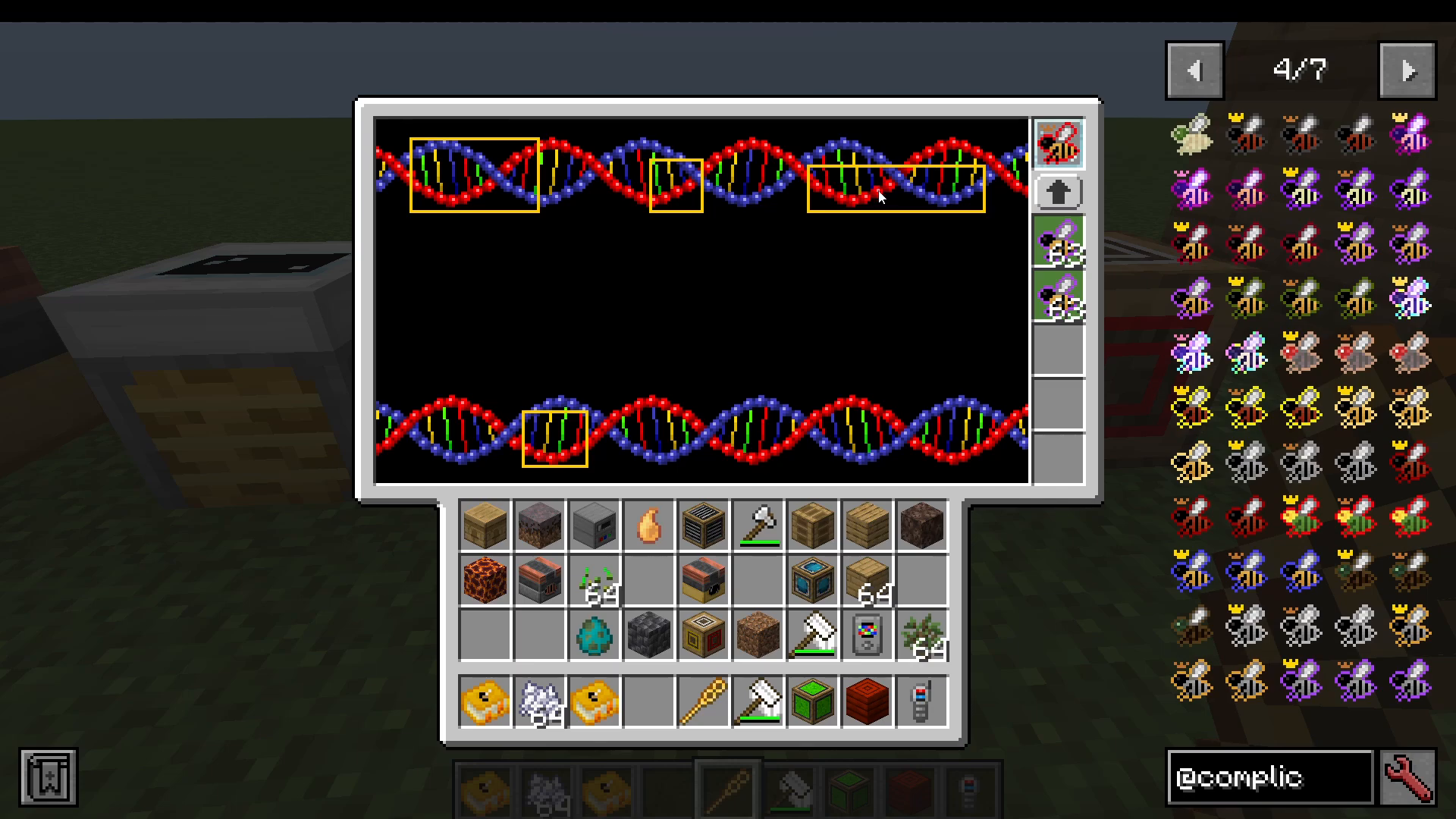
If you have JEI installed, it will display all mutation recipes directly, so the mini-game is entirely optional. You can skip it and still breed your bees normally.
The Apid Library
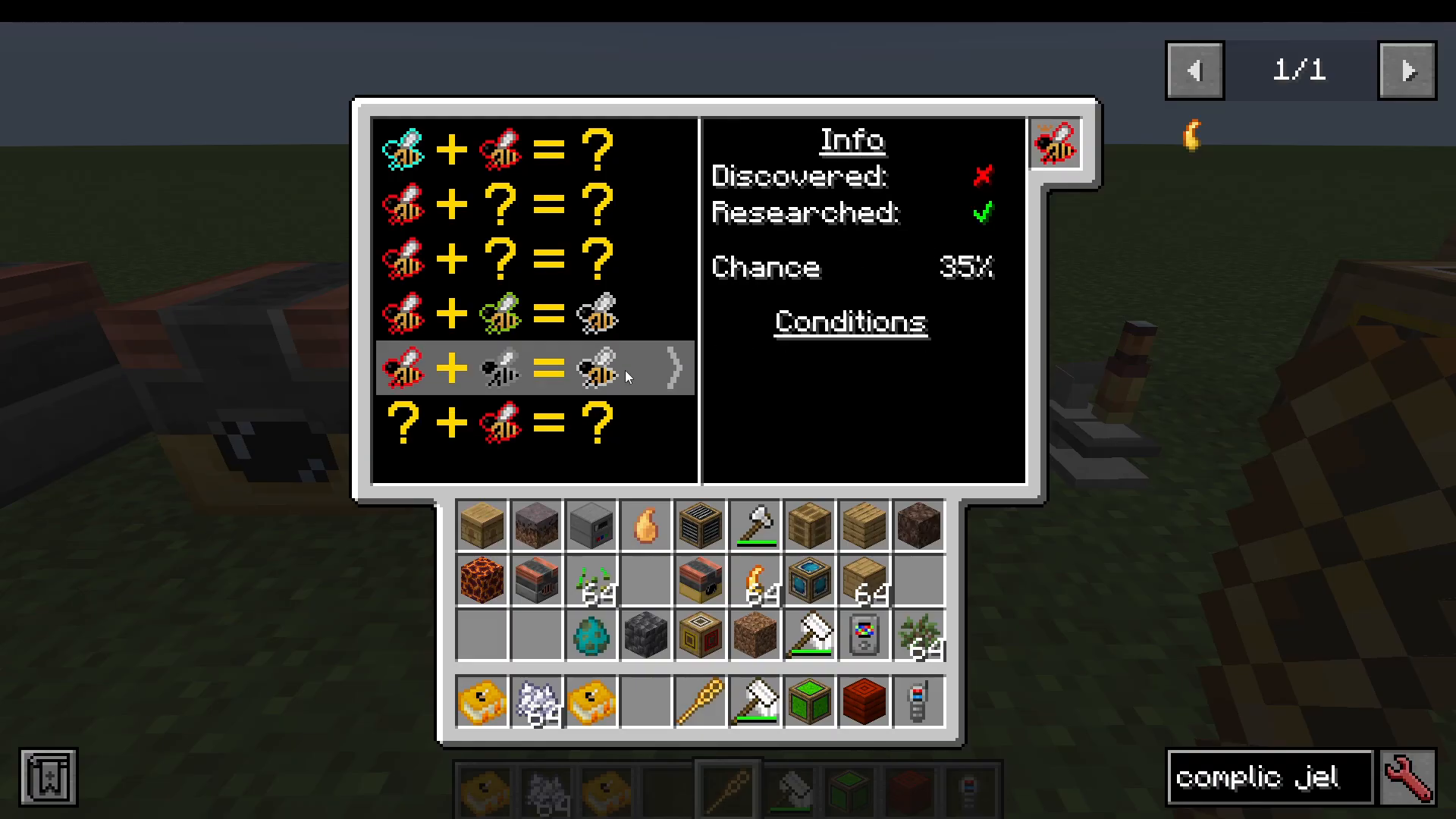
Once you have sequenced a bee, craft an Apid Library and assign it to that bee. This lets you review all unlocked mutations in one place. For example, breeding a Forest princess with a Plains drone has a 35% chance to produce a Common drone. Some mutations have no additional requirements, while others demand specific conditions such as:
Biome tag — The apiary must be in a specific biome (e.g., Plains biome tag).
Block under — A specific block must be placed directly beneath the apiary (e.g., iron block).
Daytime / Nighttime — Mutation can only occur at a specific time of day.
Temperature — Biome temperature must match: Frozen, Cold, Normal, Warm, Hot, or Hellish.
Humidity — Biome humidity must match: Dry, Normal, or Wet.
Downfall — It must be raining.
Dimension — The apiary must be in a specific dimension.
Checking Your Biome with the Meter
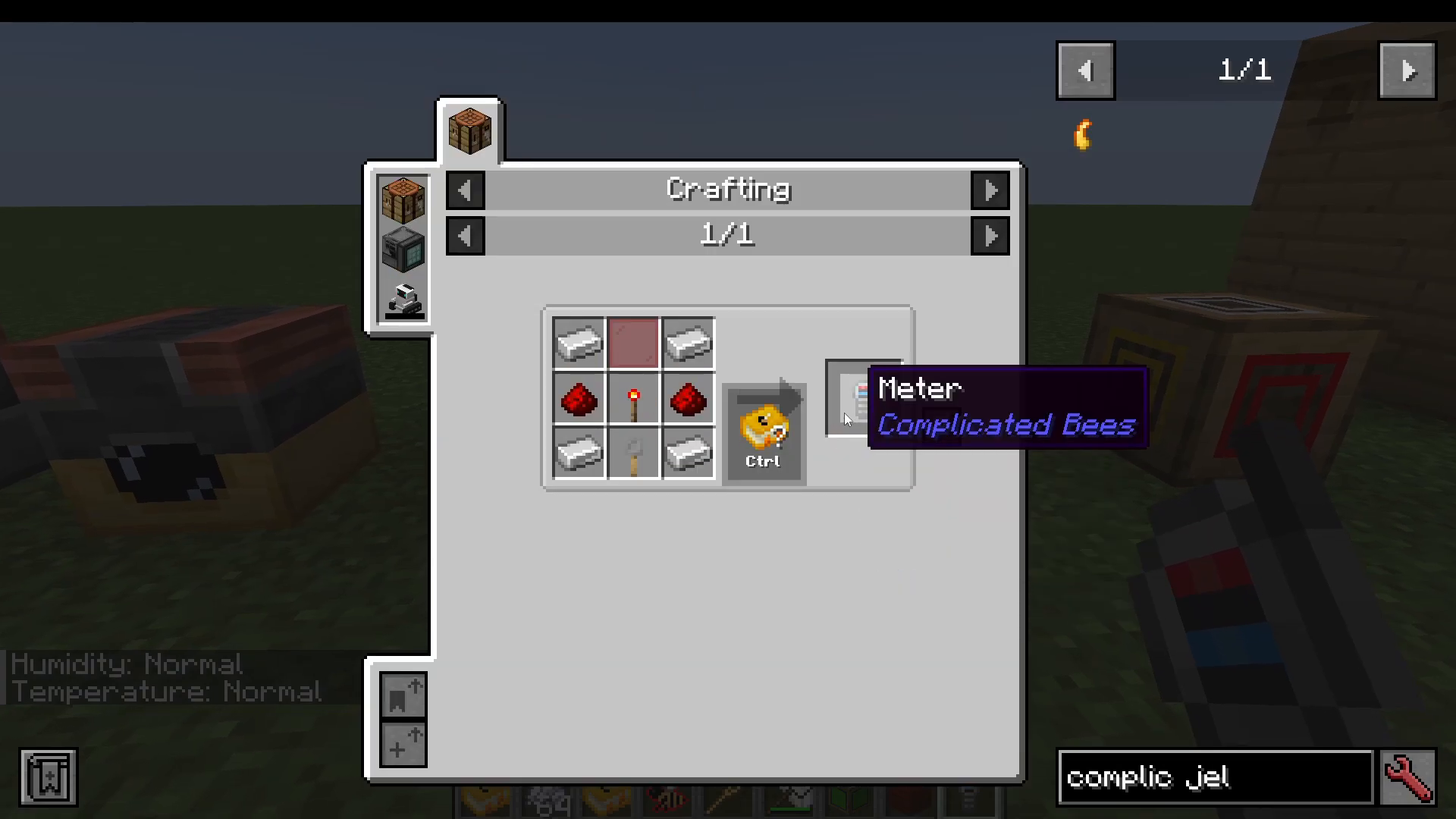
If you are unsure whether your current location satisfies a mutation’s conditions, craft a Meter and right-click it. A message will appear in chat displaying the current biome’s temperature and humidity. This lets you quickly verify whether your setup is suitable for the bee you want to breed.
Analysing Bee Traits with the Analyzer
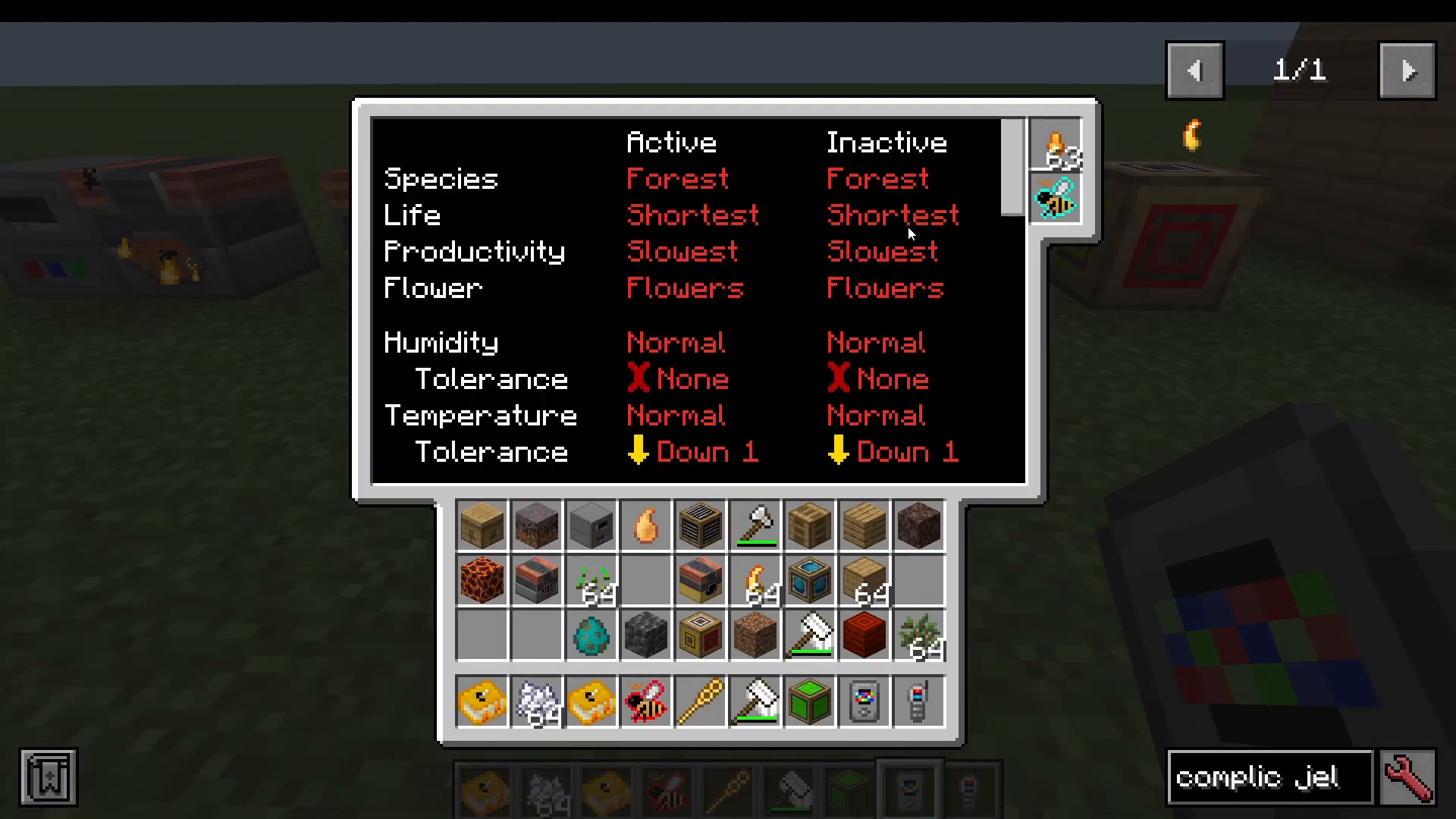
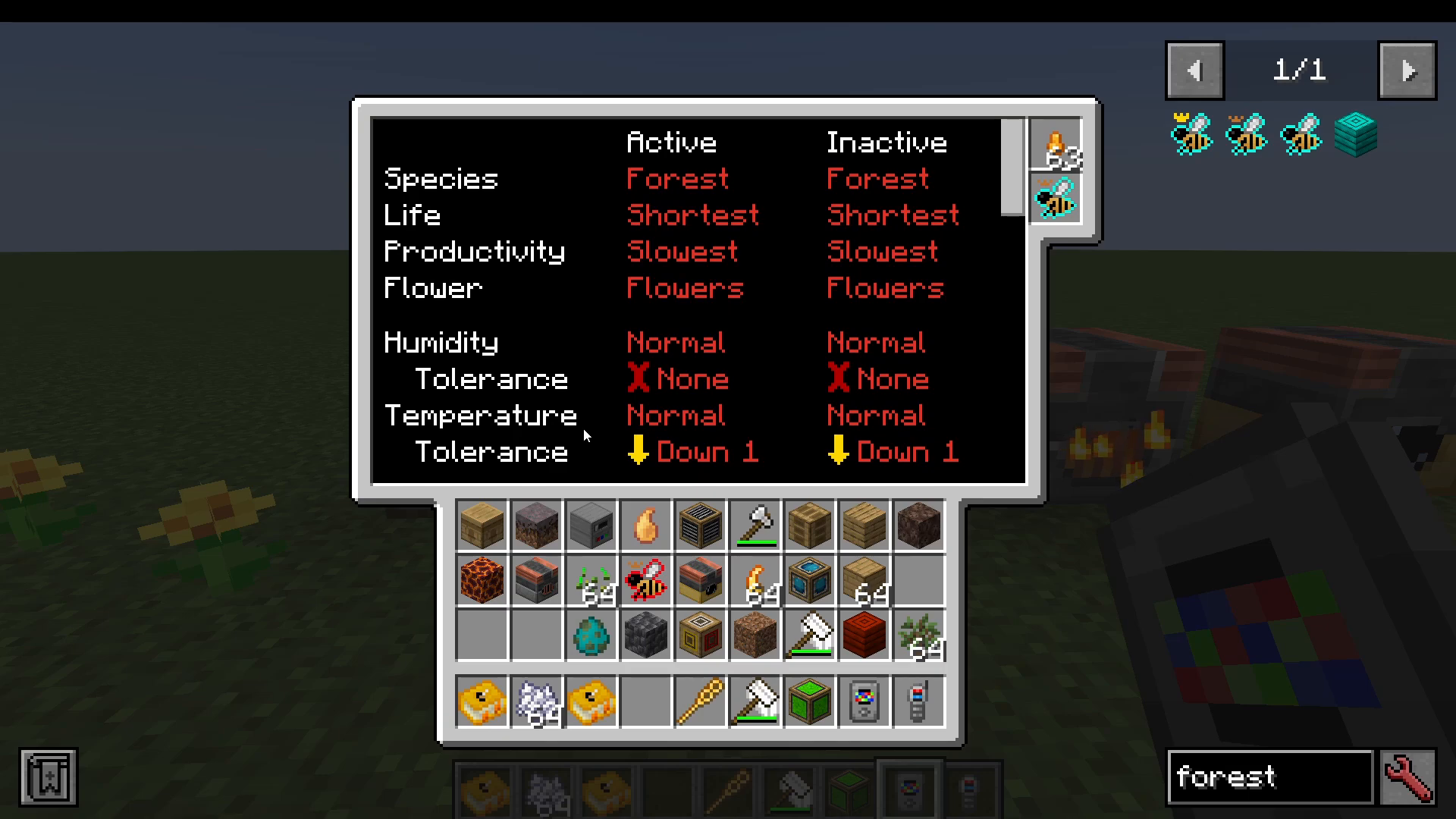
The Analyzer gives you a full breakdown of any bee’s genetic traits. Craft it, place a honey droplet in the fuel slot, then insert a bee to read its stats. Every bee has an active trait and an inactive trait for each gene — the active trait always takes precedence.
Key Traits Explained
Life Cycle — How long the bee works before dying, measured in work ticks. Values: Shortest (15), Shorter (25), Short (35), Average (50), Longer (65), Long (75), Longest (90). A shorter lifespan means faster cycling, which is better when you are trying to trigger mutations quickly.
Productivity — The base chance per tick that the bee produces a product (usually combs). Values: Slowest (0.3), Slower, Slow, Average (1.0), Fast (1.2), Faster (1.5), Fastest (1.7).
Flower — The type of item or block the bee requires nearby to work. Standard bees need a flower; others may require skulls or other special blocks.
Temperature & Humidity Tolerance — The preferred climate and how many steps of variance the bee will accept. For example, a bee that prefers Normal temperature with a tolerance of Down 1 will also work in Cold biomes, but not Frozen ones.
Breeding Traits Over Time
When two bees breed, there is a chance that traits from one parent pass into the active or inactive gene slot of the offspring. To push a desirable trait (such as Shortest lifespan) into the active slot, keep breeding bees that carry that trait. Over several generations the active gene will shift toward the trait you want. This is the core long-term progression loop of the mod.
Important Items and Equipment
Bee Staff
The Bee Staff is a combat weapon that launches bees as projectiles. It is crafted from pollen, royal jelly, blaze rods, and propolis.
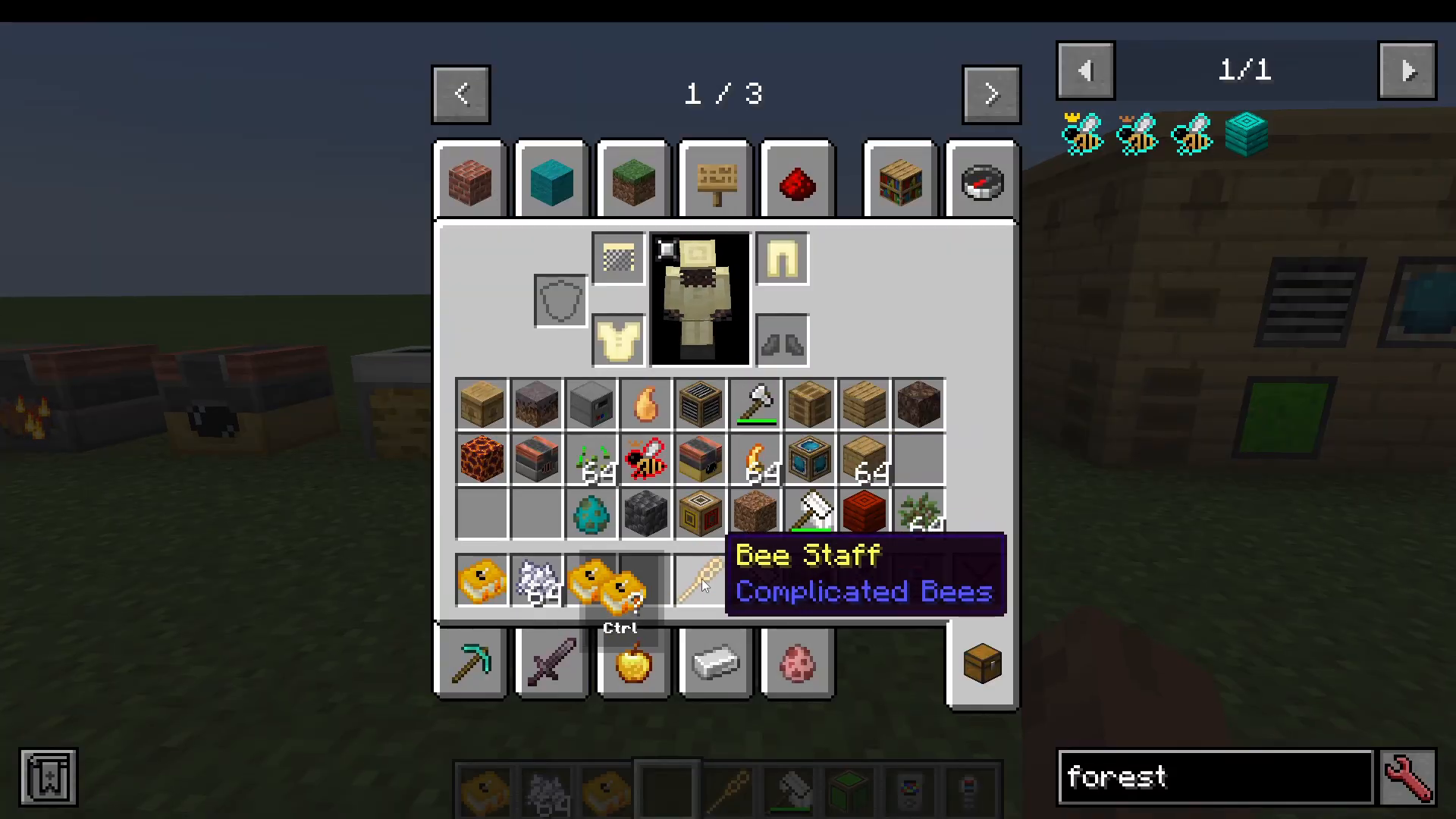
To craft it you will need to work your way up the breeding chain:
Propolis — Centrifuge Silky Combs from Jungle Bees (70% drop chance).
Royal Jelly — Centrifuge Royal Combs, which come from Imperial Bees.
Imperial Bee breeding chain: Common/Cultivated → Noble or Diligent → Noble + Cultivated → Majestic → Majestic + Noble → Imperial
When in doubt about any breeding chain, look up the desired comb in JEI (press R to see recipes), then click through to the bee that produces it and check its mutation requirements.
Apiarist’s Leggings
Some bees apply negative status effects — for instance, a Wither Bee will inflict wither on nearby players. The full Apiarist’s gear set negates all bee-related negative effects, making it essential if you are working with dangerous species or playing in a modpack that adds aggressive bee traits.
Decorative Blocks
The mod also adds several decorative building blocks derived from bee products, including Honeyed Planks, Smooth Wax Slabs, wax doors, and similar variants. These are crafted from honey blocks and beeswax.
Food Items
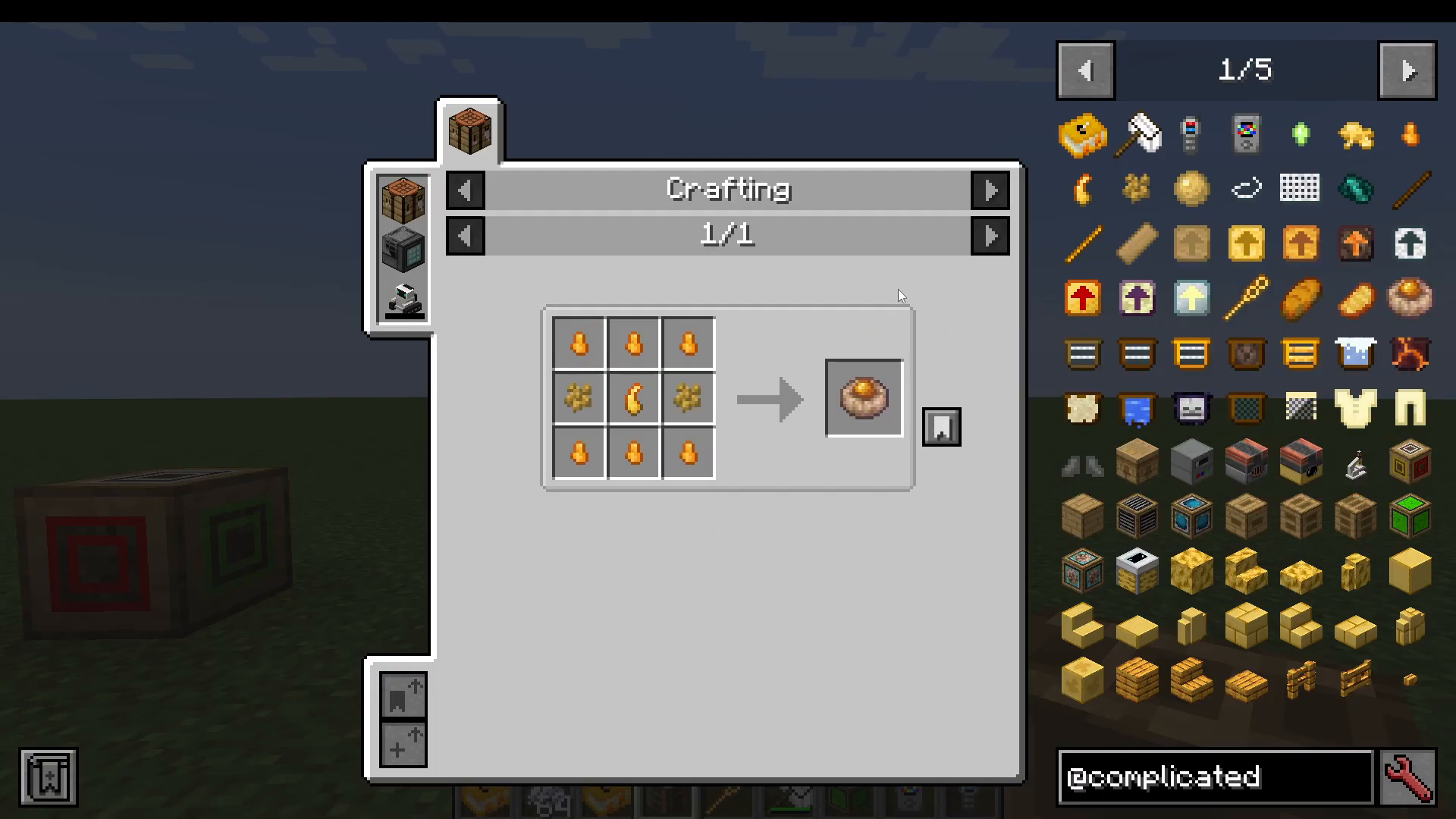
You can craft Honey Bread (honey + bread), Honey Pork Chop, and a Brochure using honey-based ingredients.
The Alveary: The Endgame Multiblock
The Alveary is the mod’s most powerful structure and your endgame goal for bee production. It is a multiblock built from a 3×3×3 arrangement of Alveary blocks. A basic version requires only Alveary blocks for the base, middle, and top layers, and this will form the multiblock structure automatically.
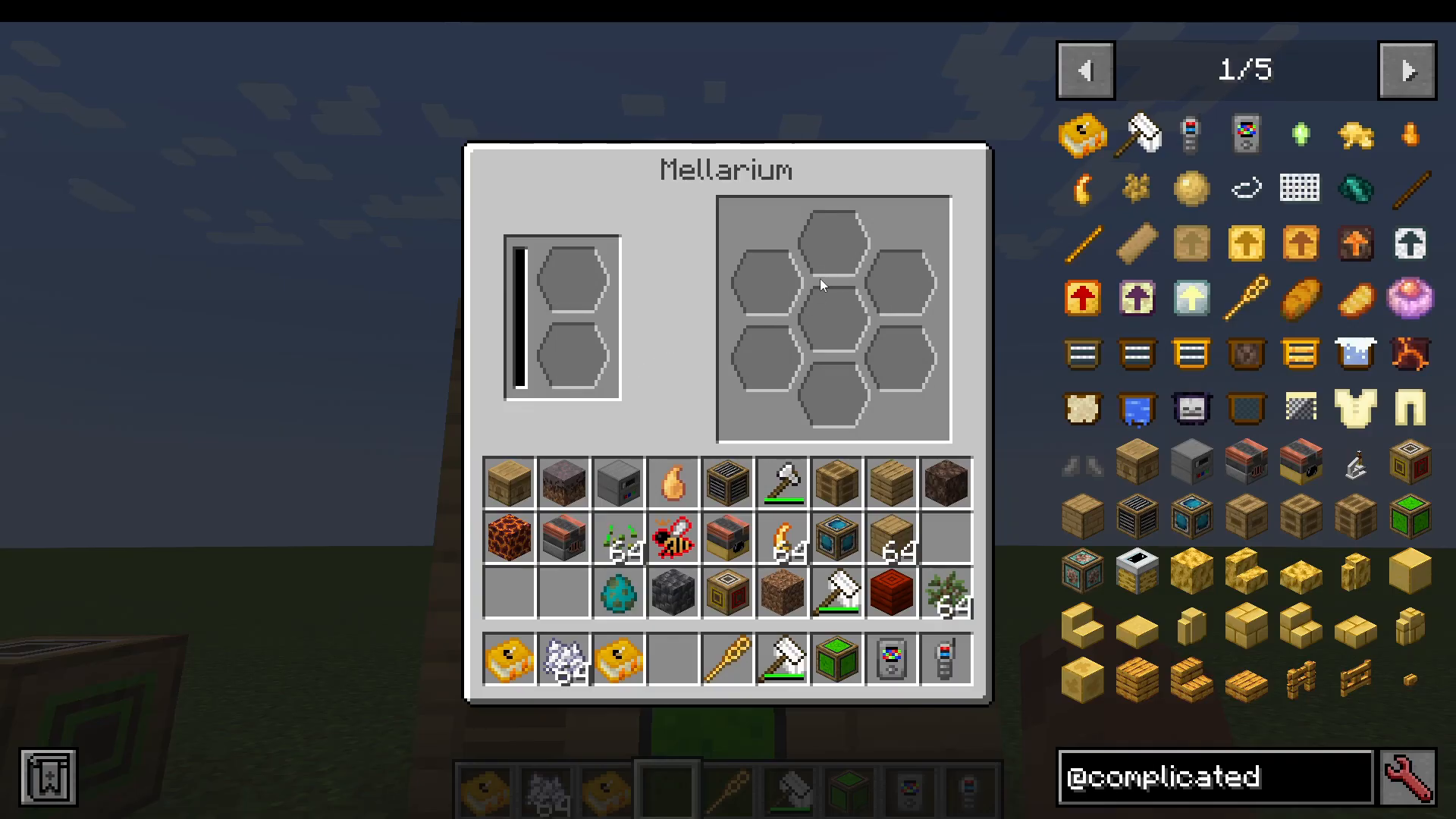
The real power of the Alveary comes from its modular upgrade blocks, which replace standard Alveary blocks on the outside of the structure. Each adds a specific function:
Alveary Upgrade Blocks
Frame Housing — Adds frame slots to the Alveary. Right-click the block to insert frames. Unlike an apiary (which only holds 3 frames), you can add multiple Frame Housing blocks to reach 9 or more frame slots simultaneously.
Temperature Unit — Accepts items to raise or lower the internal temperature of the Alveary. Check JEI (press U on the temperature unit) to see which items work. For example: Magma Block = +1 temperature level; Fire Charges = +2 temperature levels.
Hydro Regulator — Functions exactly like the Temperature Unit but adjusts internal humidity instead.
Rain Shield — Prevents rain from stopping bee activity. Some bee species refuse to work during rain; the Rain Shield removes that restriction entirely.
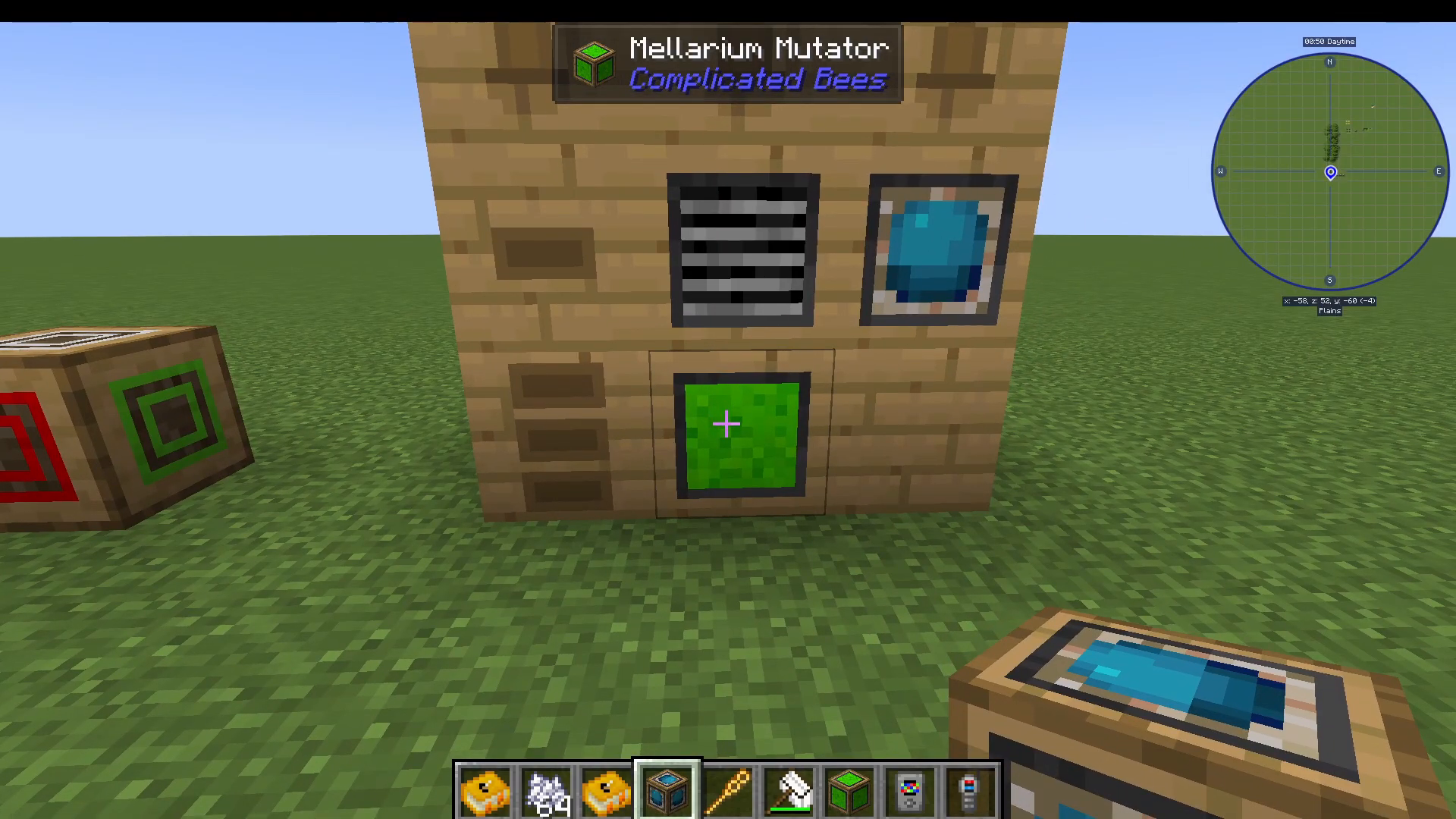
Mutator — Accepts items such as royal jelly, nether stars, or ender pearls to dramatically increase mutation rates, enabling very fast bee breeding.
Sorting Bees with the Bee Sorter
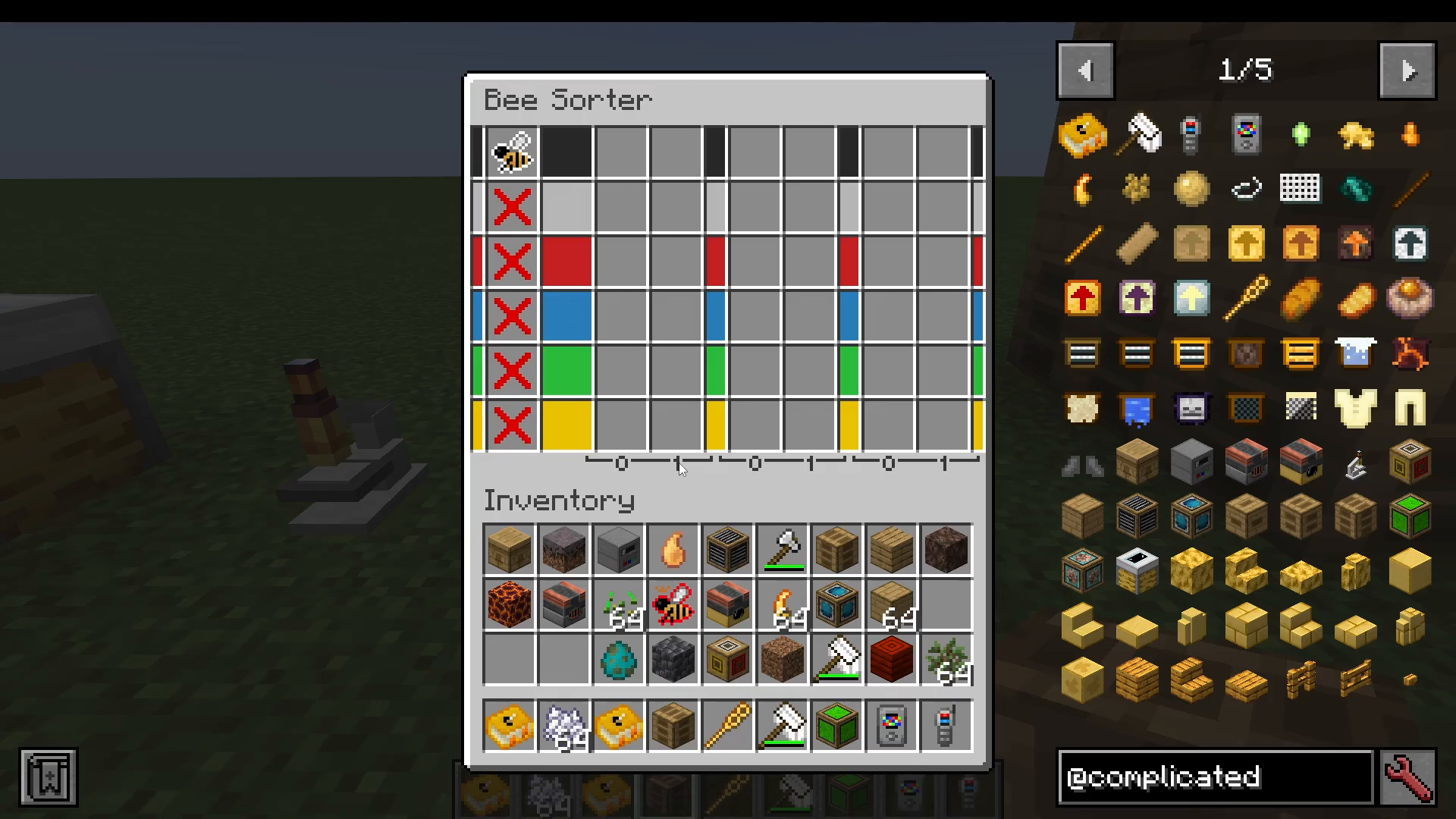
The Bee Sorter is an advanced automation tool that routes bees to different outputs based on their genetic traits. It has four coloured sides (blue, yellow, red, green) and a configurable interface, making it extremely useful when you are running large-scale breeding operations and need to automatically separate specific bees.
Open the Bee Sorter’s interface. On the left side is a filter button that cycles through the following modes when clicked:
No items allowed
Drones only
Princesses only
Queens only
Any bee
No bees (items pass through, bees do not)
The remaining slots are gene filters. Each filter has a 0 (primary/active) and a 1 (secondary/inactive) slot. For example, you can configure one side to output only drones that have an active Plains species gene AND an inactive Common species gene. Connect an item pipe from another mod to the corresponding coloured side and only bees matching those exact genetic criteria will exit through it.
Miscellaneous Items and Quick JEI Tips
A few remaining items you may encounter while playing:
Silk (Silkisk) — Obtained by centrifuging propolis.
Pile Shards — Dropped by specific bee species as a comb product.
For any item you are unsure about, press R in JEI to see its recipe, or press U to see all the ways it can be used. Click through from item to comb to bee to mutation chain — JEI is your best companion throughout this entire mod.
Summary
Complicated Bees is a rich, layered mod that rewards patience and systematic progression. Start by hunting wild nests with a Scoop to collect your first princess and drone, then build an Apiary and Centrifuge to begin generating resources. Use the Microscope and Analyzer to understand your bees’ genetics, then carefully breed new species by meeting their mutation conditions. Fine-tune your setup with frames, upgrade your Centrifuge for faster processing, and ultimately build the Alveary multiblock for maximum output and flexibility. With the Bee Sorter automating your breeding pipeline, the full system becomes one of the most satisfying automation builds available in Minecraft modding.
“`