






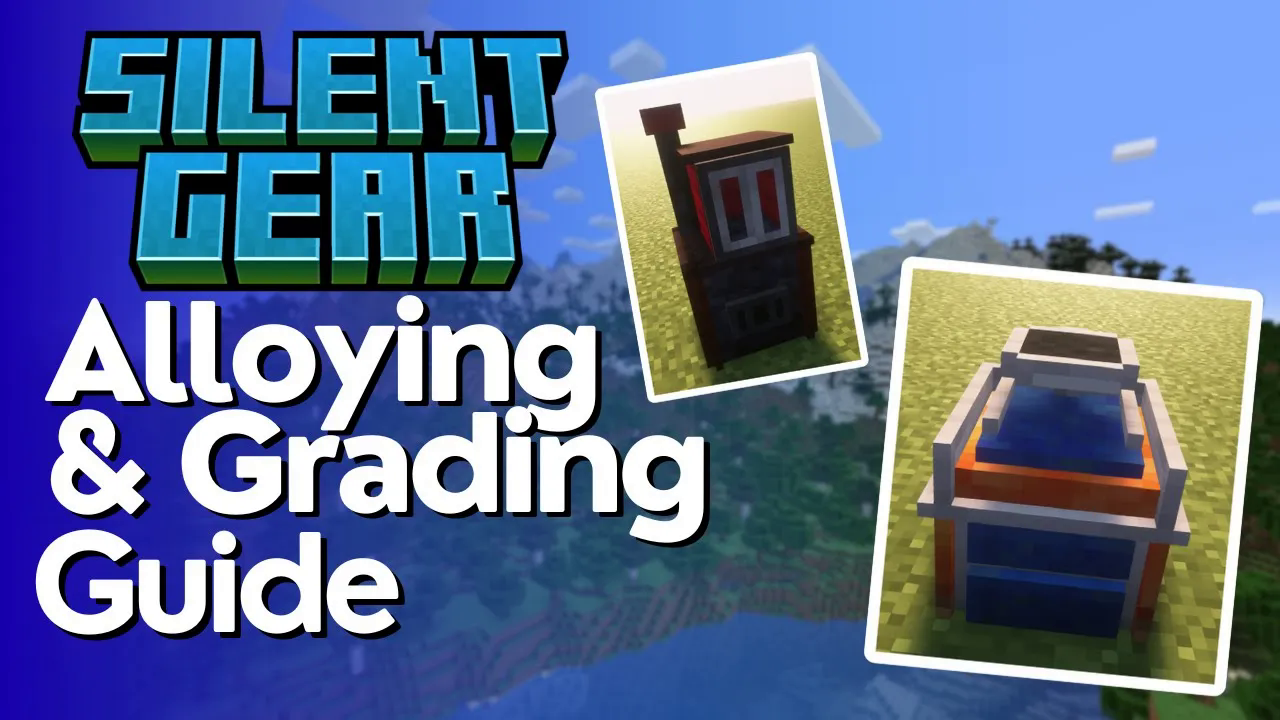
Alloy Forge & Material Grading Guide – Silent Gear
Alloy Forge & Material Grading Guide – Silent Gear
Silent Gear offers powerful ways to enhance your gear through alloy creation and material grading. This guide walks you through crafting various alloys in the alloy forge and using the material grader to optimize your materials for the best possible stats on your equipment.
Understanding Alloys in Silent Gear
Silent Gear allows you to create alloys by combining different materials in the alloy forge. It’s important to note that many modpacks modify the available materials in Silent Gear and similar gear mods like Tinker’s Construct. These mods work best when they have access to a wide variety of materials from other mods, such as mechanism ingots and adventure mod ingots.
Note: If you’re playing in the ATM pack, you may want to check out the Productive Metalworks tutorial instead, as that mod functions differently in that pack.
Available Alloys
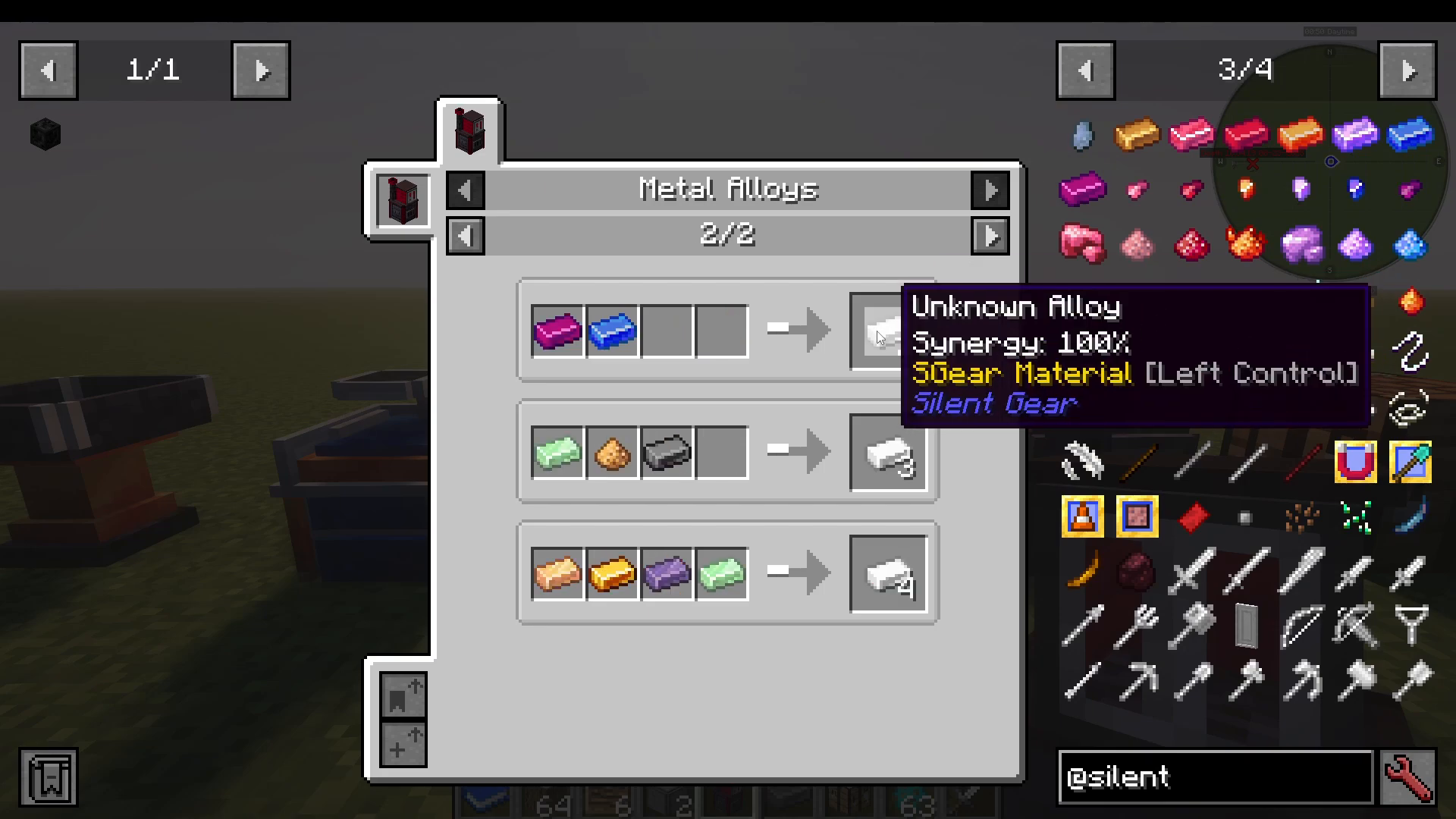
Here are the primary alloys you can craft in Silent Gear 1.21:
Bronze – Currently has no recipe in version 1.21
Crimson Steel – Made from Crimson Iron (found in the Nether), combined with Magma Cream and Blaze Rods. In the alloy forge, you can use a block of Crimson Iron with two Blaze Rods and Magma Cream to create Crimson Steel ingots more efficiently
Blades Gold – Created by combining Blaze Powder and Gold in your alloy forge
Azure Electrum – Made from Azure Silver (harvested from Azure Silver ore in the End with a Netherite pickaxe or better), combined with Gold and End Pearls
High Carbon Steel – Another variant available through the alloy forge
Depending on your specific modpack, you may have access to additional alloys. For example, if you have Railcraft and Mekanism installed, you can create custom alloys by mixing ores and ingots from these mods with Silent Gear materials.
Important Alloy Properties
Many alloys come with special traits. For example, some materials gain “moonwalker” properties from Azure Silver or flame ward from Crimson Steel. Always check the traits of each alloy to ensure you’re getting the best bang for your buck. You can view detailed stats and traits by looking at the alloy forge interface.
Material Grading System
Once you’ve created your alloys, you can use the Material Grader to improve their quality. The material grader uses an advanced upgrade base and requires catalyst materials to function.
Catalyst Materials (Tiers)
The material grader uses three tiers of catalysts, each providing different chances of grade improvements:
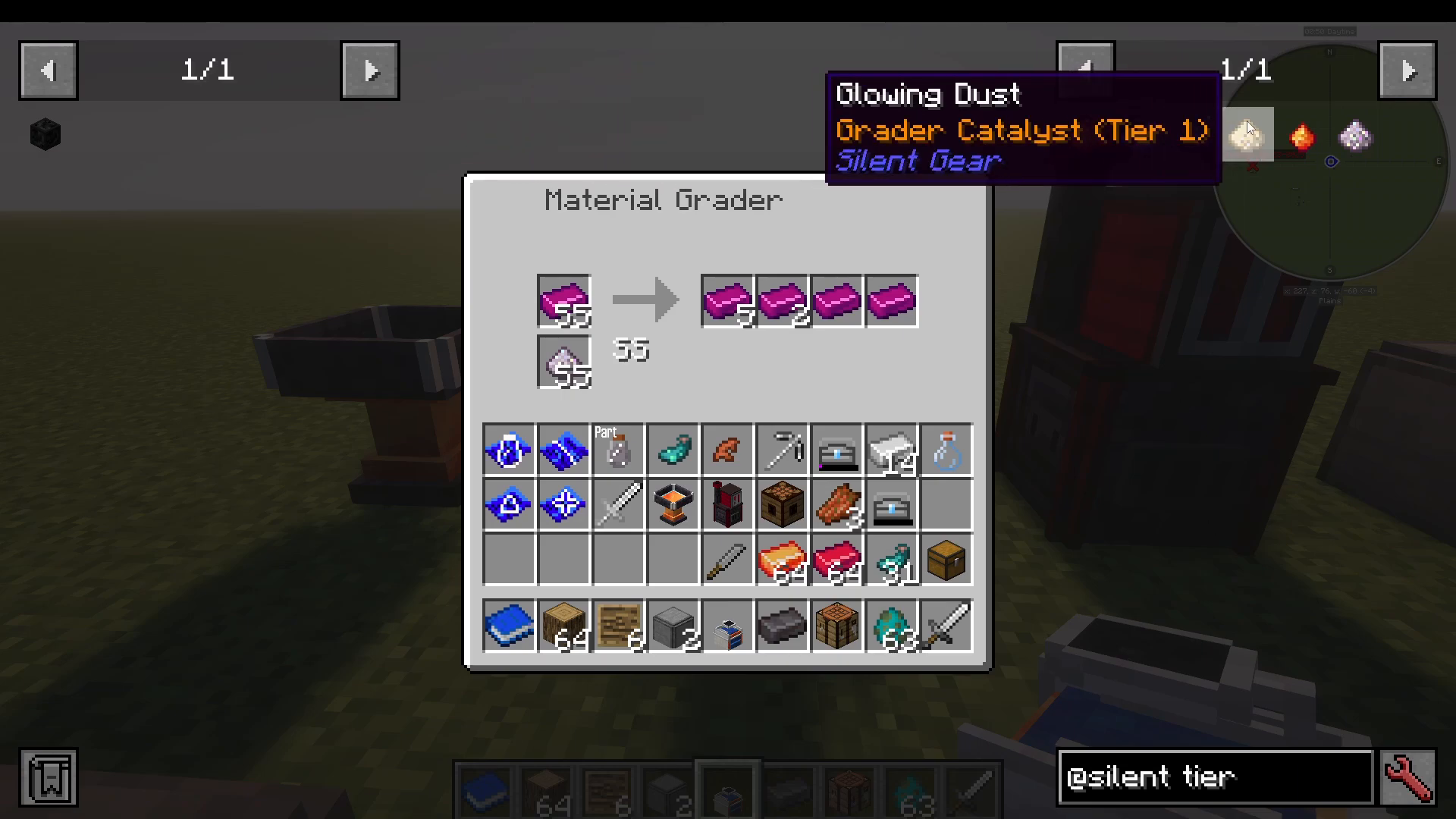
Tier 1 – Glowing Dust – Made from Nether Quartz and Glowstone. This is the lowest-tier catalyst and provides the worst grading chances
Tier 2 – Blazing Dust – Made by placing Blaze Gold ingots on an anvil and bashing them with a stone anvil. This catalyst is more reliable than glowing dust
Tier 3 – Glittery Dust – The highest-tier catalyst. Found in Nether chests or obtained by chopping down Nether wood trees (rare drops). This provides the best chance of obtaining higher-grade materials
Note: To make Blaze Gold ingots, bash wood logs on stone to get Blaze Gold ingots.
How Grading Works
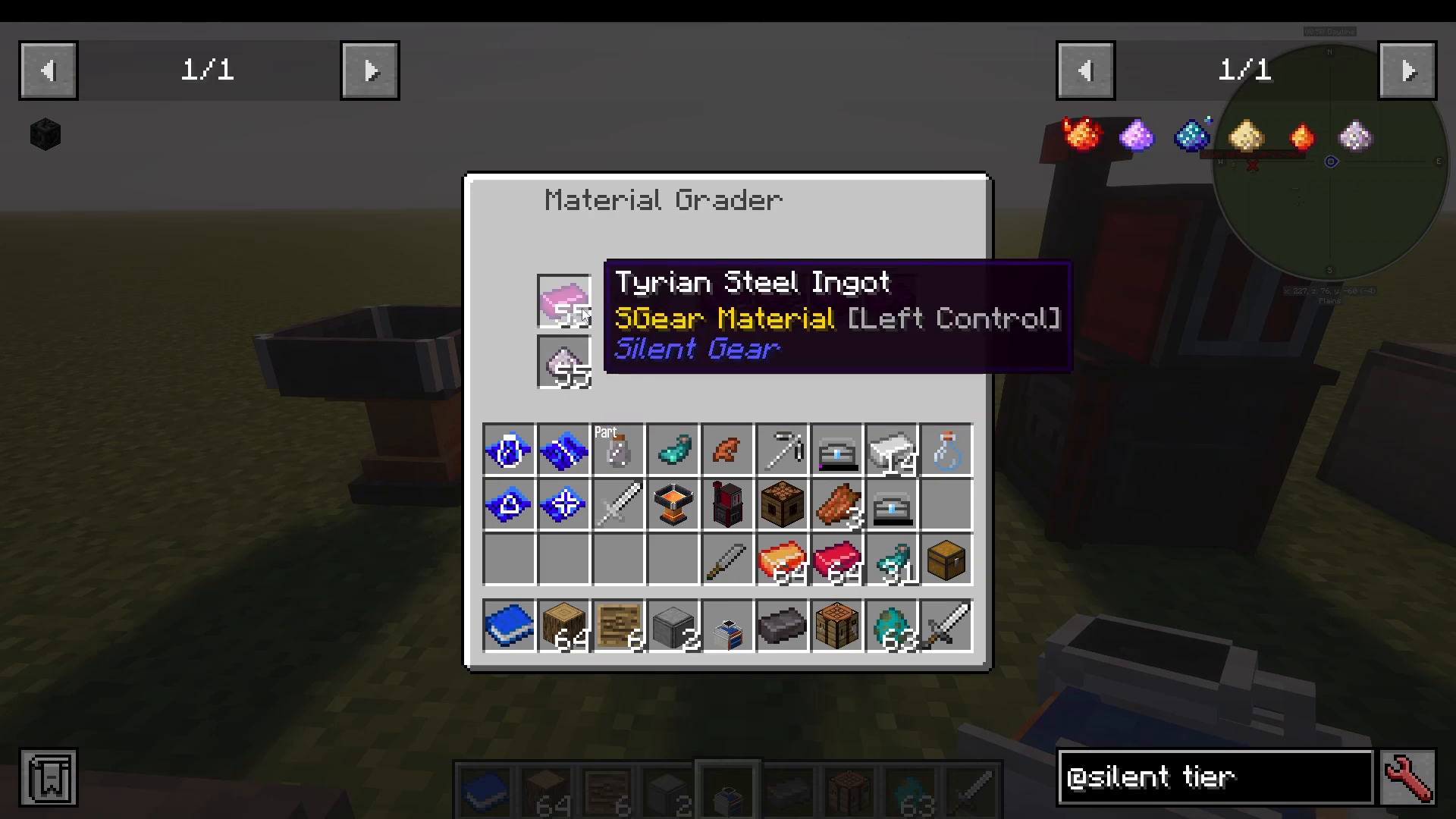
When you place materials into the material grader with a catalyst, they receive a grade tier. The possible grades are, from lowest to highest: F, D, C, B, A, S, and SS (with SSS being the absolute best).
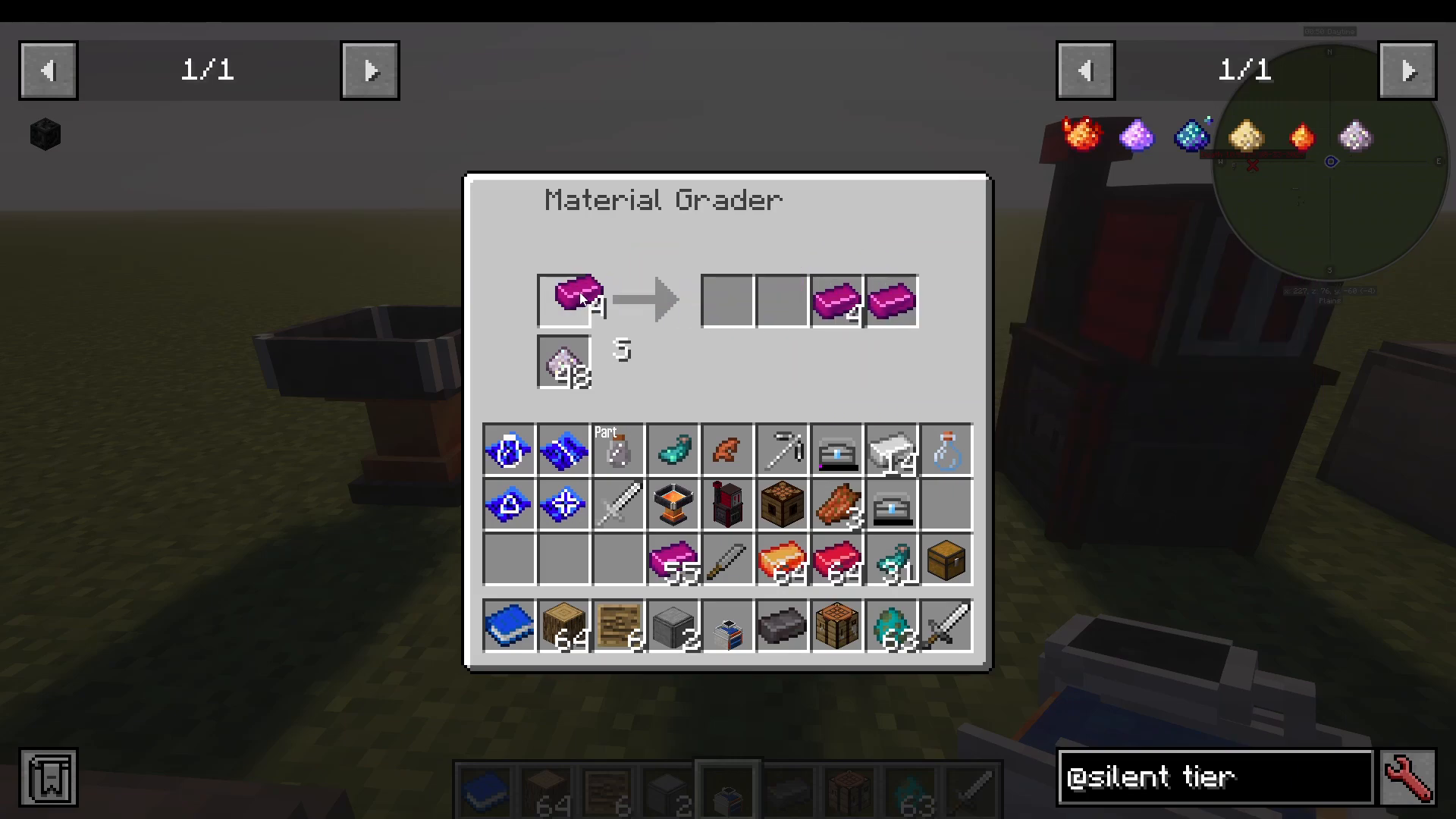
For example, placing a stack of Terran Steel through the grader with Glittery Dust might yield: five B-tier pieces, two A-tier pieces, one S-tier piece, and one SS-tier piece.
Re-grading Strategy
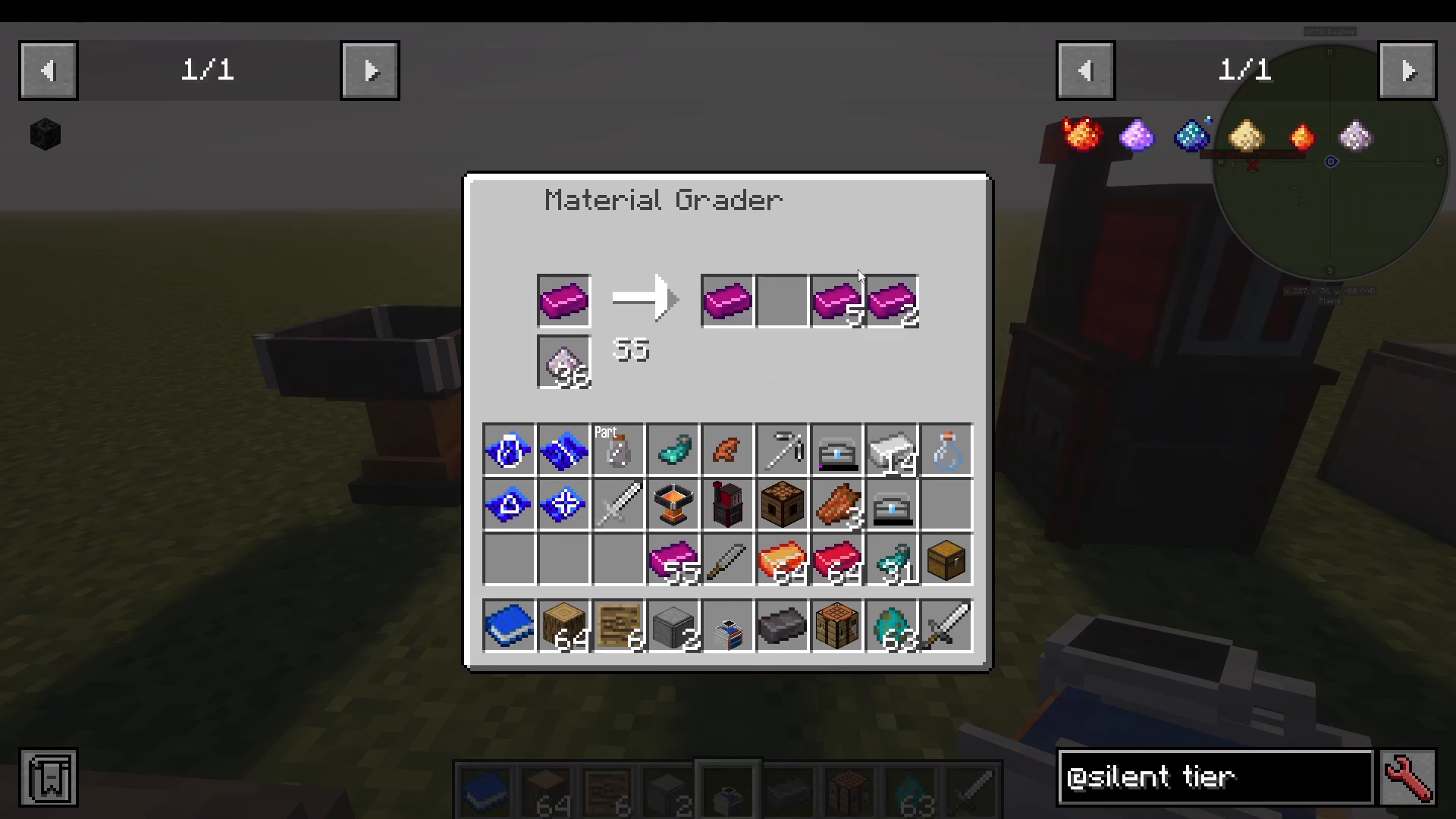
A key feature of the material grader is that materials can only stay the same tier or improve—they can never downgrade. This means if you place an A-tier material back through the grader, it will either remain A-tier or upgrade to S-tier or higher. It will never drop to B-tier or lower.
This makes re-grading a viable strategy: if you have abundant Glittery Dust, you can continuously re-run materials through the grader until all your gear materials reach SS or SSS tier.
Grade Recommendations
The grade tier of a material directly affects the stats of any gear you craft with it—higher-grade materials produce better gear. Your grading strategy depends on how you intend to use the material:
For permanent gear you’ll use long-term: Push materials to SSS tier by re-running them through the grader with Glittery Dust
For temporary or experimental gear: SS or A tier is usually sufficient
For early-game gear: B or A tier is acceptable while you gather resources
If you have access to a Nether wood tree farm, you can farm Glittery Dust relatively consistently, making high-grade materials more achievable.
Summary
Mastering alloy creation and material grading in Silent Gear significantly enhances your equipment’s potential. Start by exploring the alloys available in your modpack, then use the material grader with appropriate catalysts to upgrade your materials. Remember that higher-tier catalysts (especially Glittery Dust) provide better grading odds, and materials can only improve through re-grading, making it safe to push promising pieces toward SS and SSS tier for your best gear.
— Want to Support? —
If you would like to help us continue making these guides – please consider joining our patreon here – https://www.patreon.com/c/JaviHeals
Alternatively – we host a group of MC Servers you can join here – https://discord.gg/zD7Gjt6MHF