





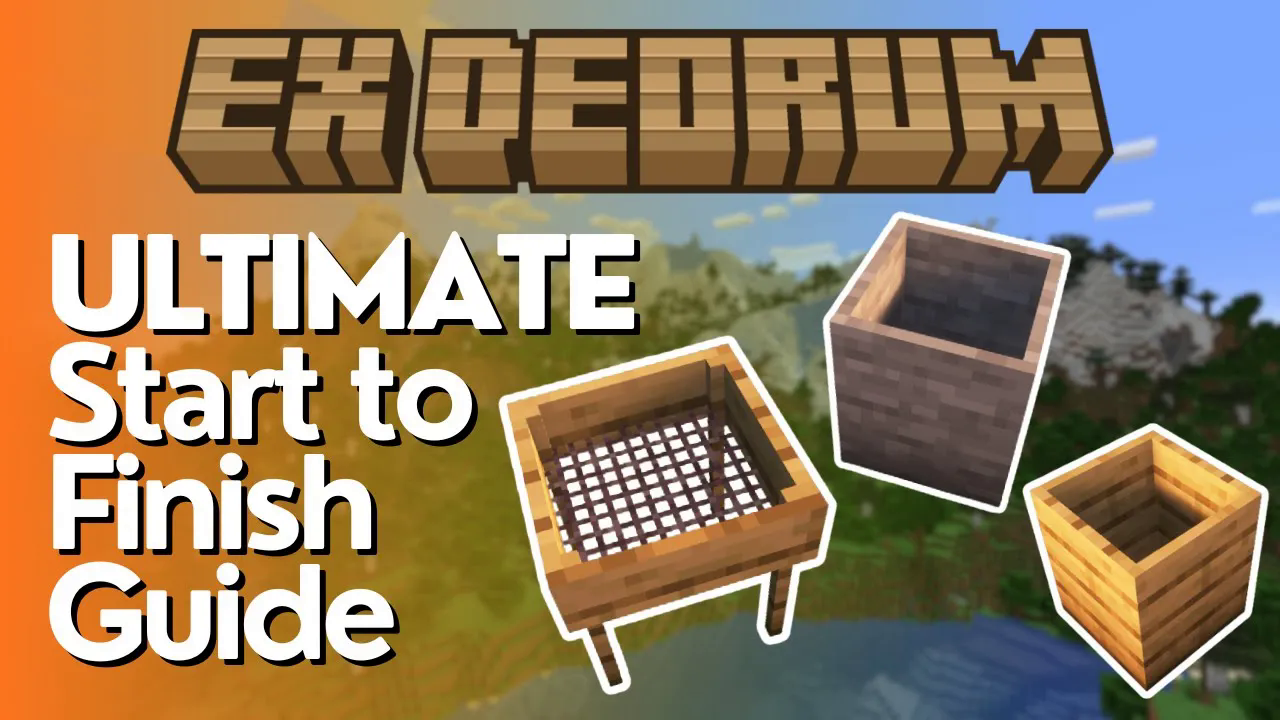
Ex Deorum Complete Tutorial
Ex Deorum Mod: Complete Beginner’s Tutorial
The Ex Deorum mod is an essential component of modpacks like Skyblock and TerraFirmaCraft. It doesn’t add a massive number of items, but everything it does add plays a critical role in your progression. This guide walks you through every feature — from barrels and sieves to silkworms and hammers — so you can hit the ground running.
Barrels
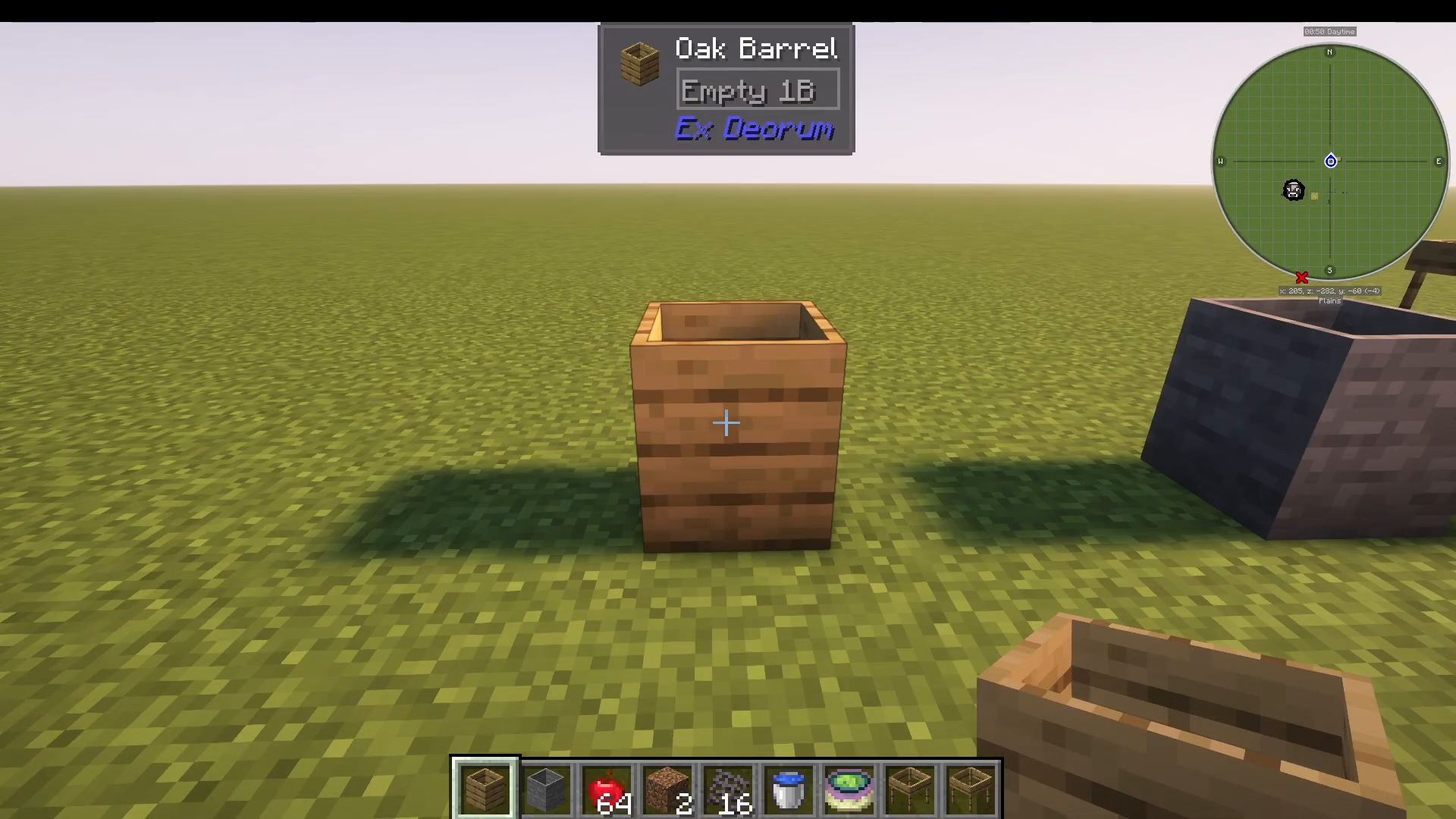
Oak Barrel: Composting for Dirt
The Oak Barrel is your first tool for generating dirt. Place an item like apples into the barrel and watch the volume meter climb to 100%. Once the progress bar also reaches 100%, the barrel produces dirt. This is the primary way to obtain more dirt in Skyblock packs. Simply right-click the barrel to collect your dirt when it’s ready.
Stone Barrel: Fluid Mixing
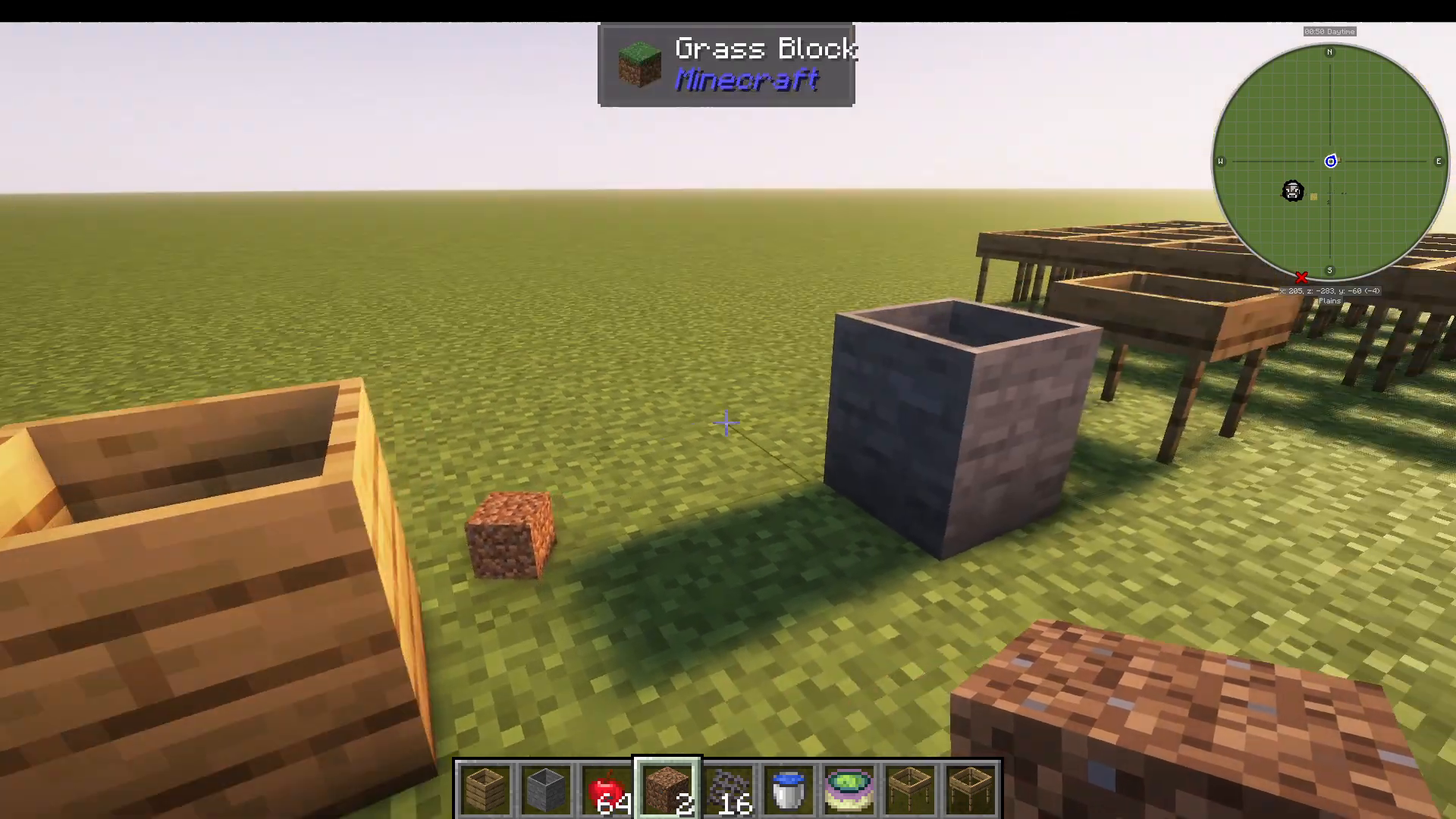
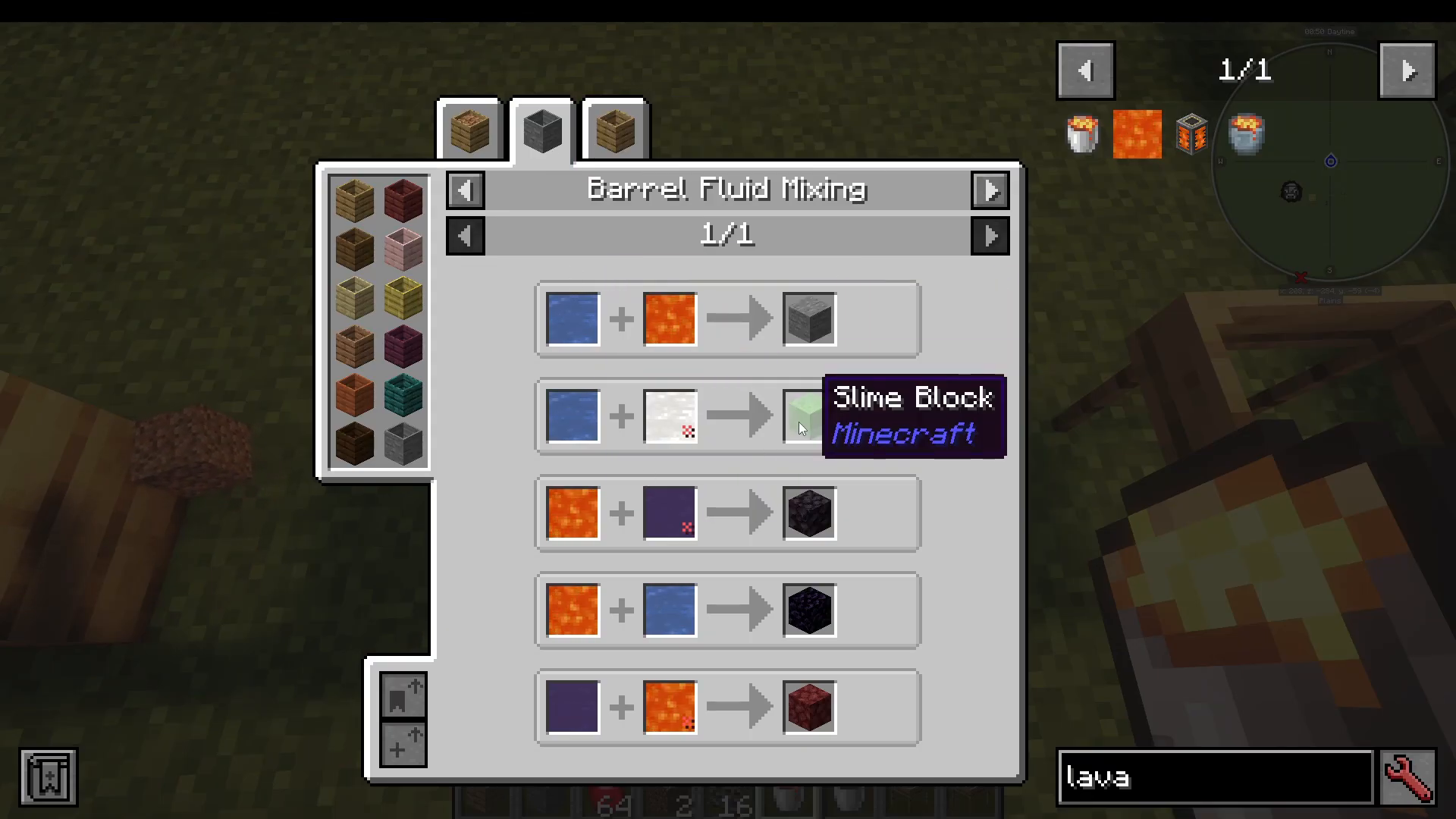
The Stone Barrel unlocks fluid mixing, which is far more powerful than basic composting. You can combine two fluid buckets inside the stone barrel to produce new materials. Key recipes include:
Water + Lava → Stone
Water + Milk → Slime Block
Witch Water + Lava → Netherrack (functions like a cobblestone generator)
How to Make Witch Water
To create Witch Water, place a water bucket into a barrel and position that barrel directly on top of Mycelium. The Mycelium block speeds up the conversion process. Once produced, Witch Water has several uses:
It will cause nearby Mycelium to grow mushrooms.
Combined with Lava in a Stone Barrel, it generates a Netherrack stream.
Viewing All Barrel Recipes with JEI
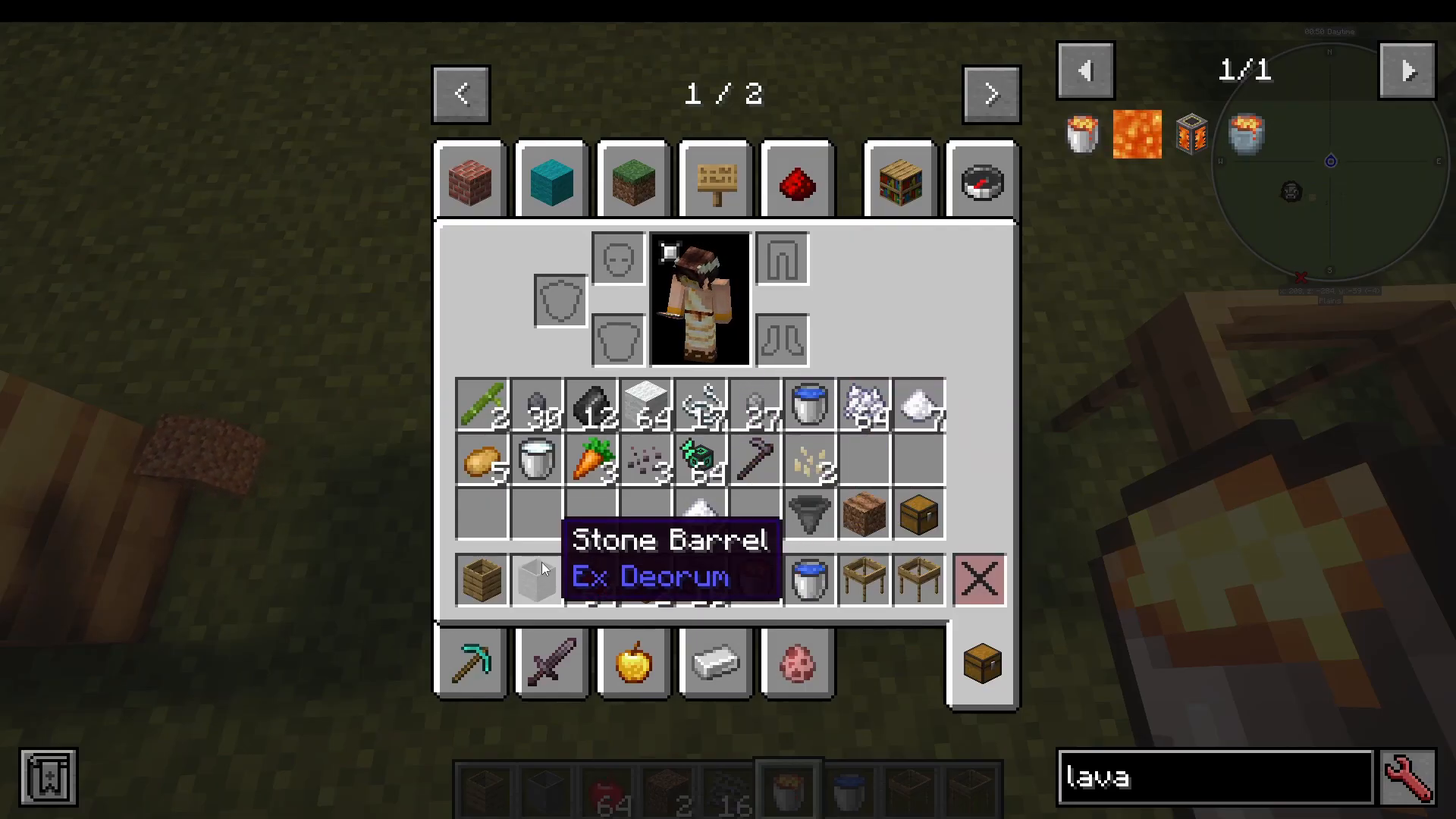
If you have Just Enough Items (JEI) installed, you can look up every barrel recipe easily. Click any item in your inventory, then press U on your keyboard to see all the ways that item can be used — including barrel composting and barrel fluid mixing recipes.
Wooden Barrel Mixing
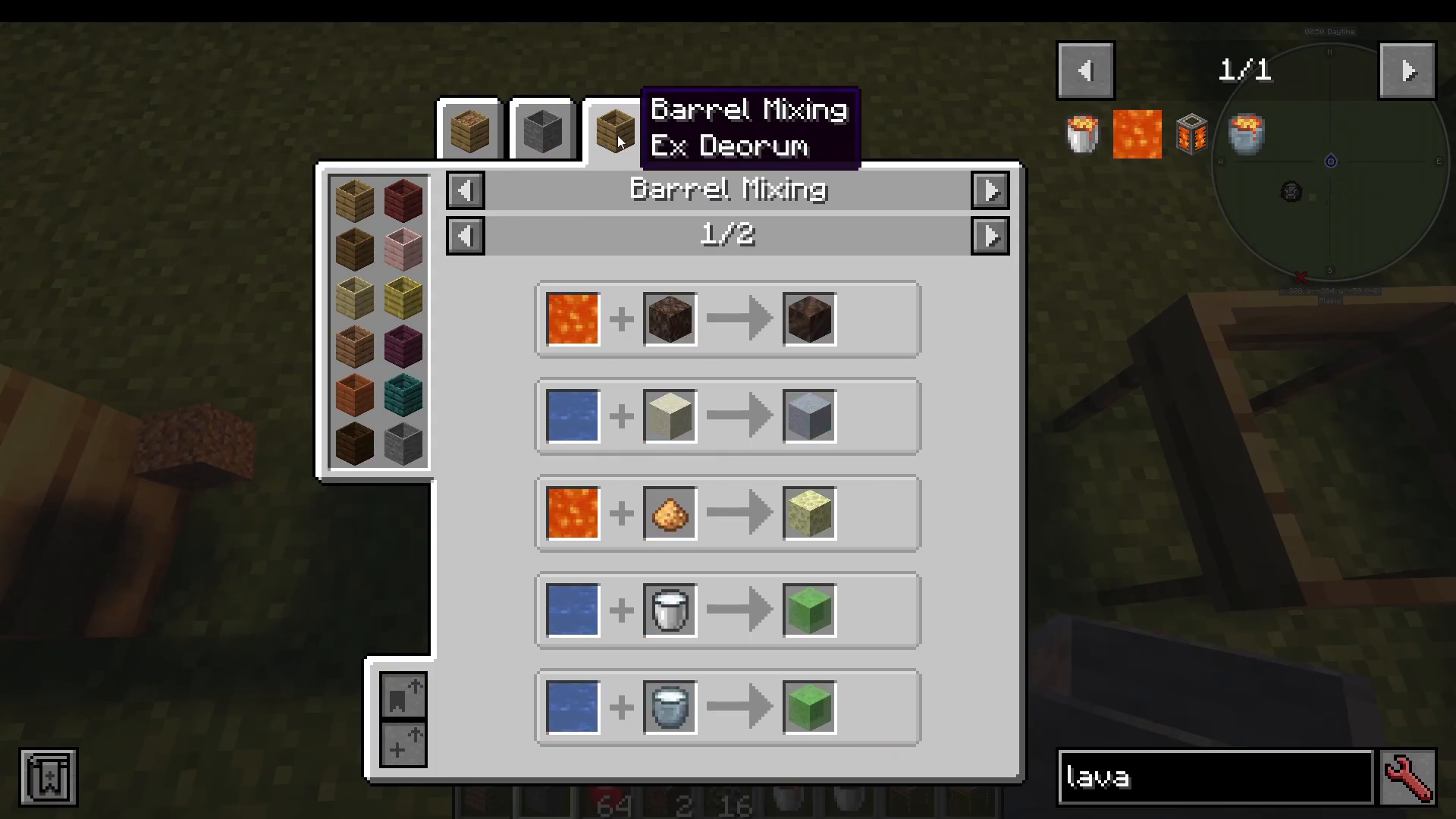
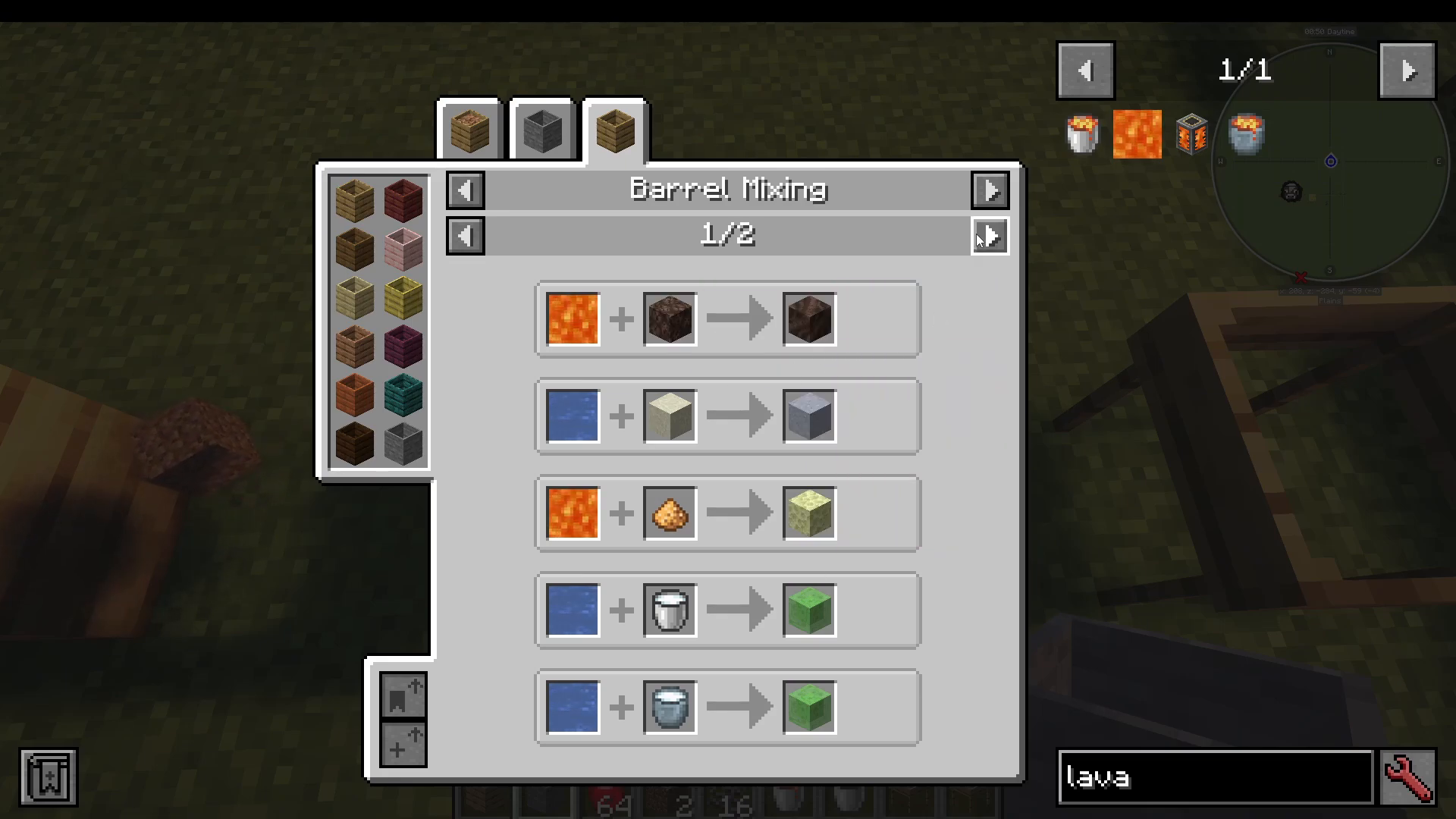
Standard barrel mixing (distinct from fluid mixing) takes place in a Wooden Barrel. For example, combining Lava and Soul Sand will produce results such as Soul Soil, Clay, and Stone. Check JEI for the full list of wooden barrel mixing recipes.
Porcelain Buckets and Crucibles
Before you have access to iron, you can craft Porcelain Buckets as an early-game alternative. Porcelain is crafted using Clay and Bone Meal, which produces Porcelain that can then be shaped into a bucket or a crucible. The Porcelain Crucible allows you to handle fluids before iron buckets are available, making it a vital early progression item.
Sieves and Meshes
How Sieves Work
Sieves are used to filter materials like dirt and gravel to obtain resources. However, a sieve on its own does nothing — you must equip it with a mesh first. Meshes are available in several tiers:
String Mesh (lowest tier)
Flint Mesh
Iron Mesh
Netherite Mesh (highest tier, lasts the longest)
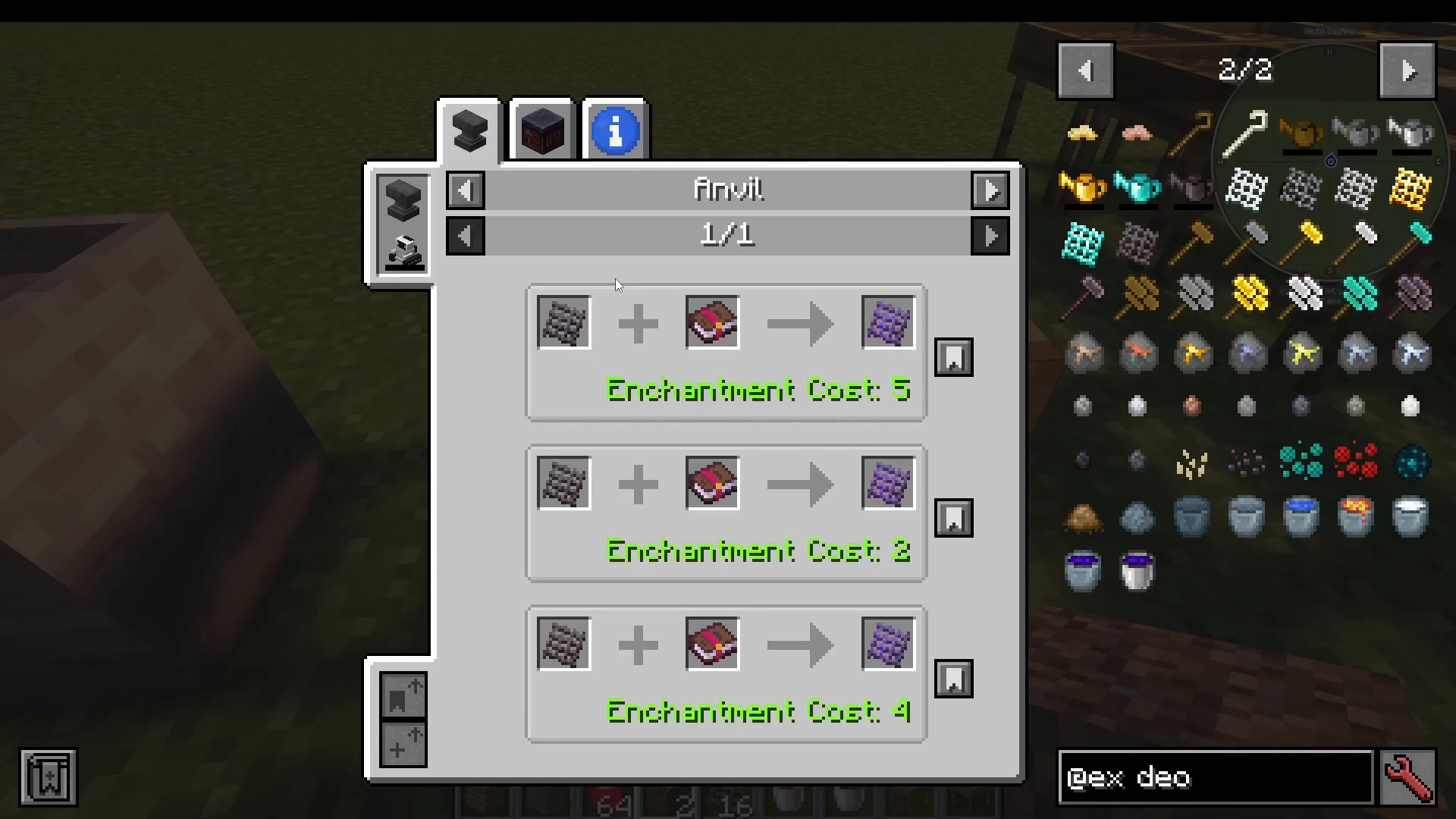
Higher-tier meshes yield better drop rates. You can also enchant meshes with Fortune (increases drop likelihood) and Efficiency (increases sifting speed).
Sifting in Action
Equip your sieve with a mesh — a Netherite Mesh is ideal for longevity — then right-click the sieve while holding a material like dirt. Keep right-clicking until the progress bar reaches 100%, at which point item drops will appear. Sifting is the backbone of resource gathering in most Skyblock modpacks.
Multi-Sieve Arrays
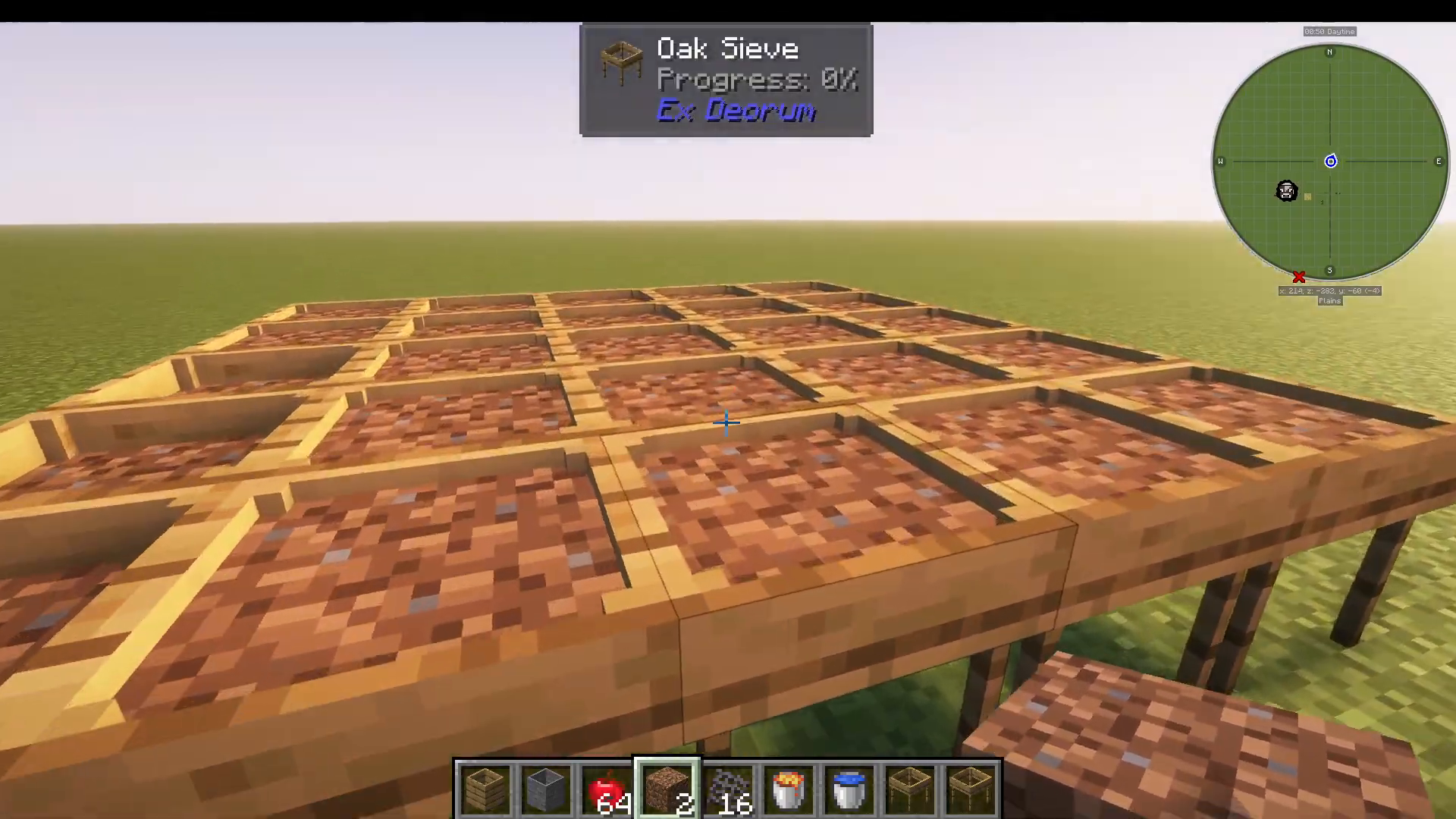
To dramatically speed up sifting, you can place sieves adjacent to each other in a grid of up to 5×5. Sifting in one sieve will simultaneously process all connected sieves, letting you gather large amounts of loot far more efficiently and with much less repetition.
Compressed Items and Ore Chunks
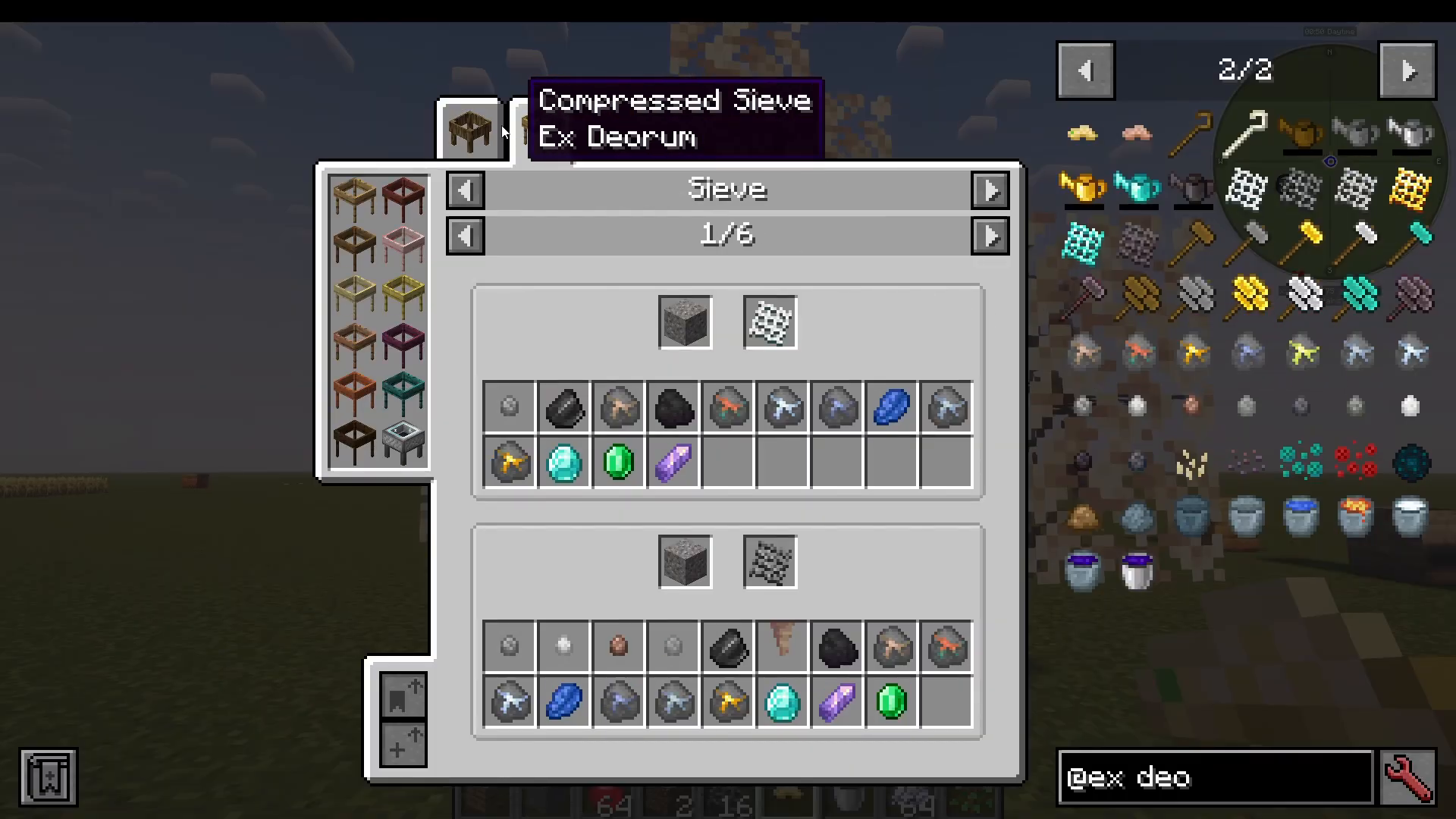
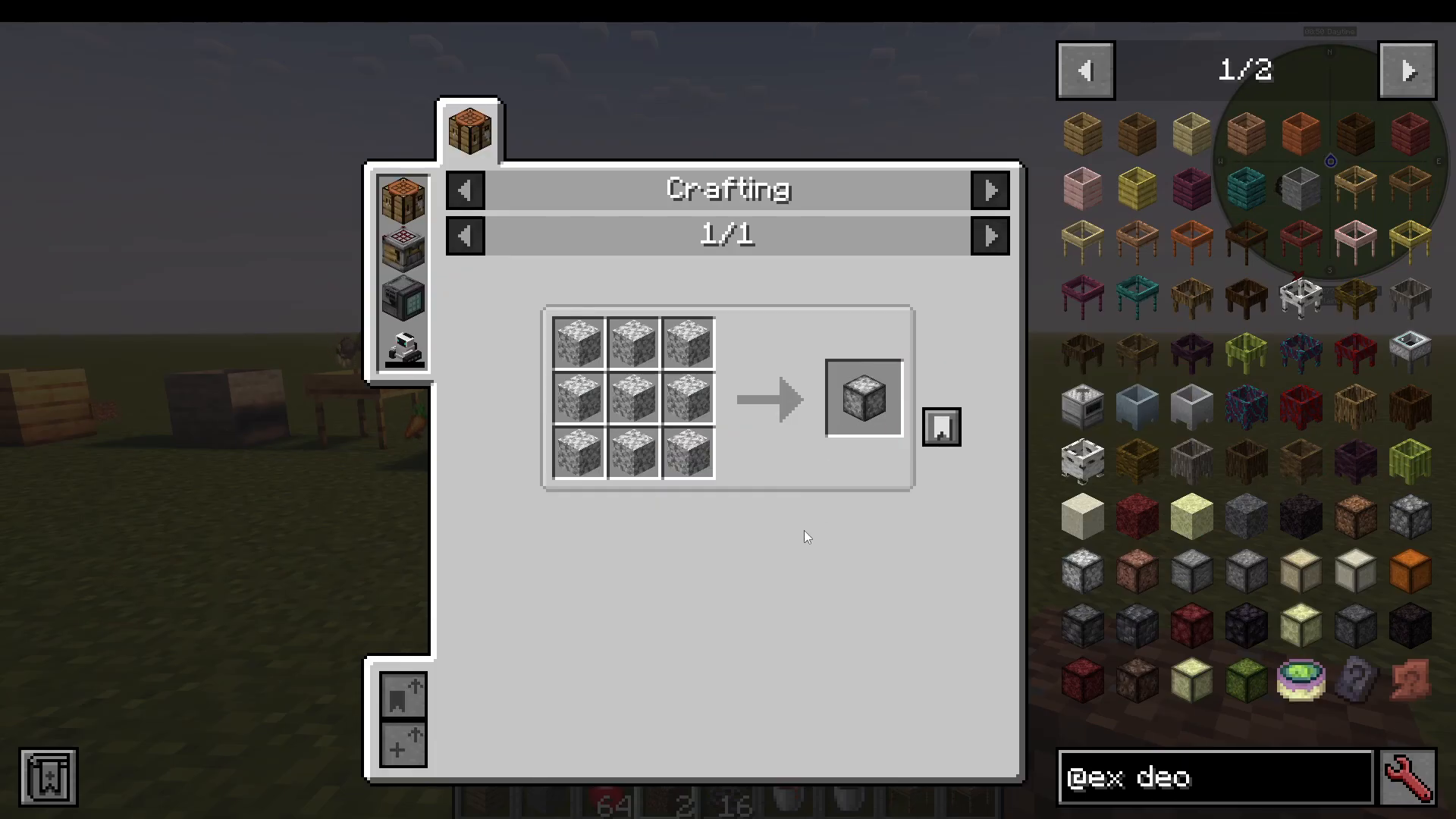
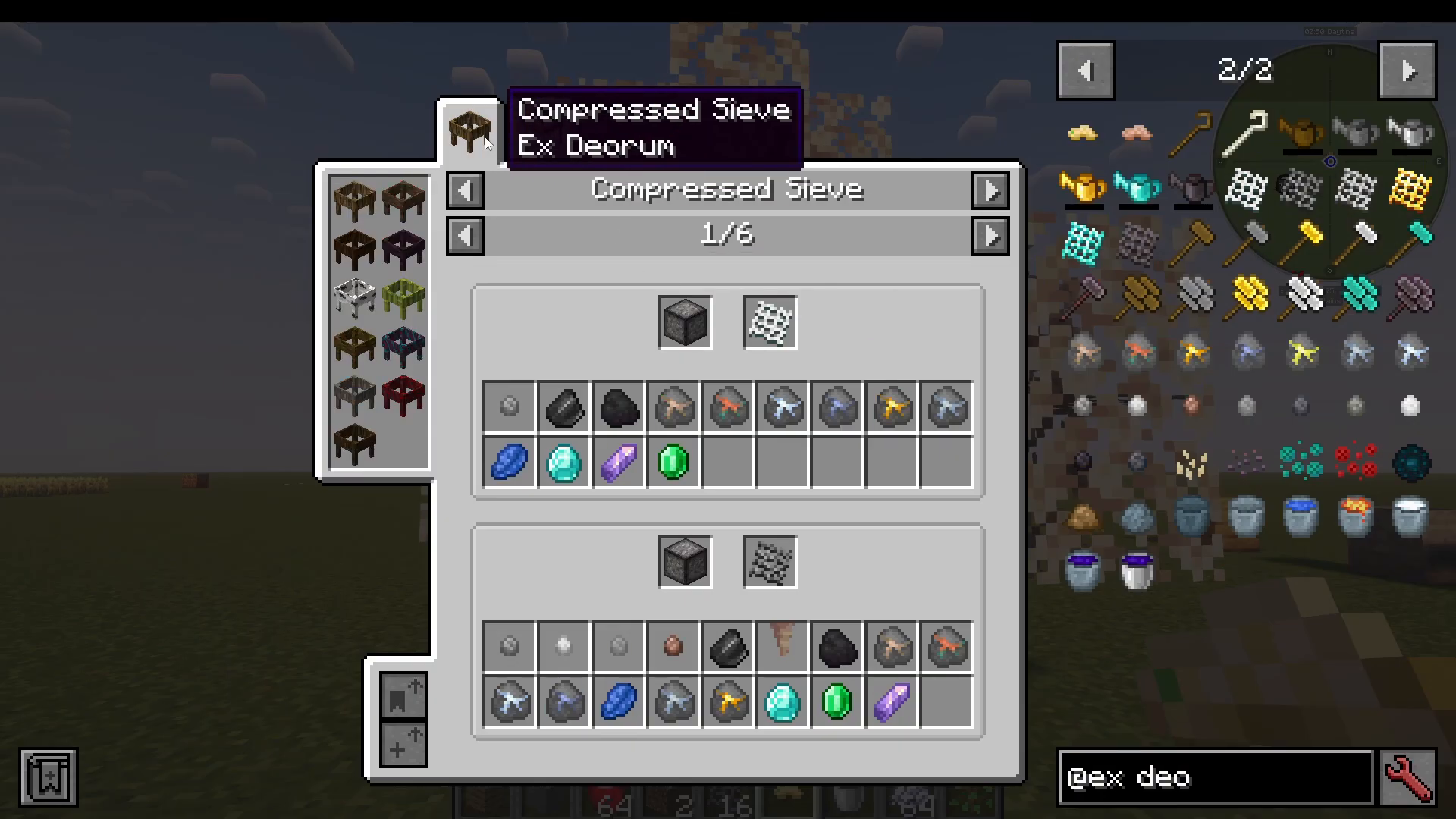
You can compress items — for example, compressing Diorite into Compressed Diorite — and then sieve those compressed blocks to get more resources per sieve cycle. When sifting gravel, you have a 10% chance to obtain Iron Ore Chunks. Using better meshes and compressed blocks significantly increases your average output. As a reference:
String Mesh: average output of 0.7 Iron Ore Chunks per sieve
Netherite Mesh: average output of 1.19 Iron Ore Chunks per sieve
Hammers
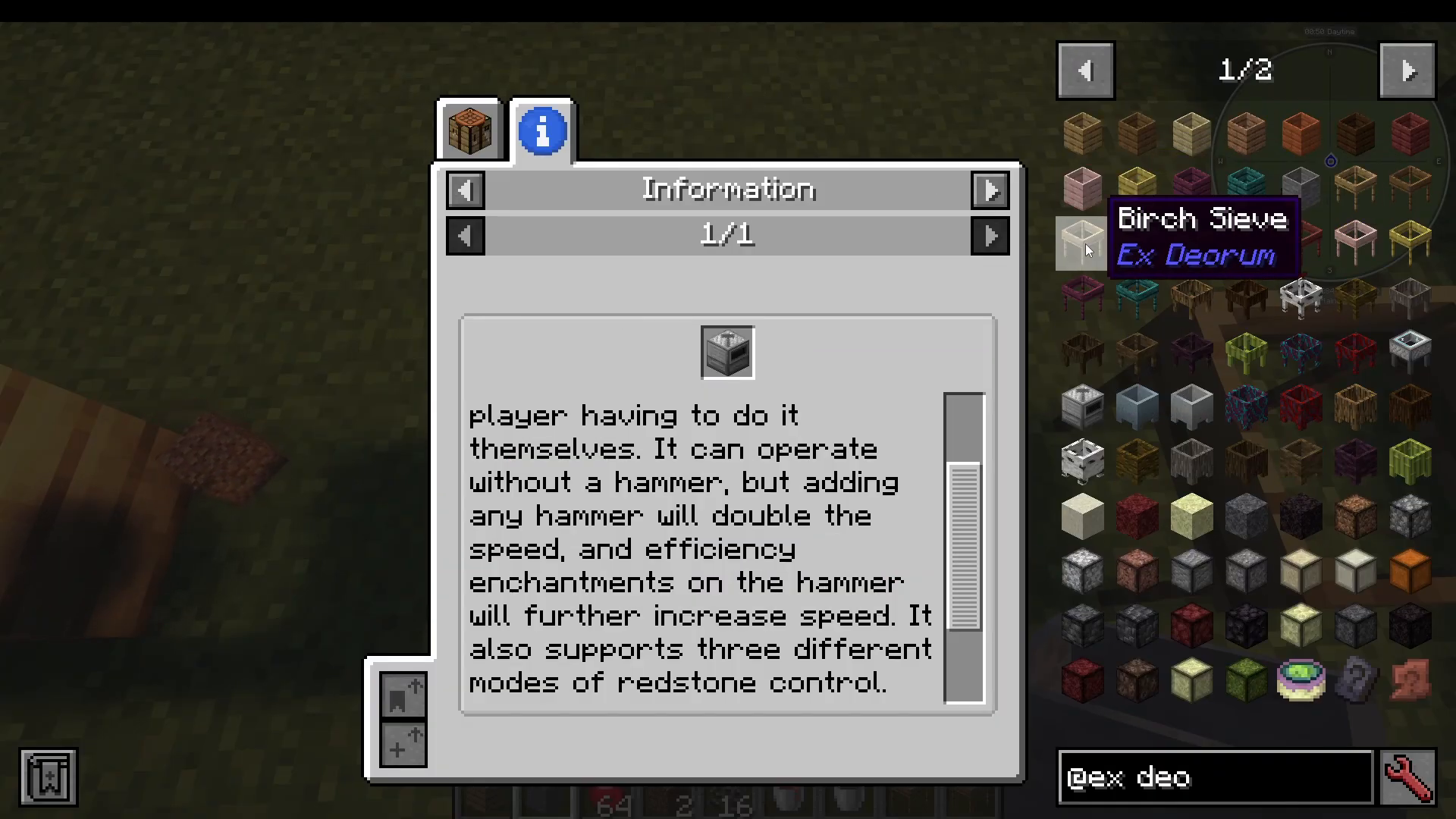
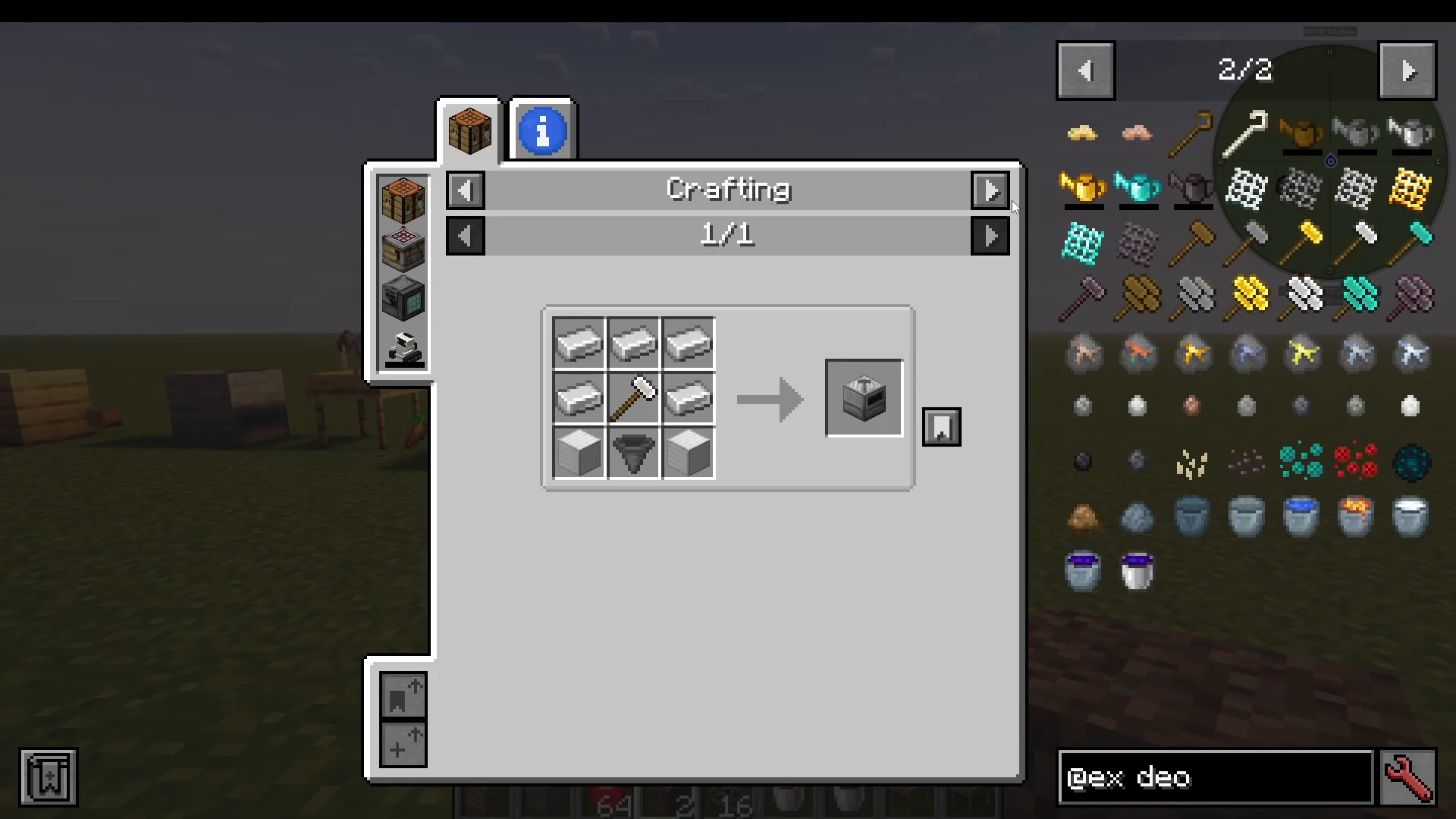
Hammers are used to break down blocks into smaller materials. For example, right-clicking a block of Compressed Diorite with a hammer will convert it into Gravel. Hammers come in different material tiers (including a Compressed Diamond Hammer, which requires 9 standard hammers to craft). There is also a Mechanical Hammer, but this requires Forge Energy (FE) from another mod — Ex Deorum itself does not provide a power source.
Pebbles
Through sieving you will occasionally find Pebbles, such as Stone Pebbles or Diorite Pebbles. Collecting four pebbles of the same type allows you to craft one full block of that material — for example, four Diorite Pebbles craft into one block of Diorite. Grasses and other small finds also come from sieving and follow the same logic.
Silkworms
Obtaining Silkworms
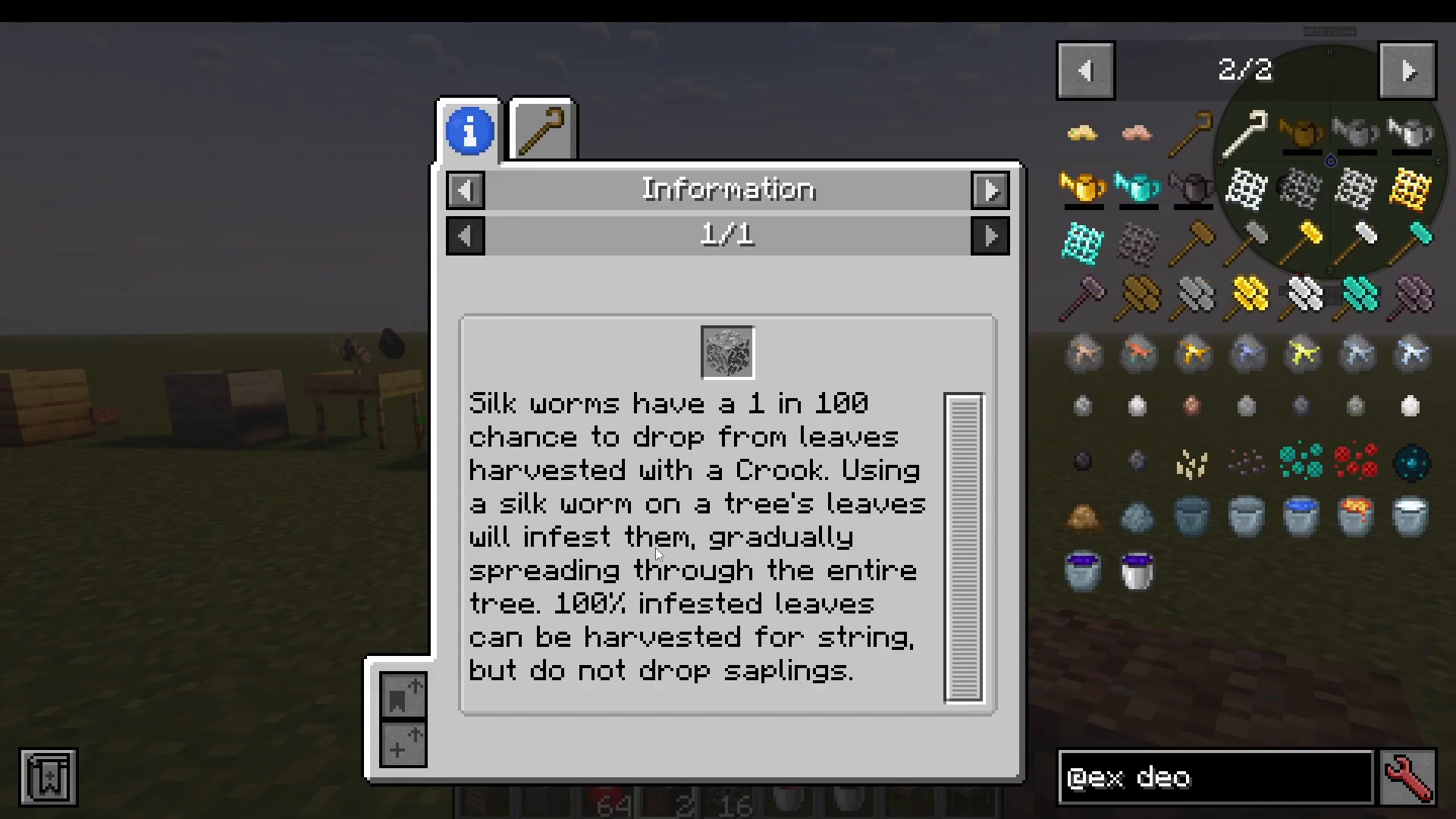
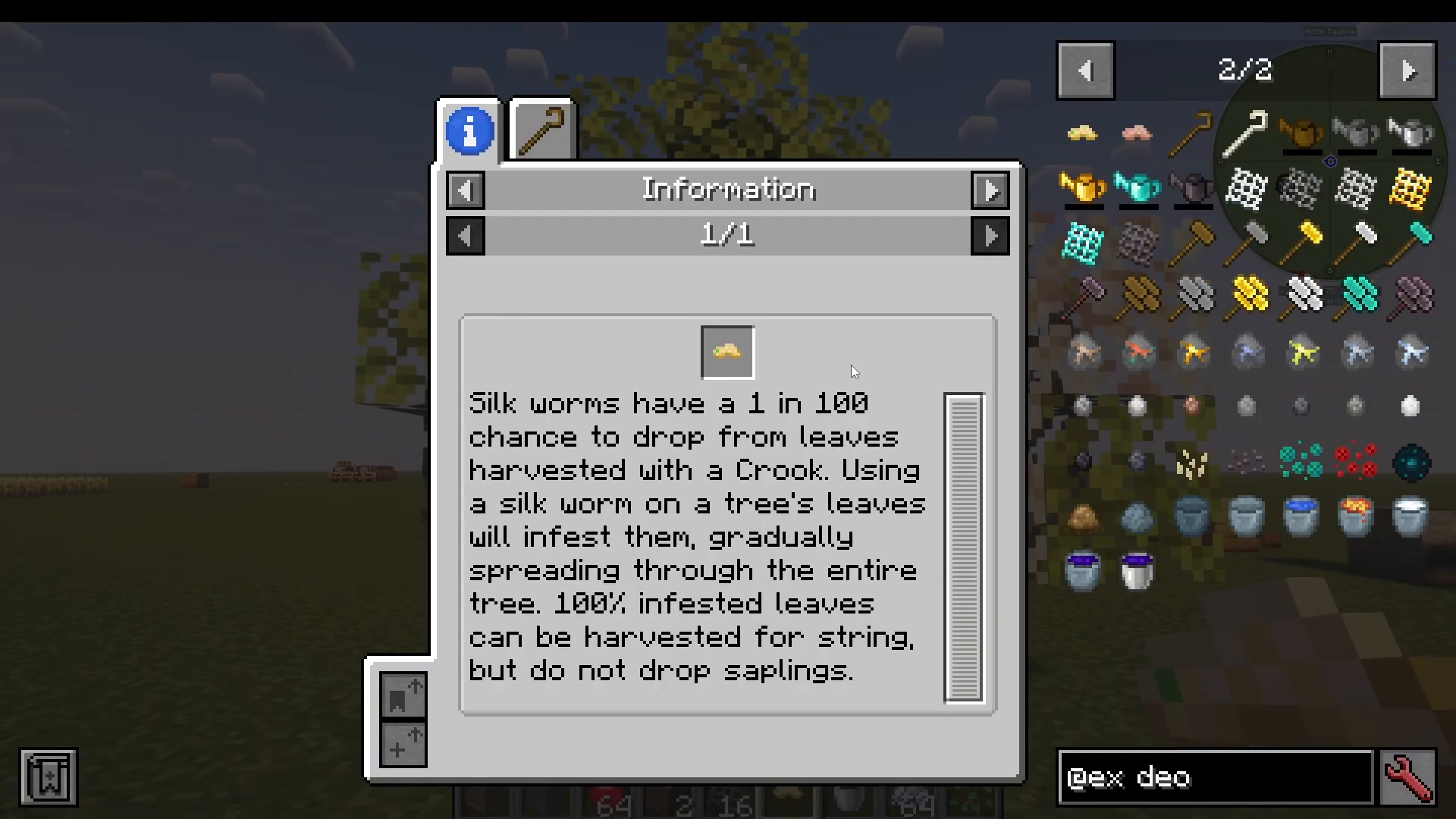
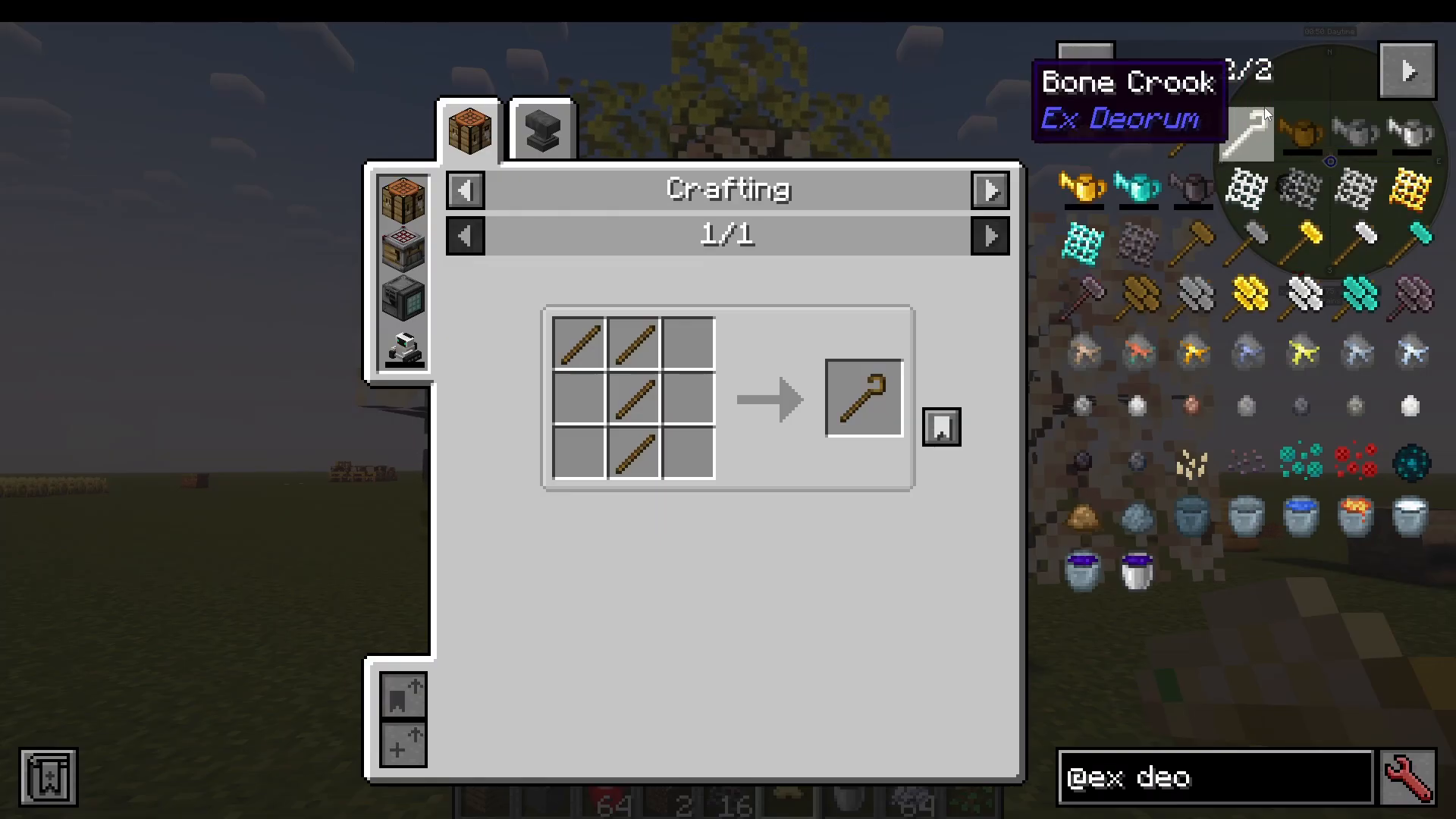
Silkworms have a 1-in-100 chance to drop from leaves when harvested using a Crook. Ex Deorum provides both a standard Crook and a Bone Crook, which you can craft. As a bonus, you can also cook and eat a Silkworm if needed.
Infesting Trees with Silkworms
Right-clicking a leaf block while holding a Silkworm will begin infesting that leaf. A progress indicator will appear, and once the leaf is fully infested (progress reaches 100%), the infestation spreads passively to adjacent leaves. Over time, the Silkworm will take over the entire tree.
Harvesting Infested Leaves
Infested leaves can be harvested to obtain String. Be aware that infested leaves do not drop Saplings, so never use a Silkworm on the only tree you have — always keep at least one uninfested sapling in reserve.
Watering Cans
Ex Deorum adds Watering Cans in multiple durability tiers. Use them to accelerate the growth of saplings and crops, making them a handy utility tool throughout your Skyblock progression.
Summary
The Ex Deorum mod is small in scope but enormous in impact for any Skyblock or TerraFirmaCraft modpack. Mastering its core systems — barrel composting and fluid mixing, tiered sieves and meshes, hammers, silkworms, and porcelain early-game tools — will give you a reliable path to resources even when you start with nothing. Combine multi-sieve arrays with compressed blocks and high-tier meshes to maximize efficiency, and always keep a spare sapling before deploying your first Silkworm.
“`