




The Ultimate Guide to Botania
The Ultimate Guide to Botania
Welcome to the ultimate guide to Botania! This comprehensive tutorial will take you step by step through absolutely everything—from world generation to the most advanced items possible. Whether you’re a complete beginner or looking to master the endgame content, this guide covers all the essential knowledge you need to succeed in Botania.
Getting Started with Botania
Essential Starting Items
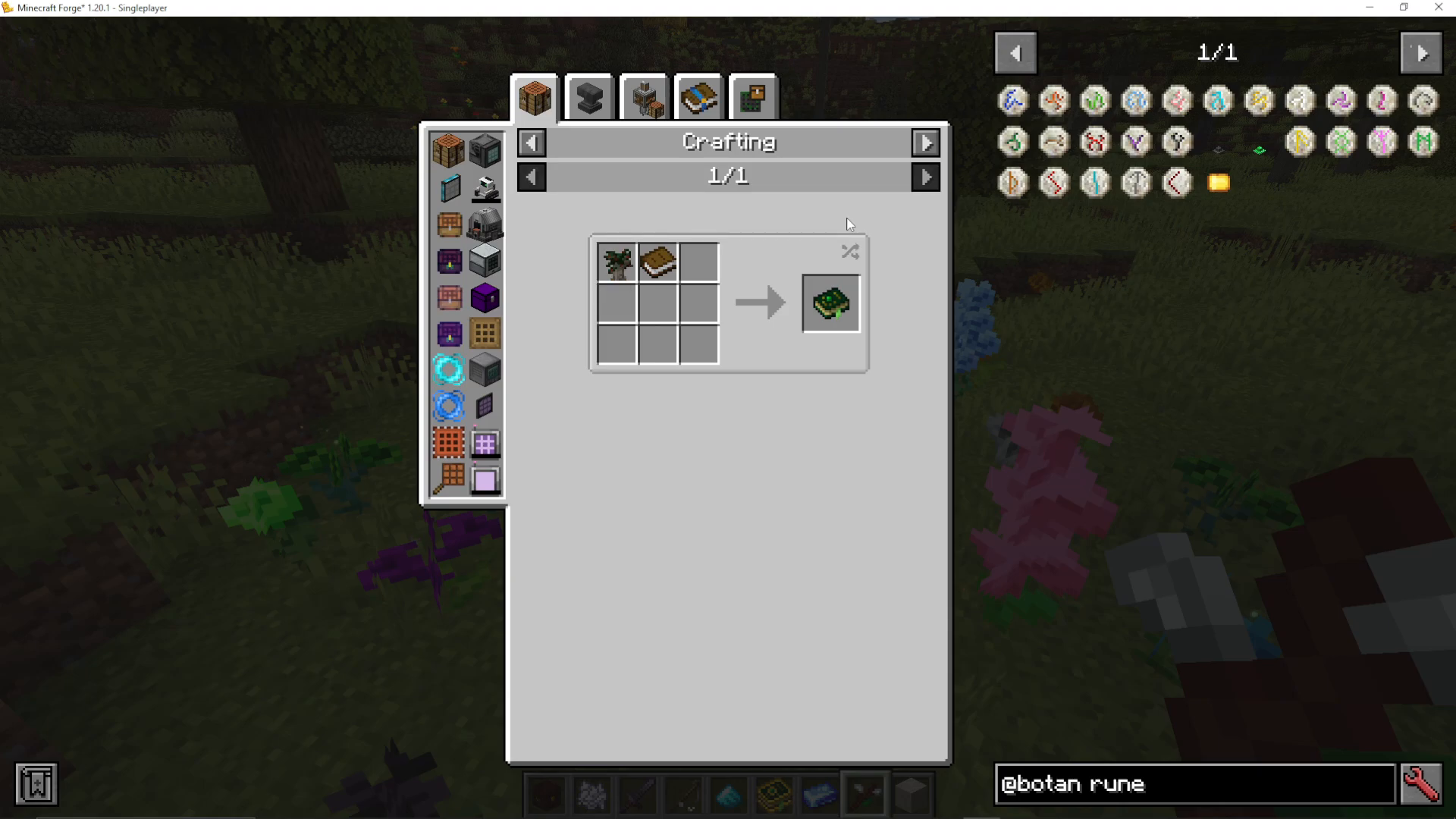
The first things you’ll need in Botania are flowers and a guide book. The guide book is called the Lexica Botania, and it’s your primary reference for the mod. To craft it, combine a book and a sapling at a crafting table. When you hold your mouse over any Botania item and press Control, you can jump directly to that item’s page in the Lexica Botania—making it incredibly useful for lookups.
Finding and Harvesting Flowers
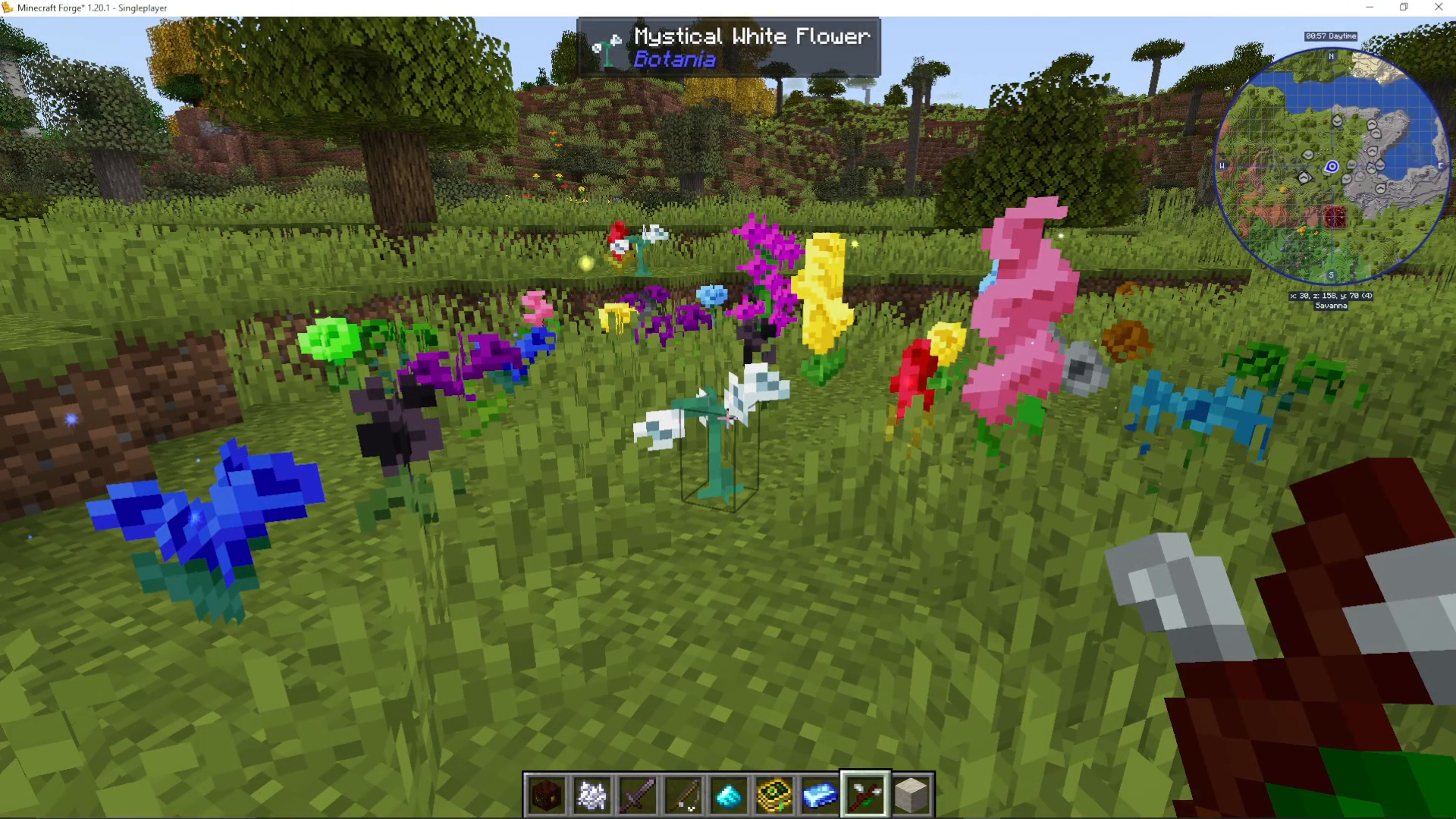
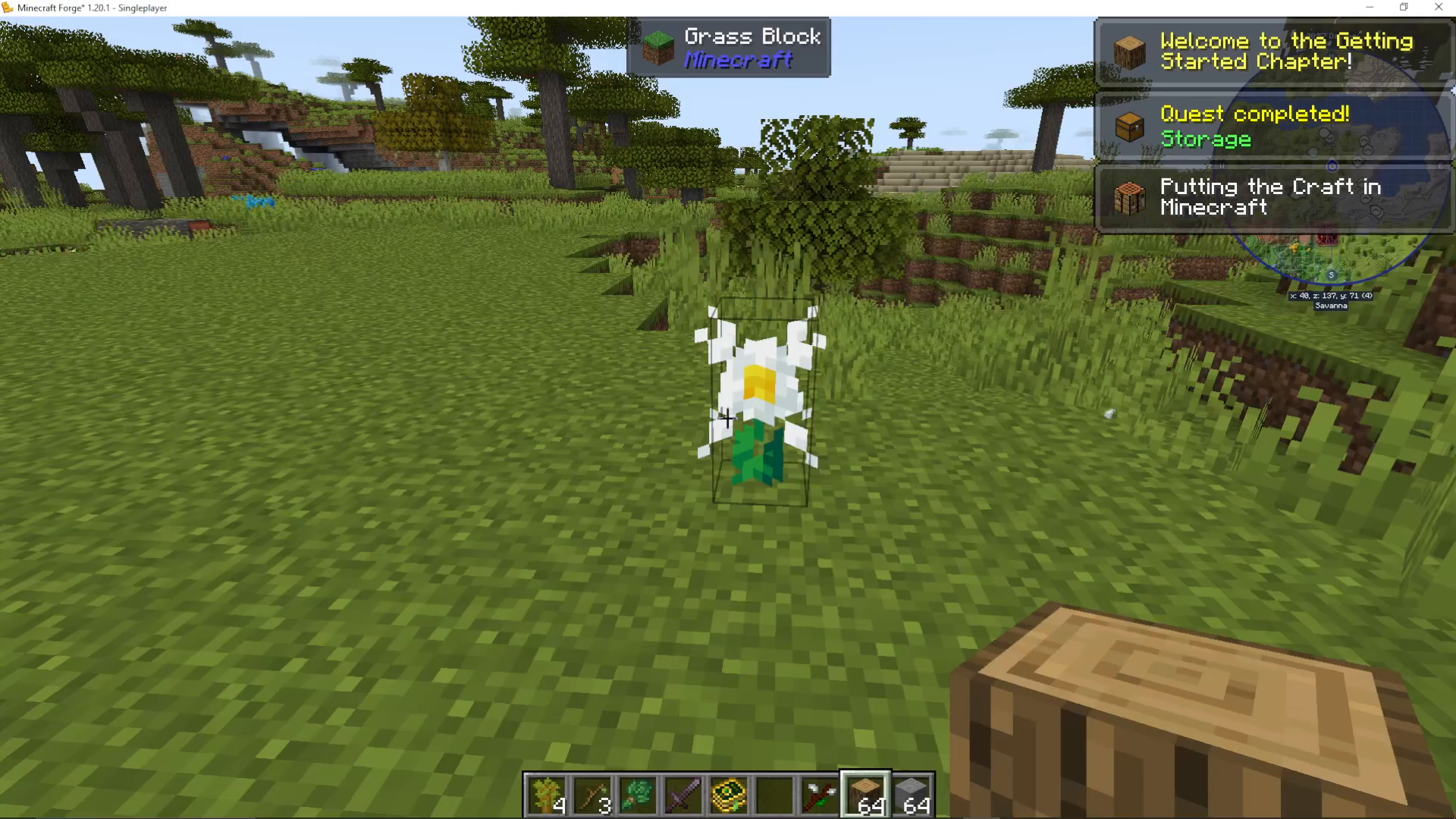
Out in the world, you’ll find Botania flowers scattered around. You can identify them by their characteristic sparkles. They come in every color and appear both above and below ground (as mushroom variants). Breaking a single flower gives you two petals, while breaking a tall flower yields four petals.
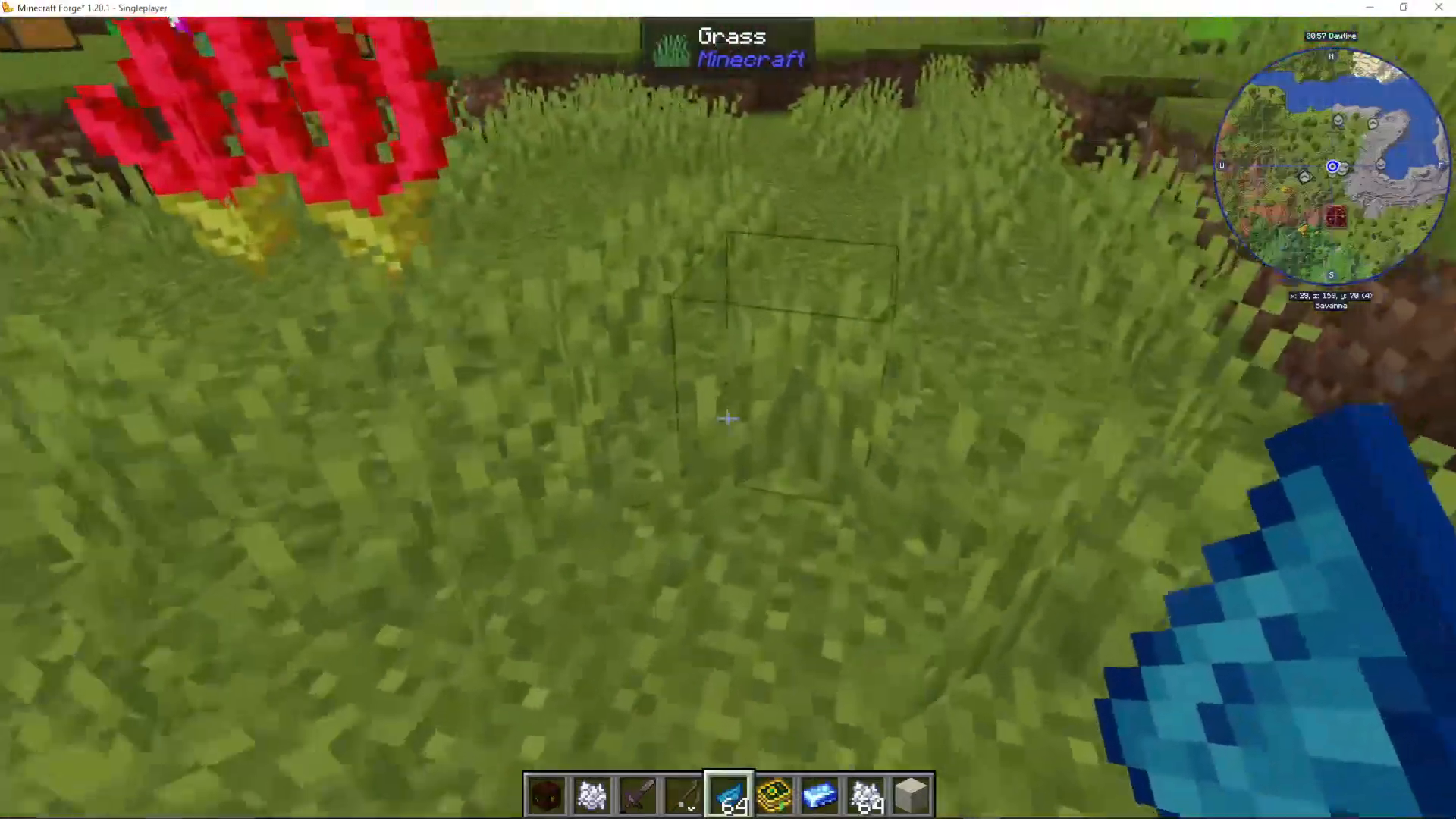
To obtain tall flowers, you can either find them in the wild or grow them yourself. Plant petals on the ground by right-clicking them, then use bone meal to create tall flowers. This allows you to generate unlimited amounts of any color petals you need.
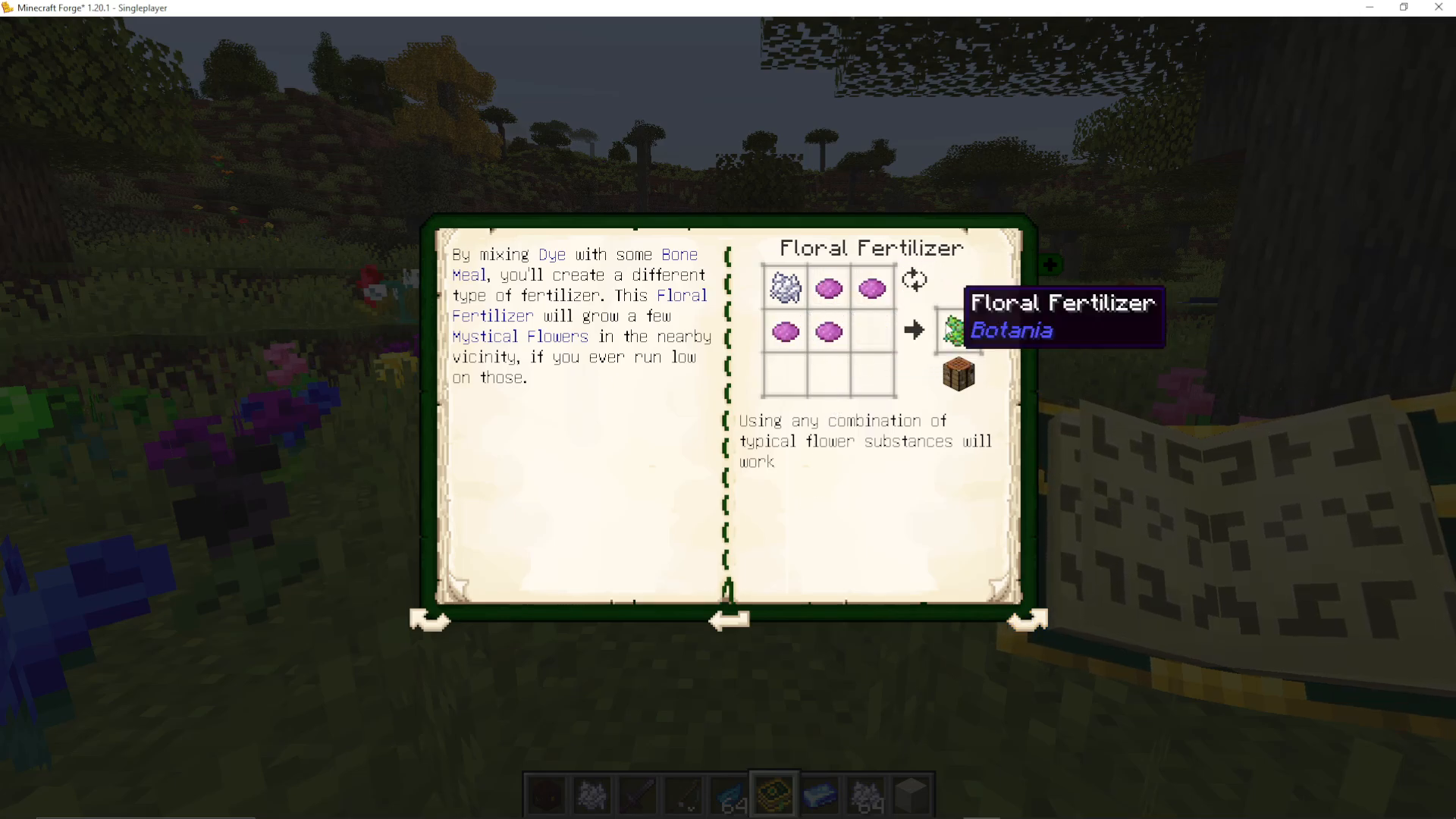
You can also convert petals into dyes by placing one petal into a crafting table. Additionally, you can create floral fertilizer by combining bonemeal and dye, which when used on the ground will generate more petalier flowers—a great way to farm large quantities.
The Petal Apothecary
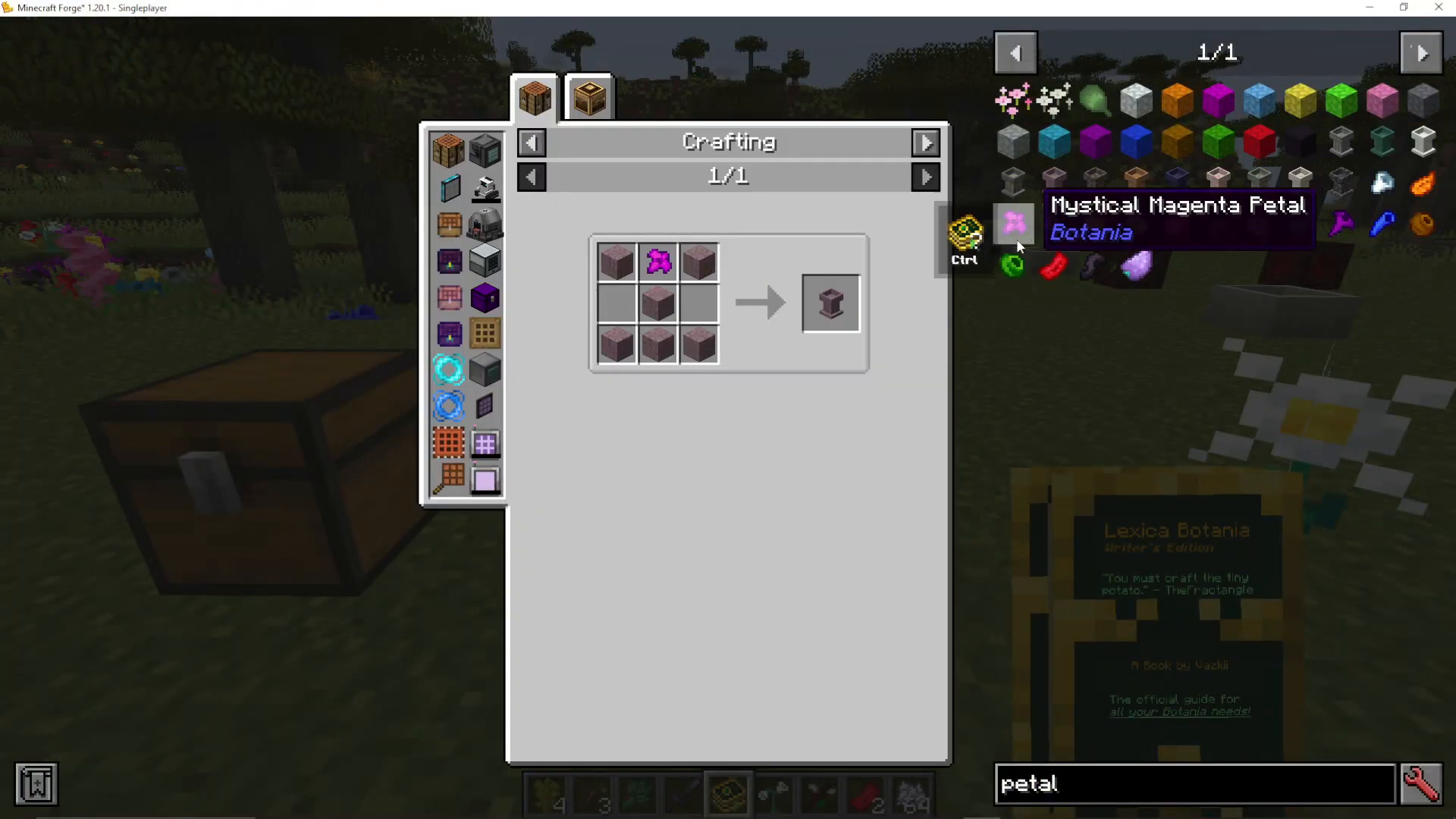
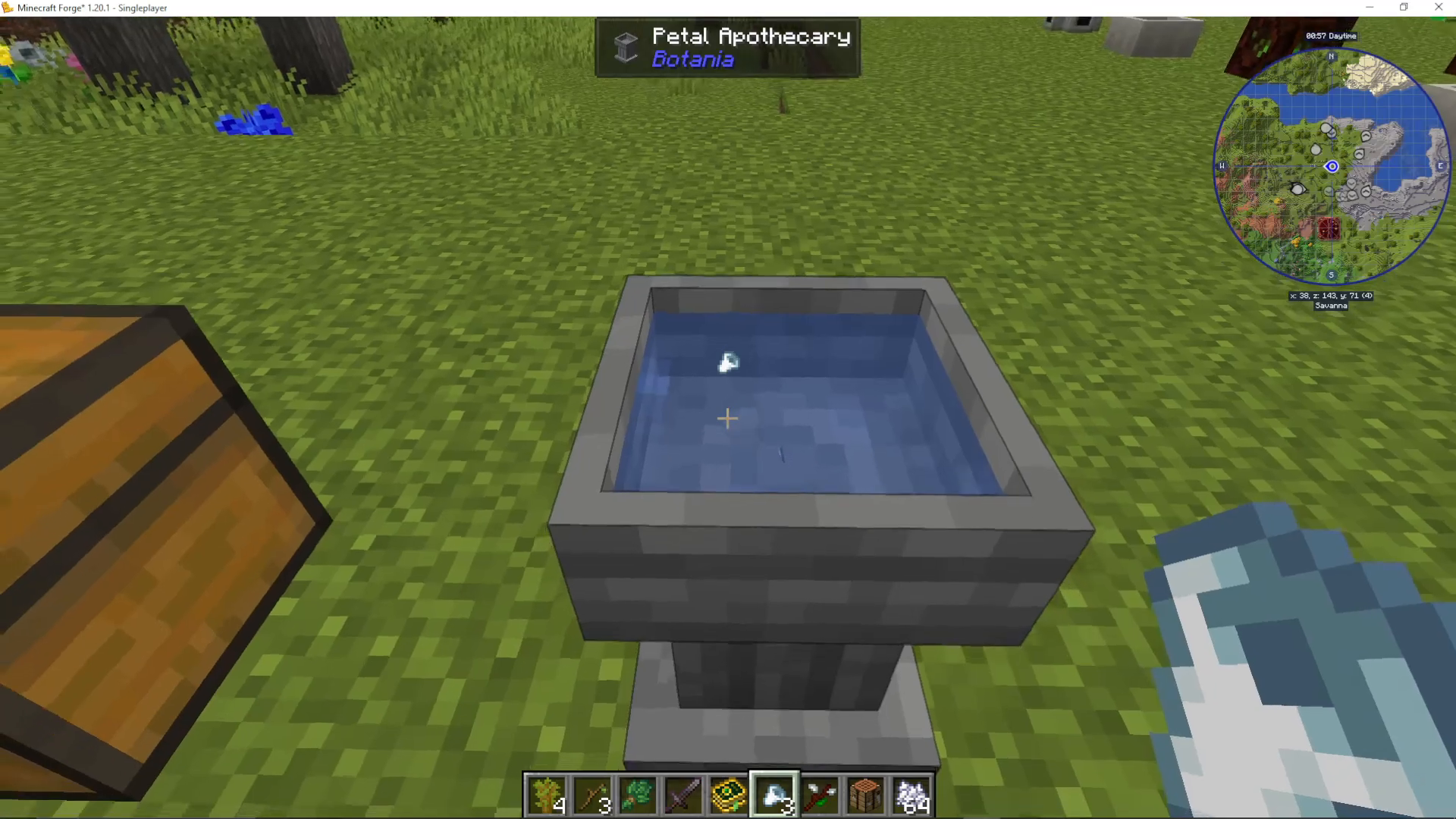
The Petal Apothecary is one of your first crafting stations. The basic version uses cobblestone arranged in a specific pattern with a flower or petal in the center. You can also make fuchsite or other stone variants depending on what block you use. Place your Petal Apothecary in the world and fill it with a bucket of water.
Important note: Your Petal Apothecary will run out of water after several uses and will need refilling.
Crafting Your First Flower: The Pure Daisy
To craft a Pure Daisy, throw four white petals into your Petal Apothecary. You’ll see a checkmark appear on screen indicating a valid recipe. Then throw in any seed as a catalyst, and the water will disappear (you’ll need to refill it). You’ll receive a Pure Daisy, which you can hover over in your inventory and press Control to view in the Lexica Botania.
Using the Pure Daisy
Plant your Pure Daisy and place logs and stone around it in an 8-block radius. Within about 30 seconds to a minute, the logs will transform into living wood and the stone will transform into living stone. You can mine these with a pickaxe (use an axe for the living wood). Setting up multiple Pure Daisies allows you to farm these materials efficiently without significant automation.
Mana Generation and Management
Creating a Mana Pool
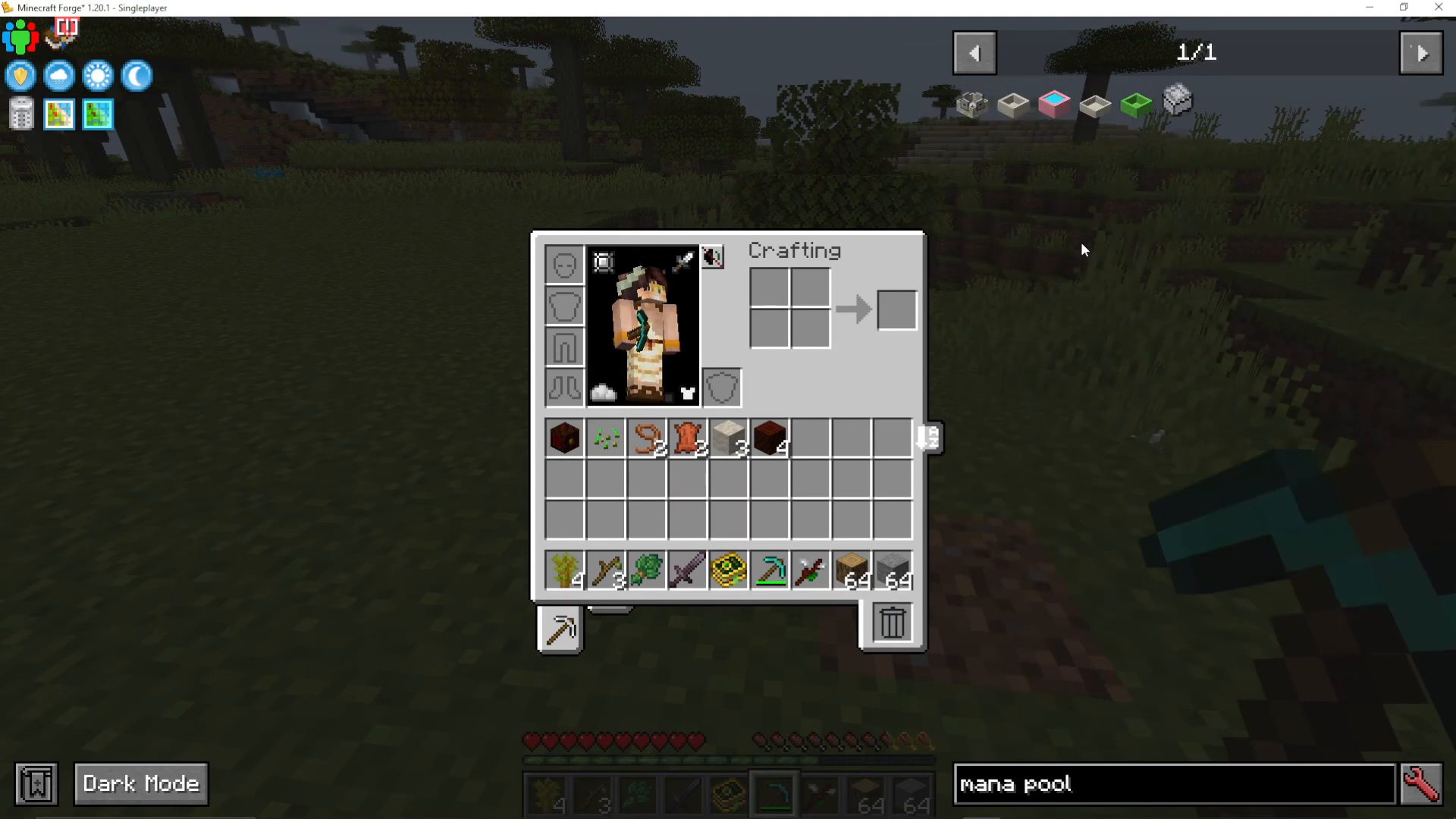
Using your living rock, you can craft a Mana Pool—the central resource storage for Botania. There are several types: the basic Mana Pool, the Diluted Mana Pool (made with living rock slabs), the Fabulous Mana Pool (enhanced with Shimmer Rock or Bifrost Blocks), and the creative-only Everlasting Guilty Pool. For most purposes, the basic Mana Pool is sufficient.
The Wand of the Forest
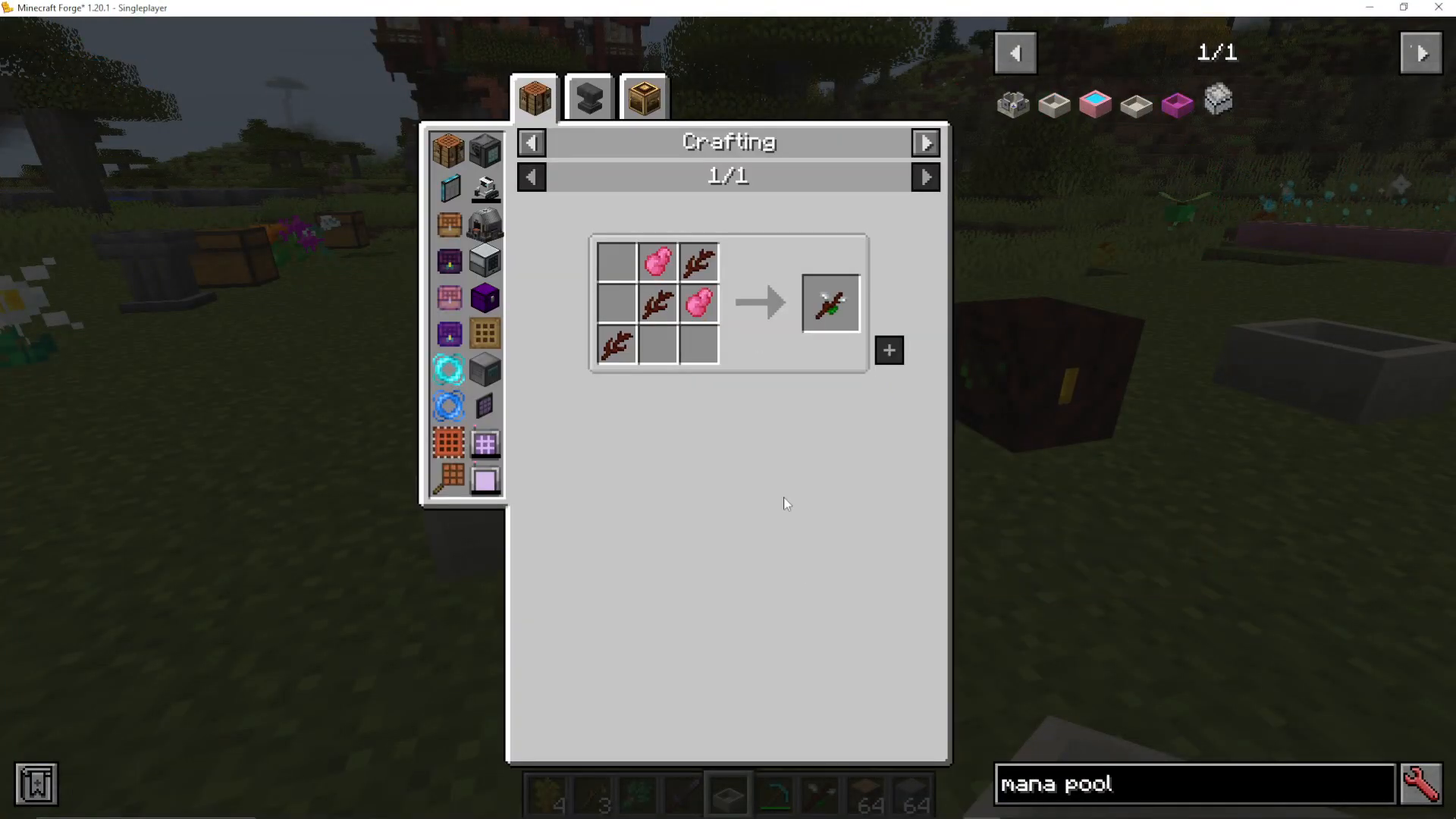
The Wand of the Forest is one of your most important tools. Craft it using three living wood twigs and two petals (any color) arranged on either side of the twigs. The wand has two modes: Bind Mode and Function Mode. Shift right-click to switch between them. In Bind Mode, you can link devices together with the wand to direct mana flow.
Mana Spreaders
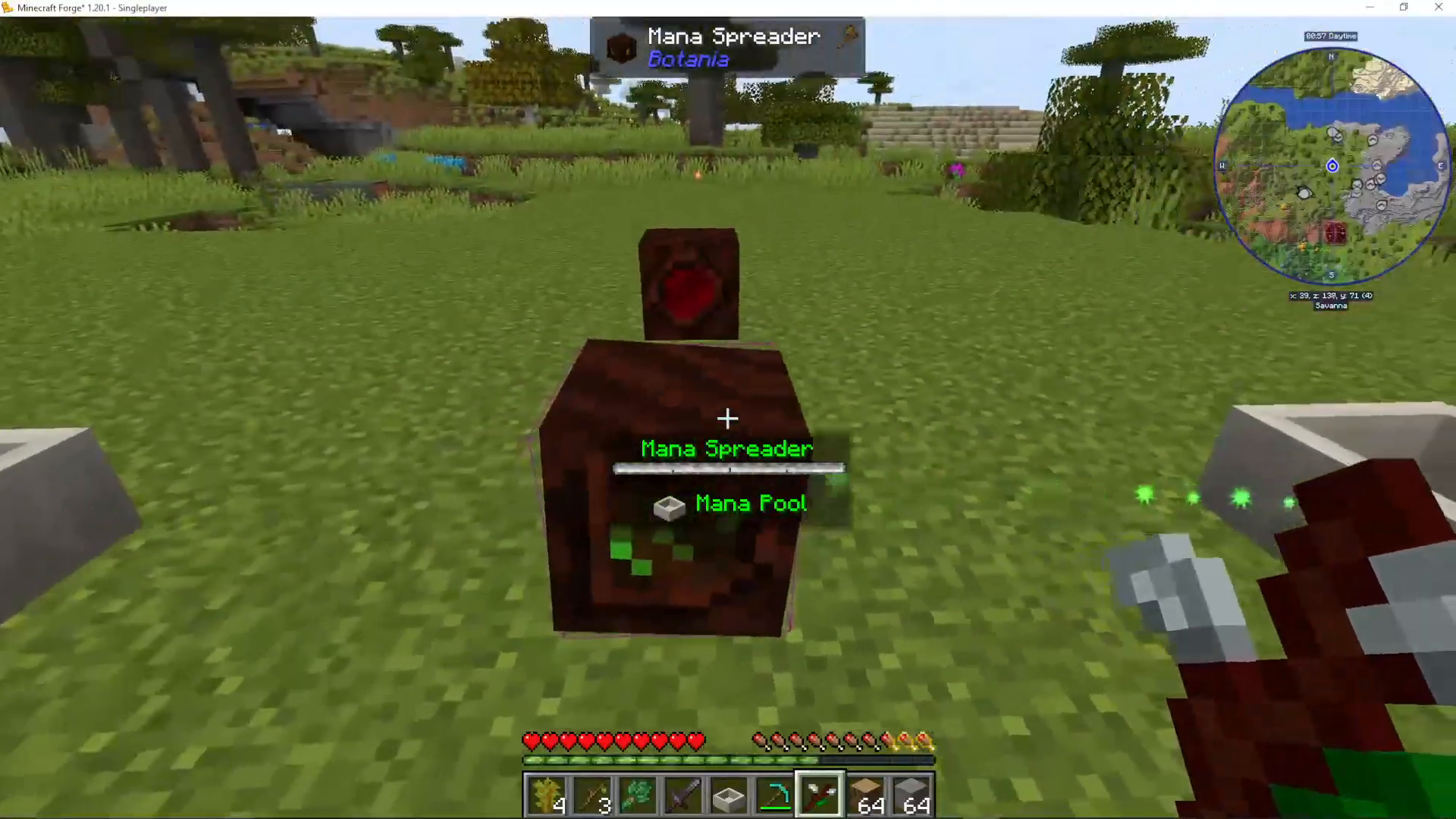
Mana Spreaders are devices that transfer mana between pools and other devices. They’re crafted from living wood, a petal, and a copper ingot. Using your Wand of the Forest in Bind Mode, shift right-click on a Mana Spreader and then on a Mana Pool to create a connection. You’ll see a beam of light indicating the link. There’s also a Pulse Mana Spreader, which requires redstone to function and works with redstone signals.
Mana Generation: Entry-Level Flowers
The Endoflame
The Endoflame is an entry-level mana-generating flower that burns items nearby to produce mana. To craft it, place two brown petals, one light gray petal, and one red petal in your Petal Apothecary with a seed catalyst. The Endoflame consumes fuel items (like coal) and converts them into mana that nearby Mana Spreaders will automatically absorb.
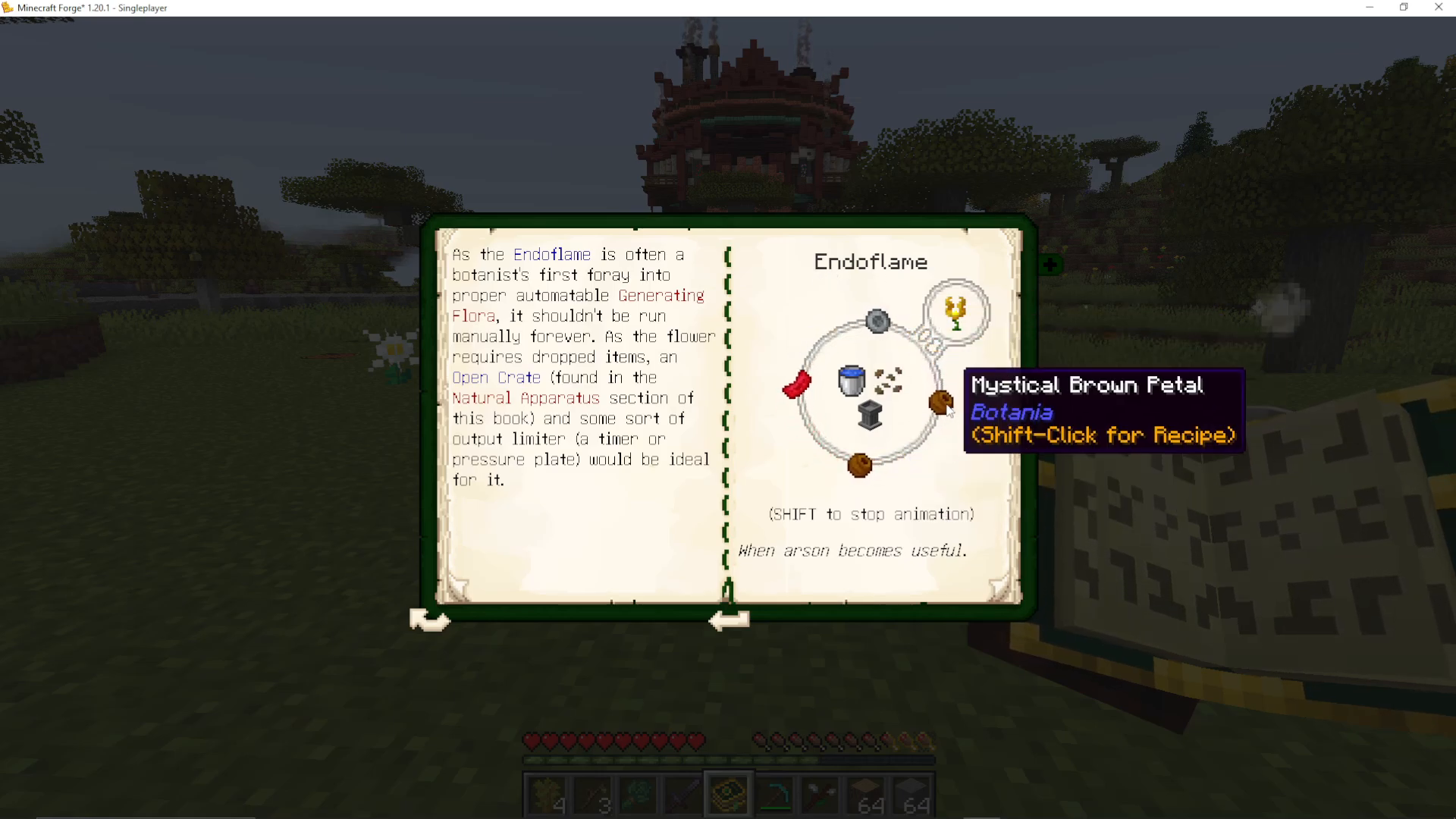
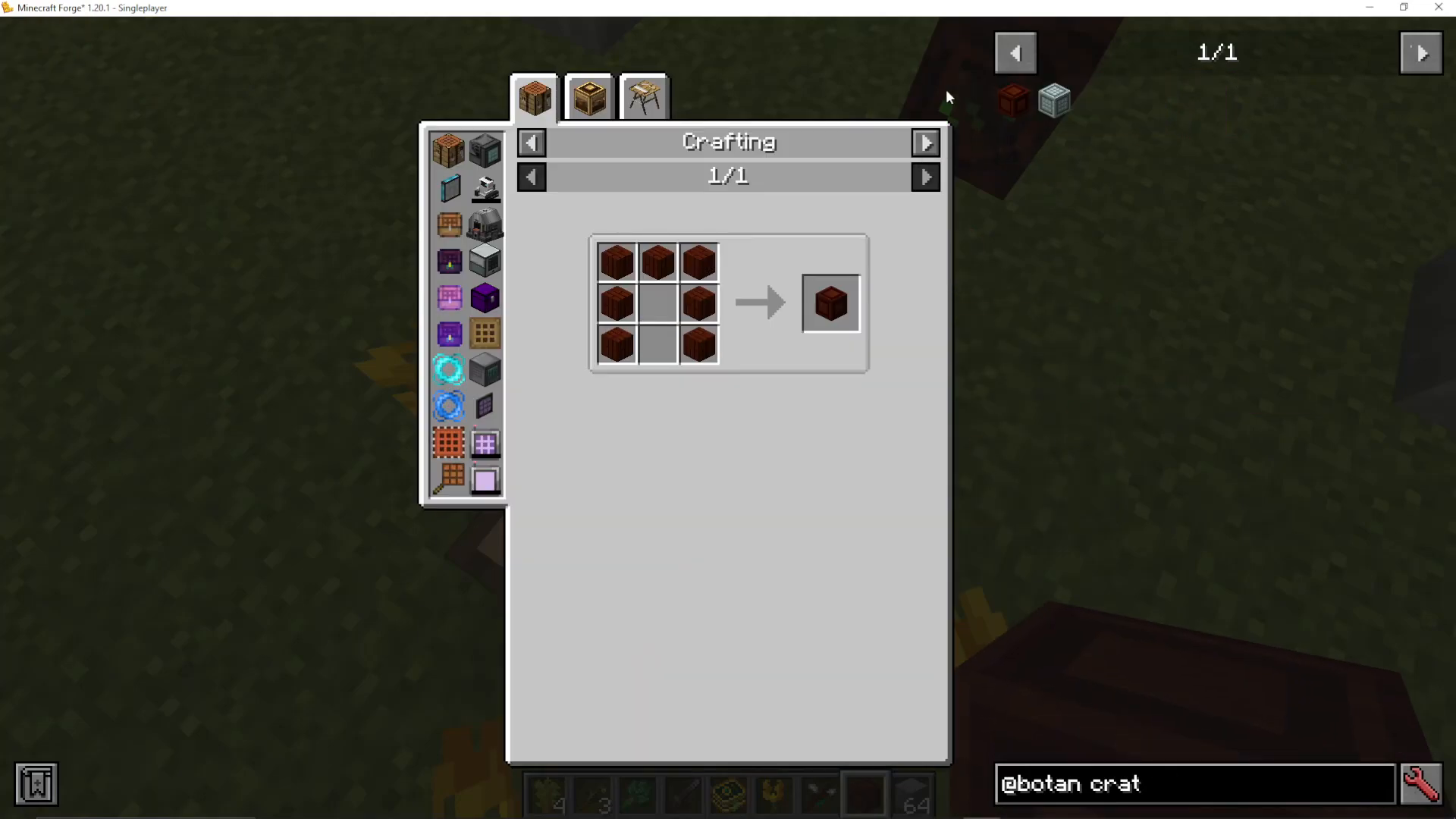
To automate this partially, use an open crate (made from living wood planks) above a hopper filled with coal. The open crate drops items directly below it, and the Endoflames will consume them. Consider adding redstone controls to prevent overflow.
The Hydroangeas
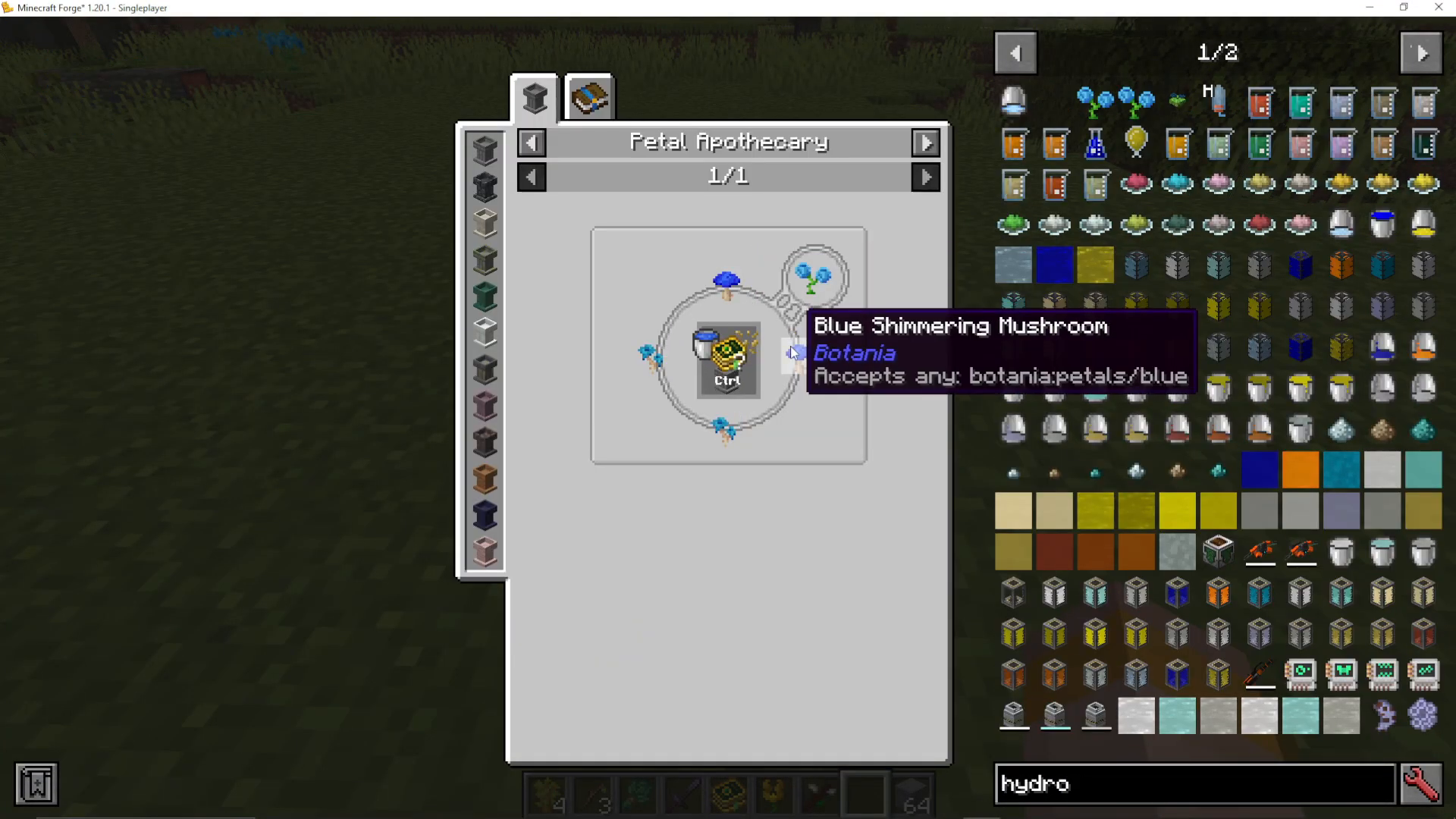
The Hydroangeas is another entry-level flower that generates mana from nearby water. Craft it using two blue petals and two cyan petals with a seed catalyst. Place it near water (a 3×3 area), and it will slowly generate mana. These flowers don’t last forever and may need replenishing occasionally.
Advanced Generating Flora
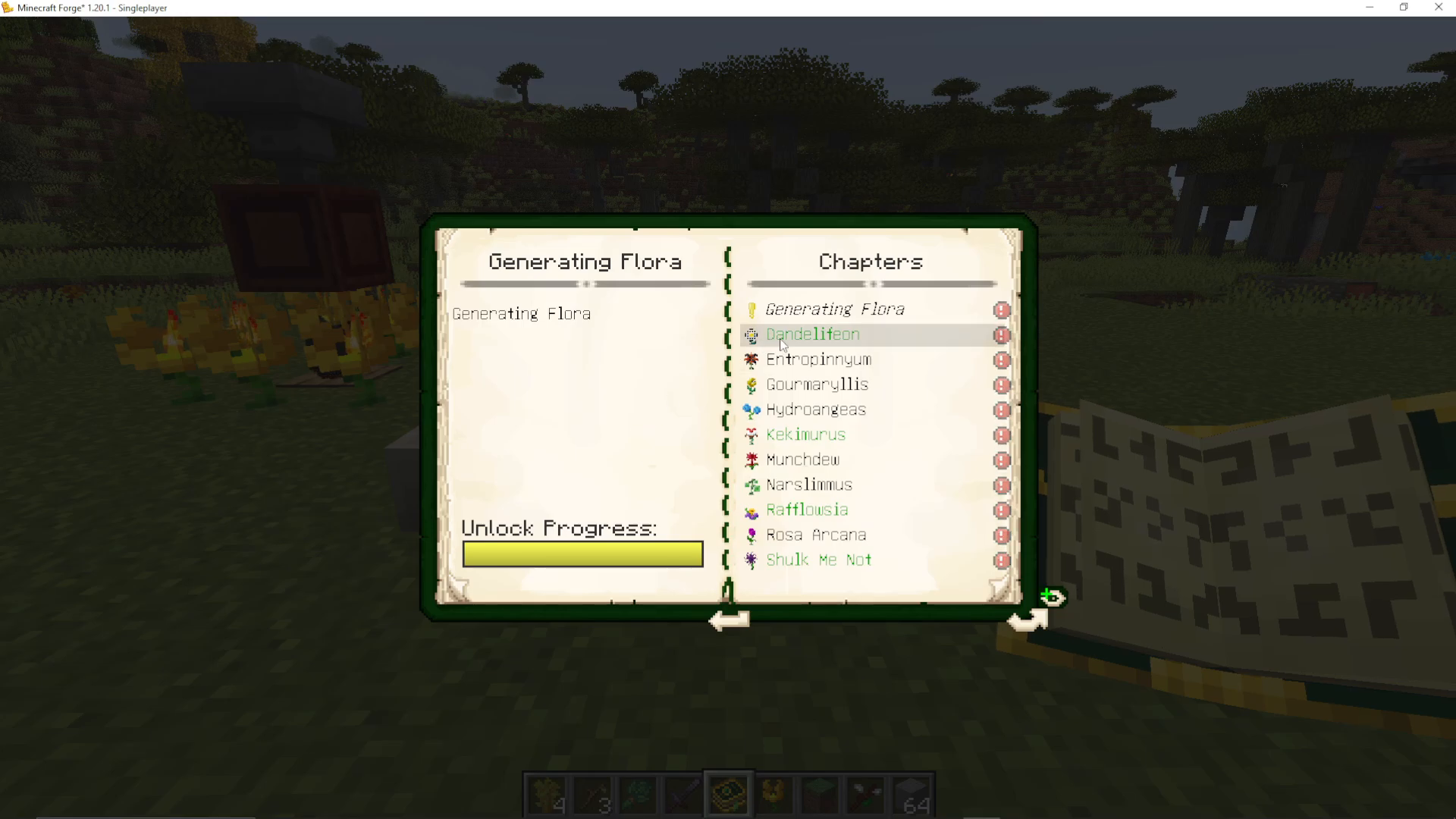
As you progress, you’ll unlock more specialized mana-generating flowers:
Entropinnyum: Generates mana from nearby TNT explosions
Gourmaryllis: Consumes food items nearby and converts them to mana
Kekimura: Eats nearby cake to produce mana
Munchdew: Eats nearby leaves and converts them to mana
Narslimmus: Uses slime to generate mana
Rafflesia: Consumes other Botania flowers in a Petal Apothecary for mana (expensive but high output)
Rosa Arcana: Absorbs player experience and nearby TNT, or synthesizes mana from experience orbs
Shulk Meenot: Generates mana from Shulker levitation powers
Spectrolus: Consumes different colors of wool
Thermalily: Generates mana from nearby lava
Mana Infusion and Basic Crafting
Mana Infusion Basics
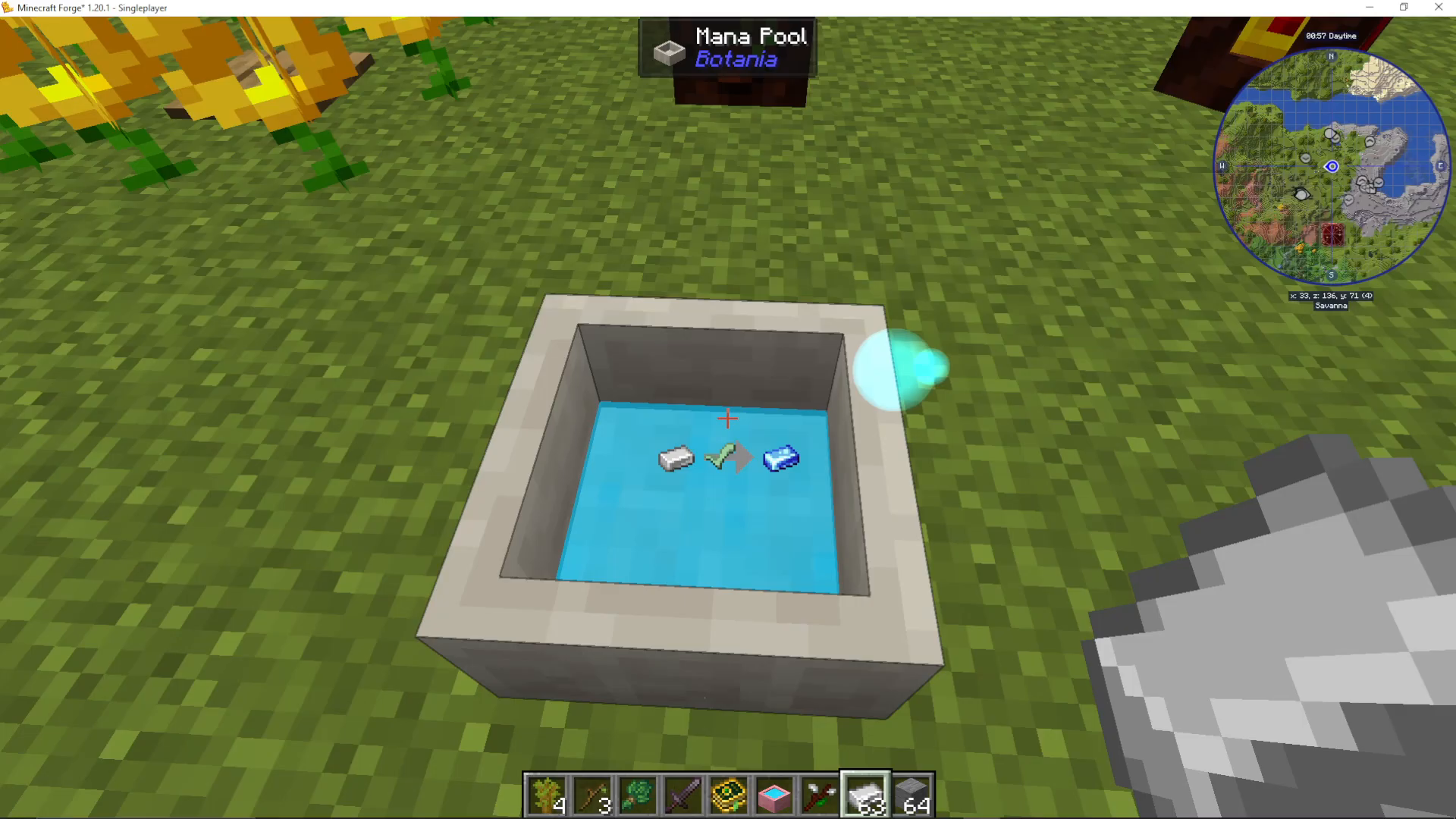
You can infuse certain items with mana from your Mana Pool. Simply throw items into the pool and watch them transform. Basic items you can infuse include:
Iron ingot → Mana Steel ingot
Diamond → Mana Diamond
Ender Pearl → Mana Pearl
Glass → Mana Glass
Nether Quartz → Mana Quartz
Sugar → Mana Powder
String → Mana Infused String
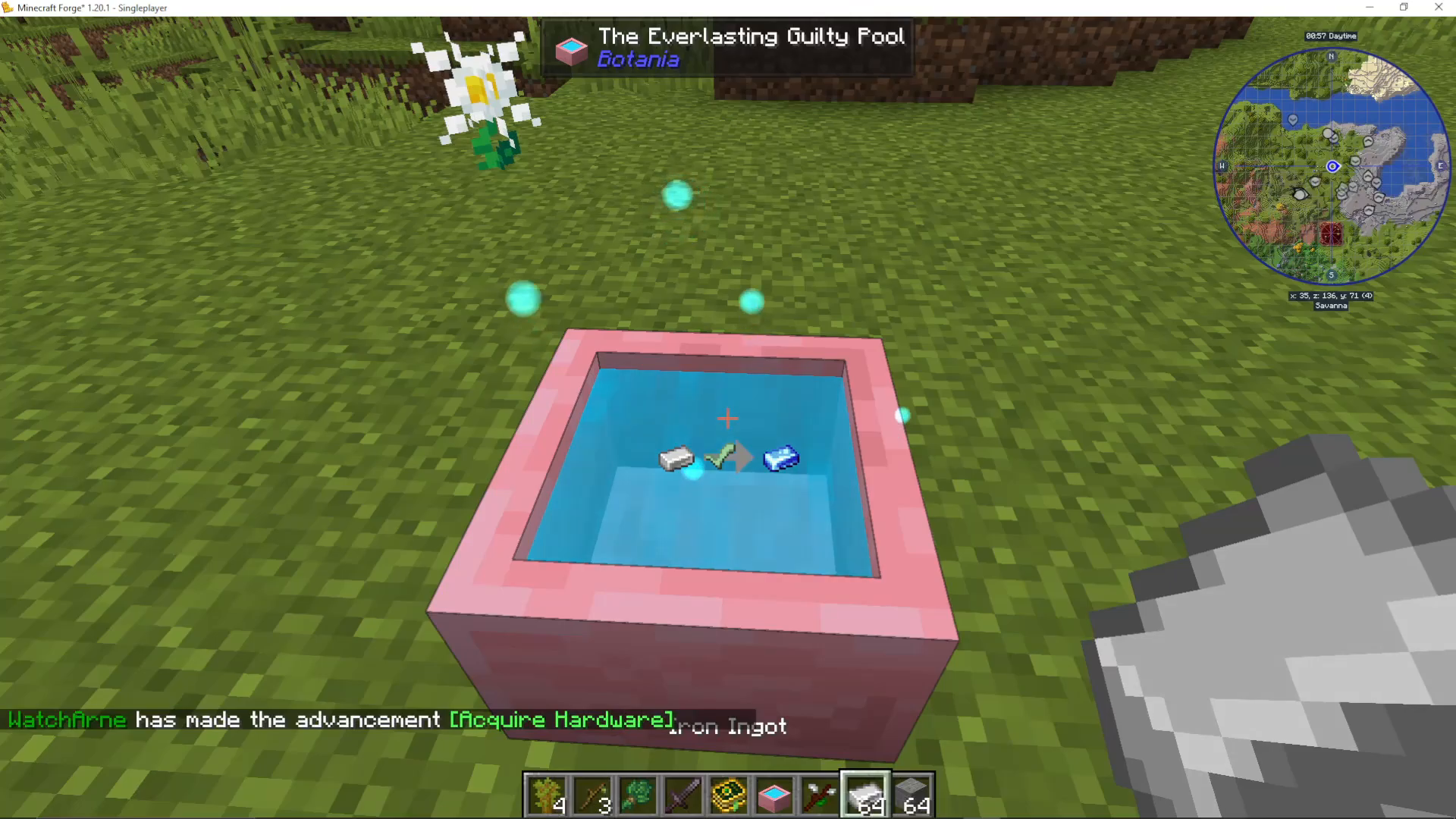
If you have JEI (Just Enough Items) or similar installed, hover over your Mana Pool and press U to see all available infusions.
The Alchemy Catalyst
Crafting an Alchemy Catalyst using a Mana Pearl, gold, and brig stats allows you to unlock additional infusions. Place it underneath your Mana Pool, and you’ll gain access to recipes marked with the alchemy catalyst logo—such as converting blaze rods to Nether warts or cobblestone to sand.
The Mana Tablet and Band of Mana
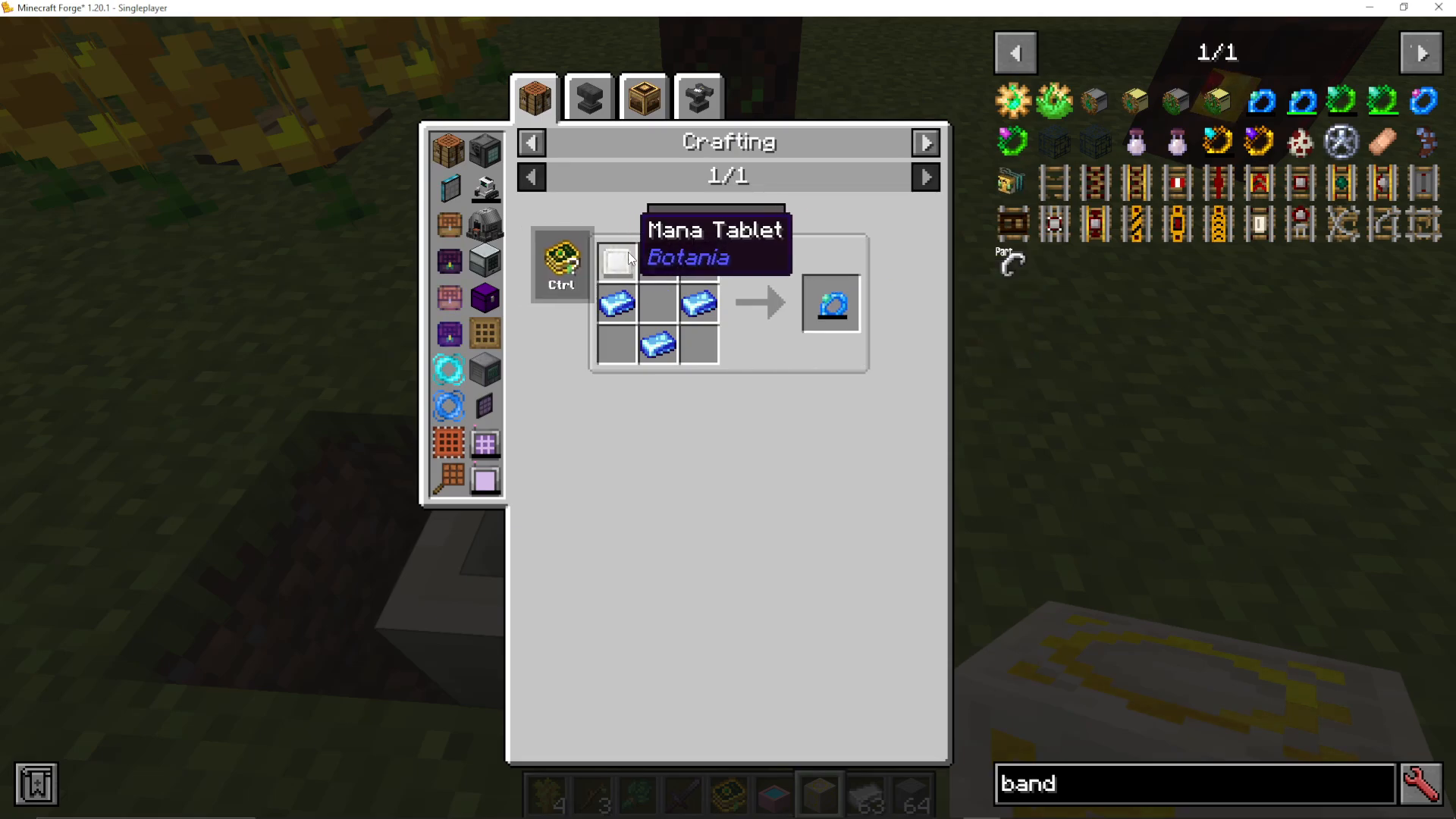
Craft a Mana Tablet using living rock, four Mana Steel ingots, and a Mana Pearl. This portable item stores mana and can be placed in your Mana Pool. Shift right-click the pool with a wand to toggle the direction of mana flow. You can also craft a Band of Mana ring using a Mana Tablet and four Mana Steel ingots for a wearable mana source.
Tools and Armor
Mana Steel Tools and Armor
Using Mana Steel ingots and living wood twigs, you can craft tools (pickaxe, shovel, axe, hoe, shears, and sword) and armor (helmet, chestplate, leggings, and boots). These tools have the mining level of iron but with better durability. They can be recharged using your Mana Tablet rather than repaired, saving resources.
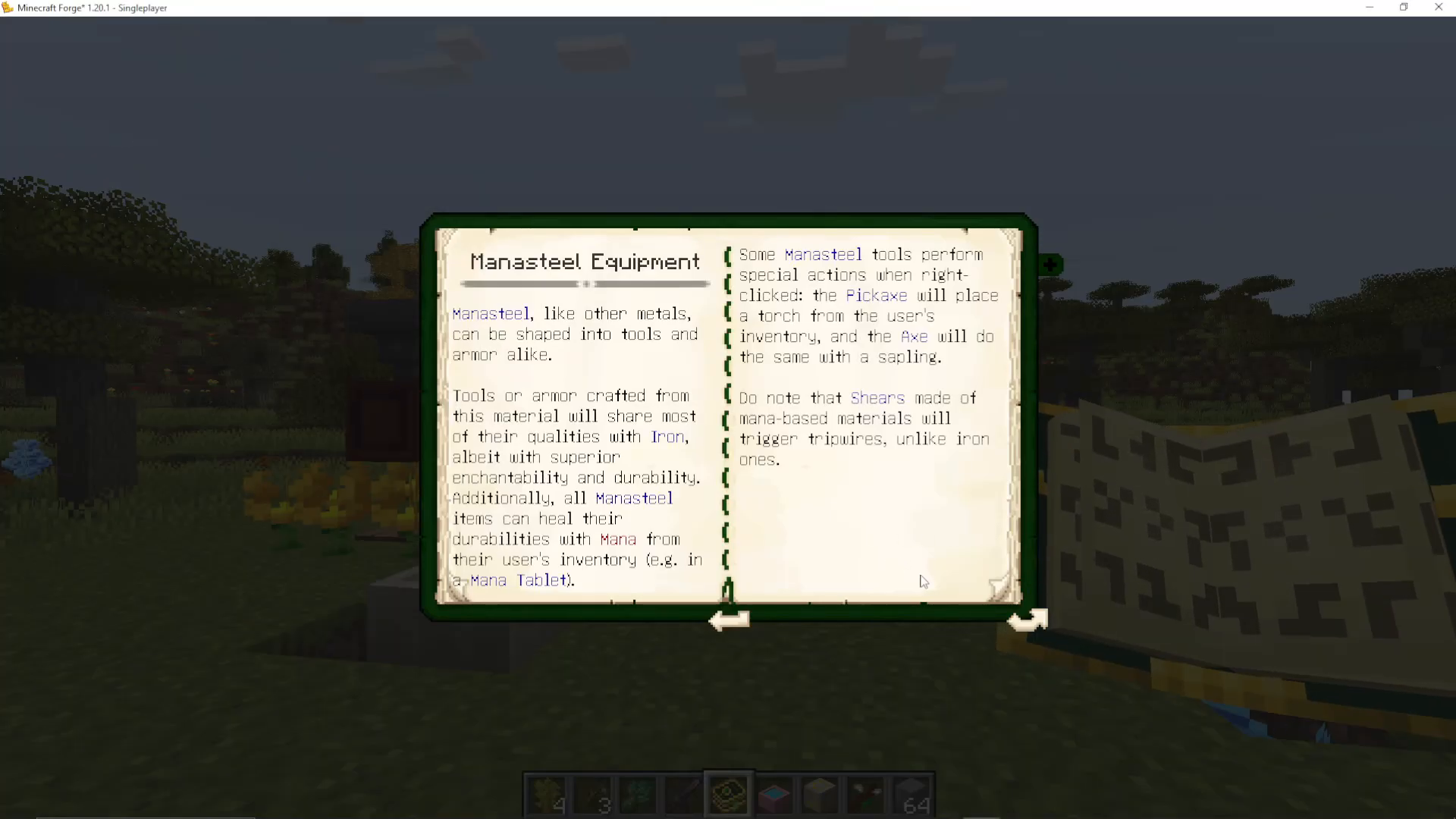
Special features include:
Pickaxe: Places torches from your inventory automatically
Axe: Plants saplings automatically
Shears: Trigger tripwires (unlike iron shears)
Sword: 1.6 attack speed with free reach and 6 damage
Living rock and living wood variants are available for early-game use with stone and wood mining levels respectively.
Mana Weave Equipment
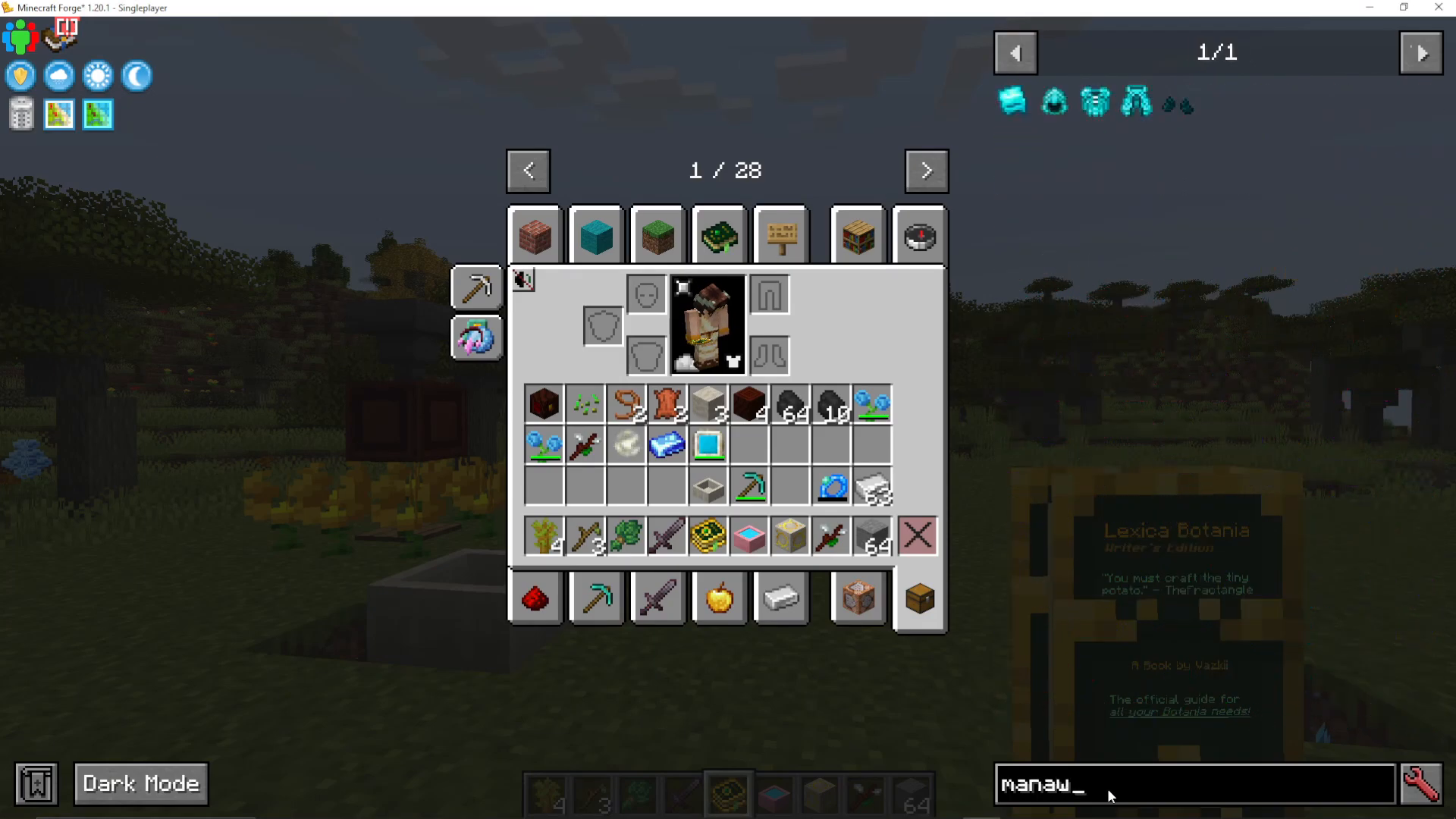
Mana Weave cloth is crafted from Mana Infused String. Wearing the full set (helmet, chestplate, leggings, boots) provides a discount on mana costs for tools and rods, and increases magical rod proficiency.
The Runic Altar
Crafting Runes
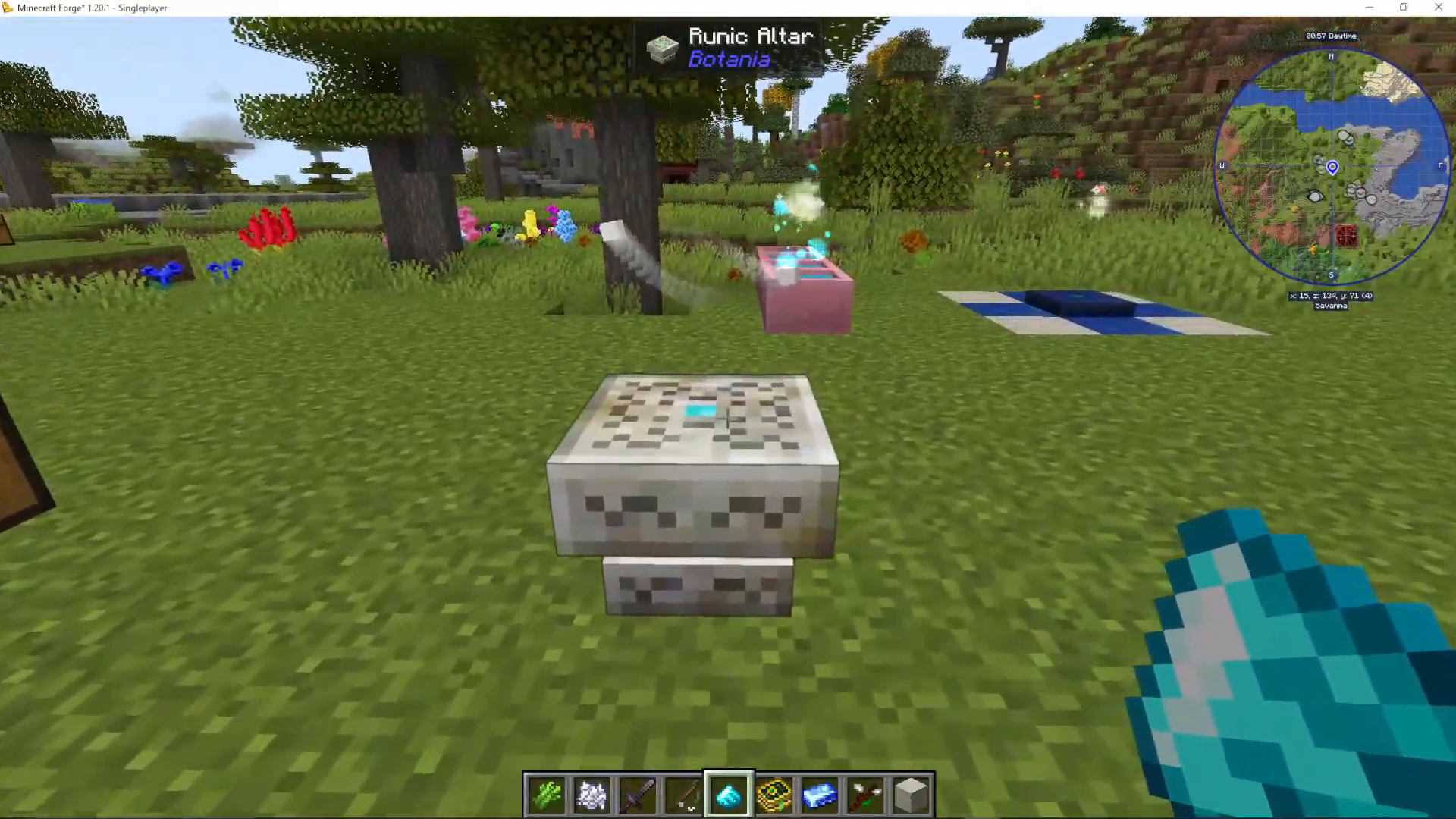
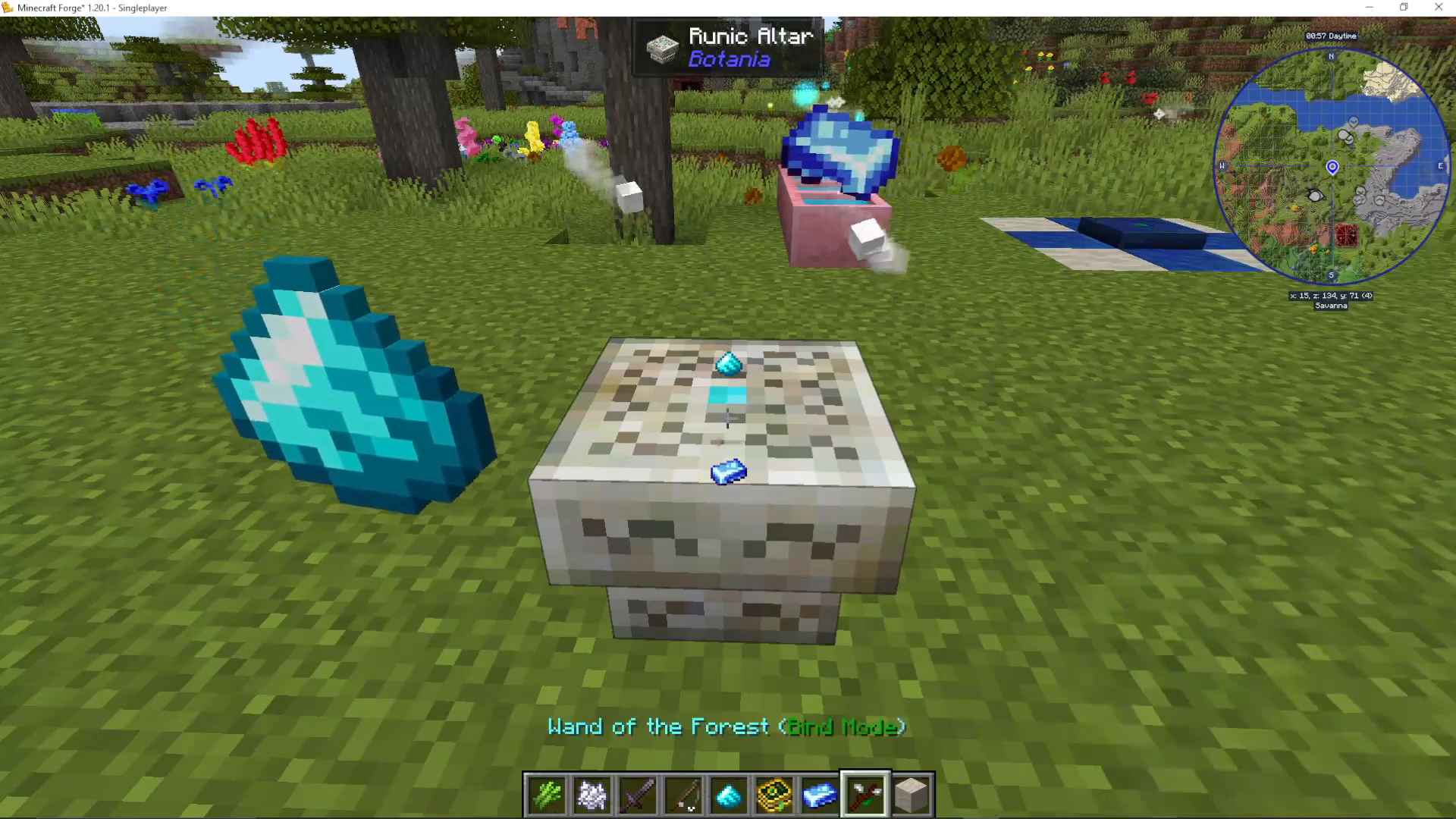
The Runic Altar is crafted using living rock and a Mana Pearl. It functions similarly to the Petal Apothecary but creates runes instead of flowers. Place items into the Runic Altar, and when it has enough mana (indicated by a clock icon on the right), right-click a living rock catalyst using your Wand of the Forest to complete the recipe.
Elemental Runes
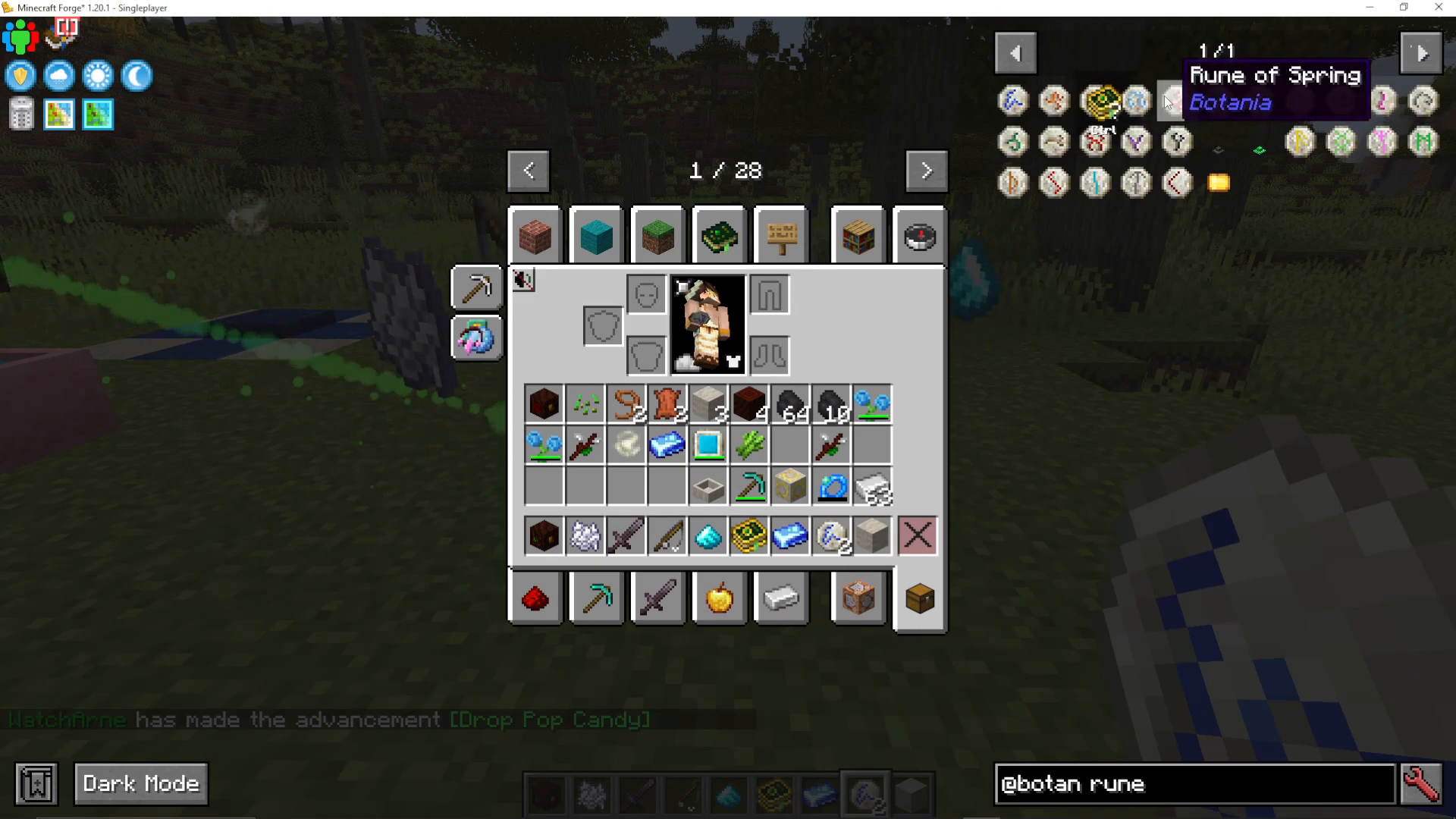
The basic elemental runes are Water, Fire, Earth, and Air. For example, to create two Water runes, you’ll need sugar cane, bone meal, Mana Steel ingot, Mana Powder, and a fishing rod. Place all items in the altar, provide mana via a Mana Spreader, and activate with the living rock catalyst.
Advanced Runes
Seasonal runes (Spring, Summer, Autumn, Winter) require elemental runes plus additional materials. However, using runes in recipes to create other runes won’t consume the runes themselves—only the other ingredients are used up, making progression more manageable.
Mana Spreader Upgrades with Lenses
What Are Lenses?
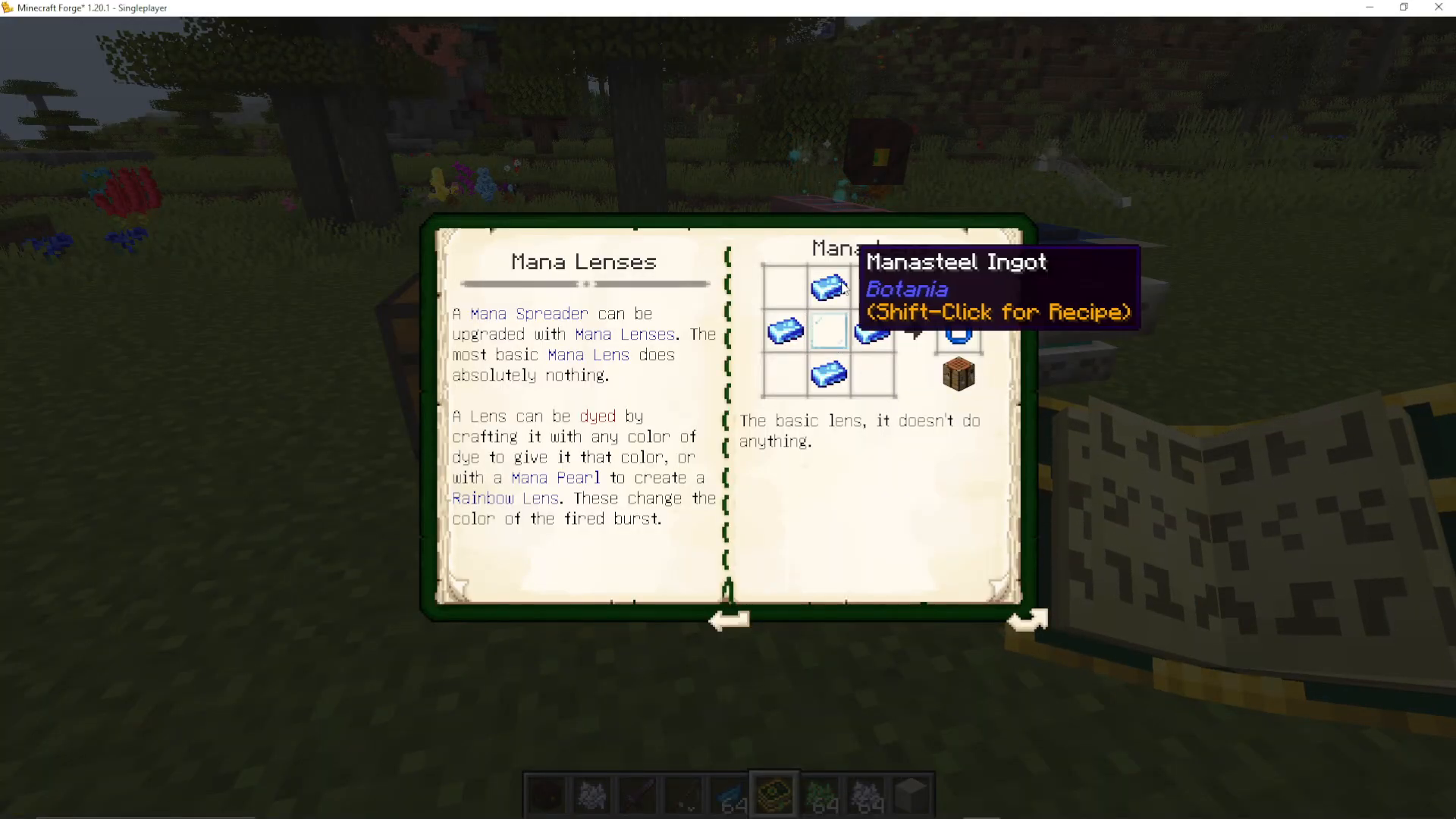
Lenses are upgrades for Mana Spreaders that modify how mana bursts behave. The basic lens requires glass and four Mana Steel ingots. You can dye lenses to change the color of mana bursts. Advanced lenses incorporate runes to add special effects.
Common Lens Types
Velocity Lens (Air Rune): Dramatically increases burst speed but reduces initial capacity and increases mana loss
Potency Lens (Fire Rune): Doubles mana burst capacity but travels slower
Resistance Lens (Water Rune): Significantly increases burst lifetime before mana loss begins
Efficiency Lens (Earth Rune): Increases time before mana loss starts
Messenger Lens: Decreases capacity but dramatically increases speed and distance
Bounce Lens: Allows bursts to bounce off walls for creative setups
Gravity Lens: Makes bursts move in an arc
Bore Lens: Allows bursts to break blocks (enables mining)
Damaging Lens: Damages living entities hit by the burst
Phantom Lens: Allows bursts to pass through blocks
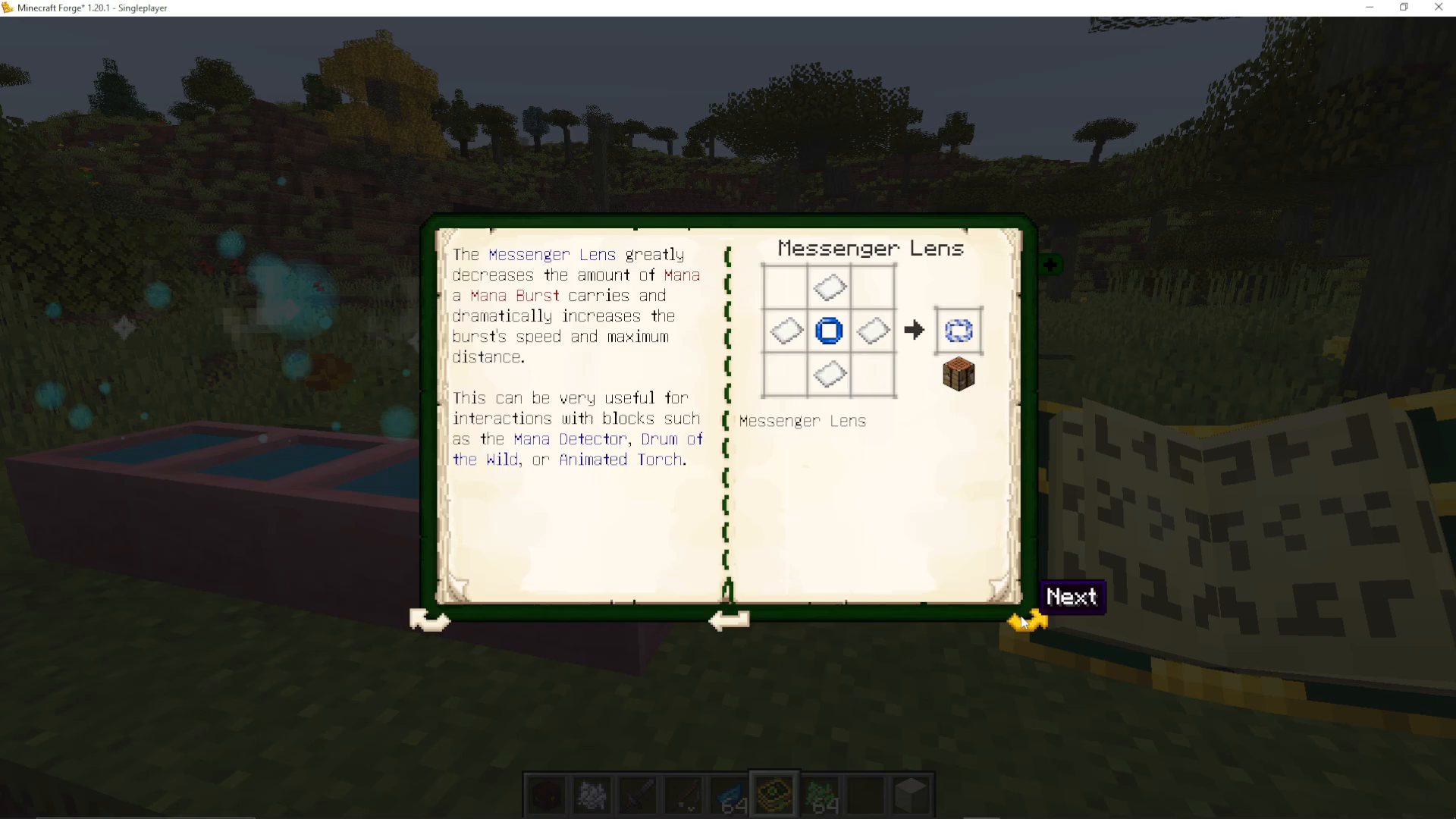
Mid-Game: Terrestrial Steel and the Agglomeration Plate
Creating Terrestrial Steel
Terrestrial Steel is a major upgrade from Mana Steel. To create it, you’ll need a Terrestrial Agglomeration Plate, which requires five living rock blocks, three lapis lazuli blocks, four more living rock blocks, a mana block in the center, and runes of Fire, Water, Earth, Air, and Mana.
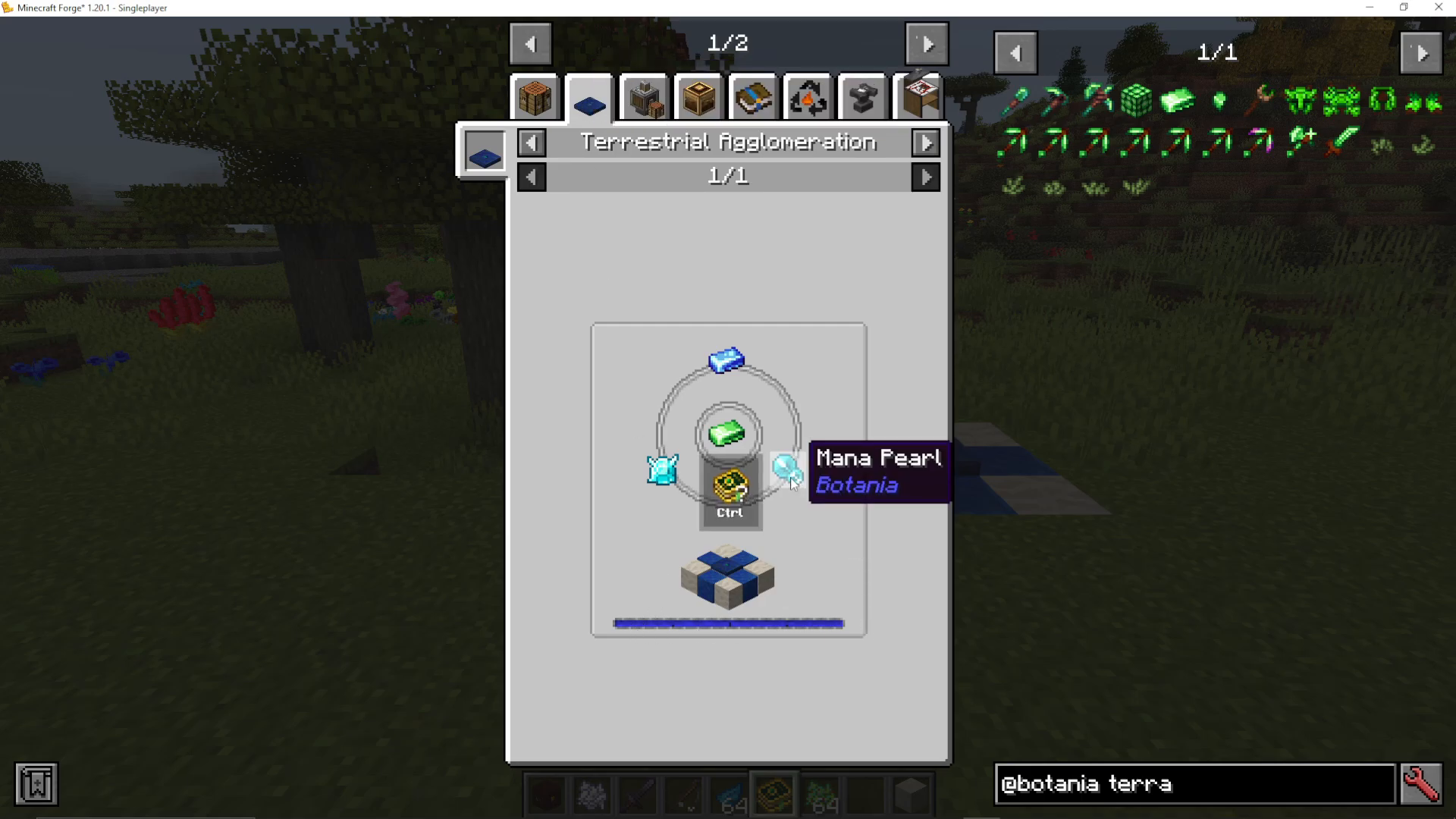
Once your plate is set up, place a Mana Pearl, Mana Diamond, and Mana Steel ingot on top. Provide mana via Mana Spreaders or Sparks, and the items will combine into a Terrestrial Steel ingot.
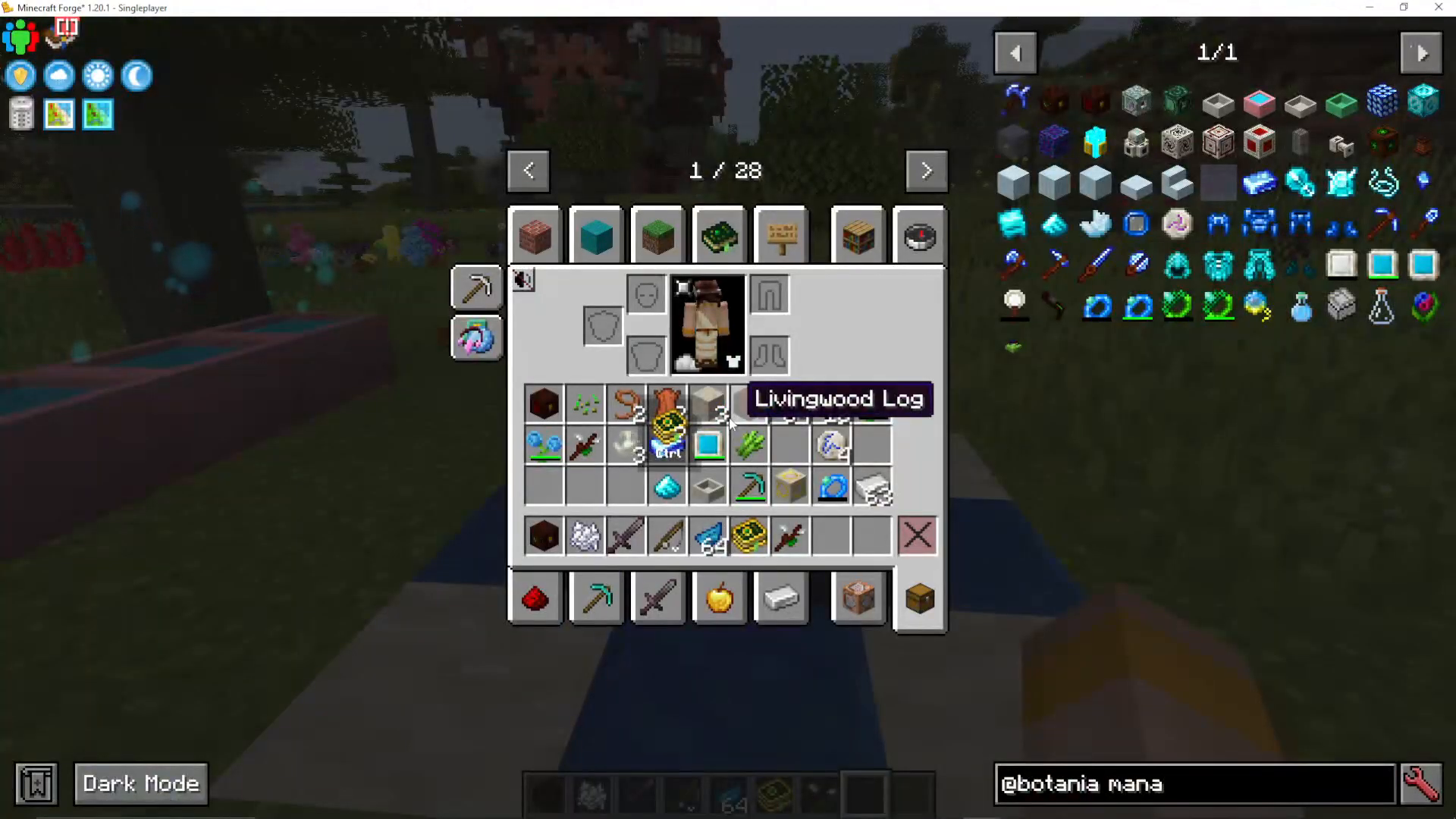
Sparks
Sparks are small magical entities crafted from petals, a gold nugget, and blaze powder. They can be placed above Mana Pools and automatically form a network, transferring mana to nearby devices like the Agglomeration Plate. Using multiple Sparks over multiple pools speeds up crafting significantly.
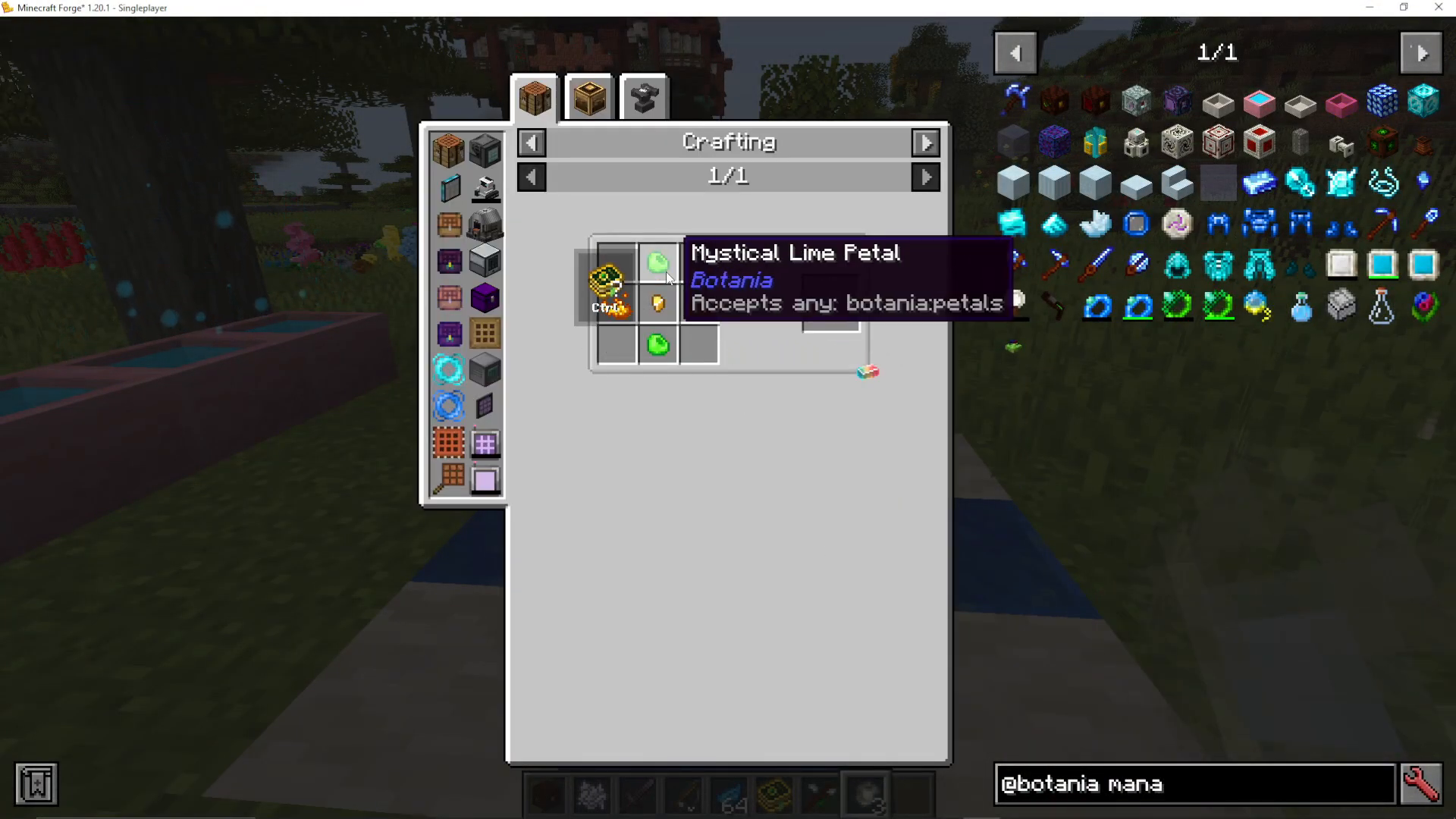
Terrestrial Tools and Armor
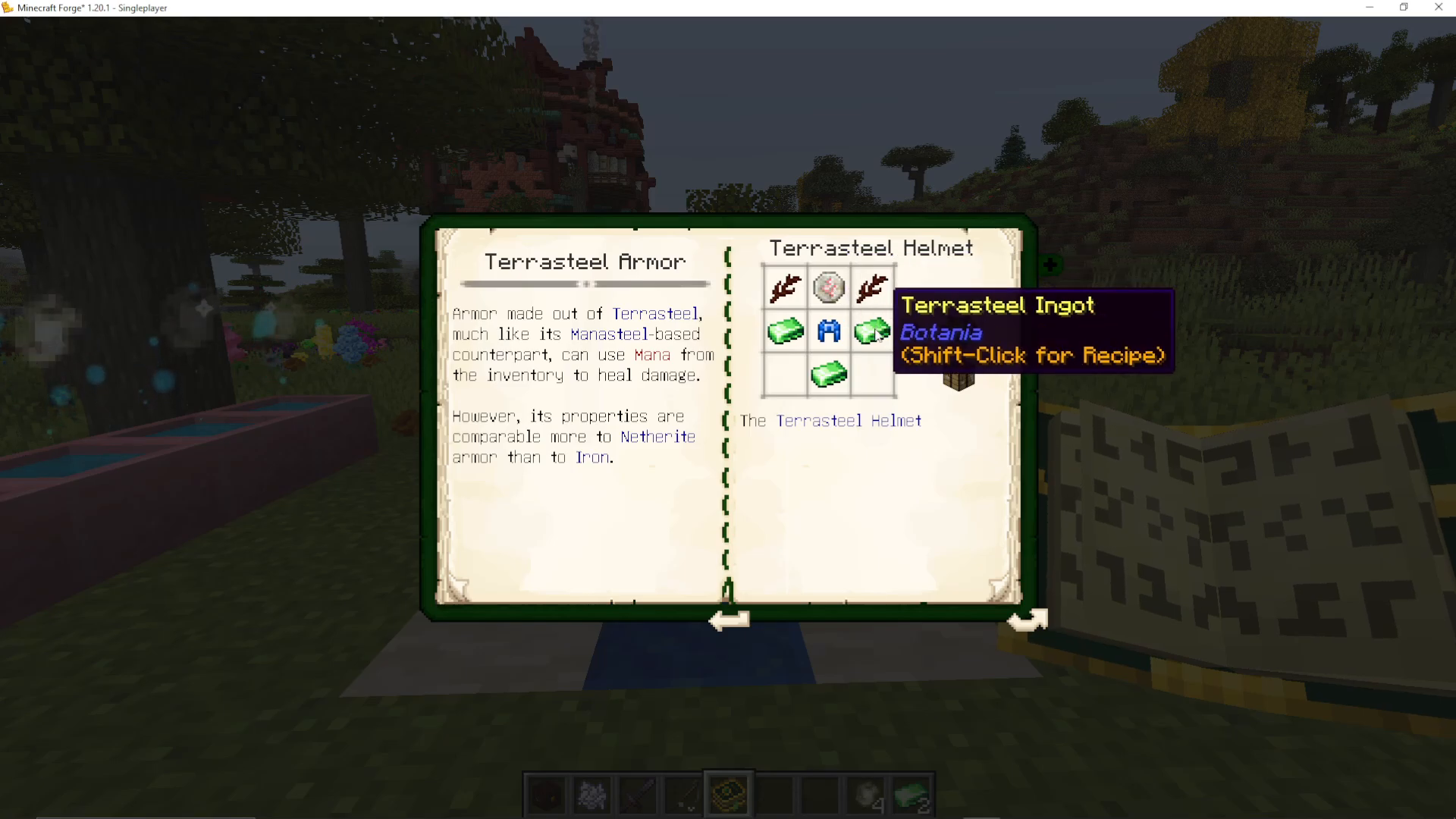
With Terrestrial Steel, you can craft superior tools and armor. Terrestrial Leggings are especially notable. When wearing the full Terrestrial set:
20% mana cost reduction on tools and rods
Passive mana regeneration on tablets
Mana can heal damage even without full hunger
Protection comparable to Netherite armor
The Elven Portal and Alfheim Trading
Building the Elven Gateway
To access the elven dimension and trade for advanced materials, build an Elven Gateway Core using living wood logs on the sides, glimmering living wood in the middle, and living wood above it. Arrange it like a vertical pillar with glimmering wood as the core.
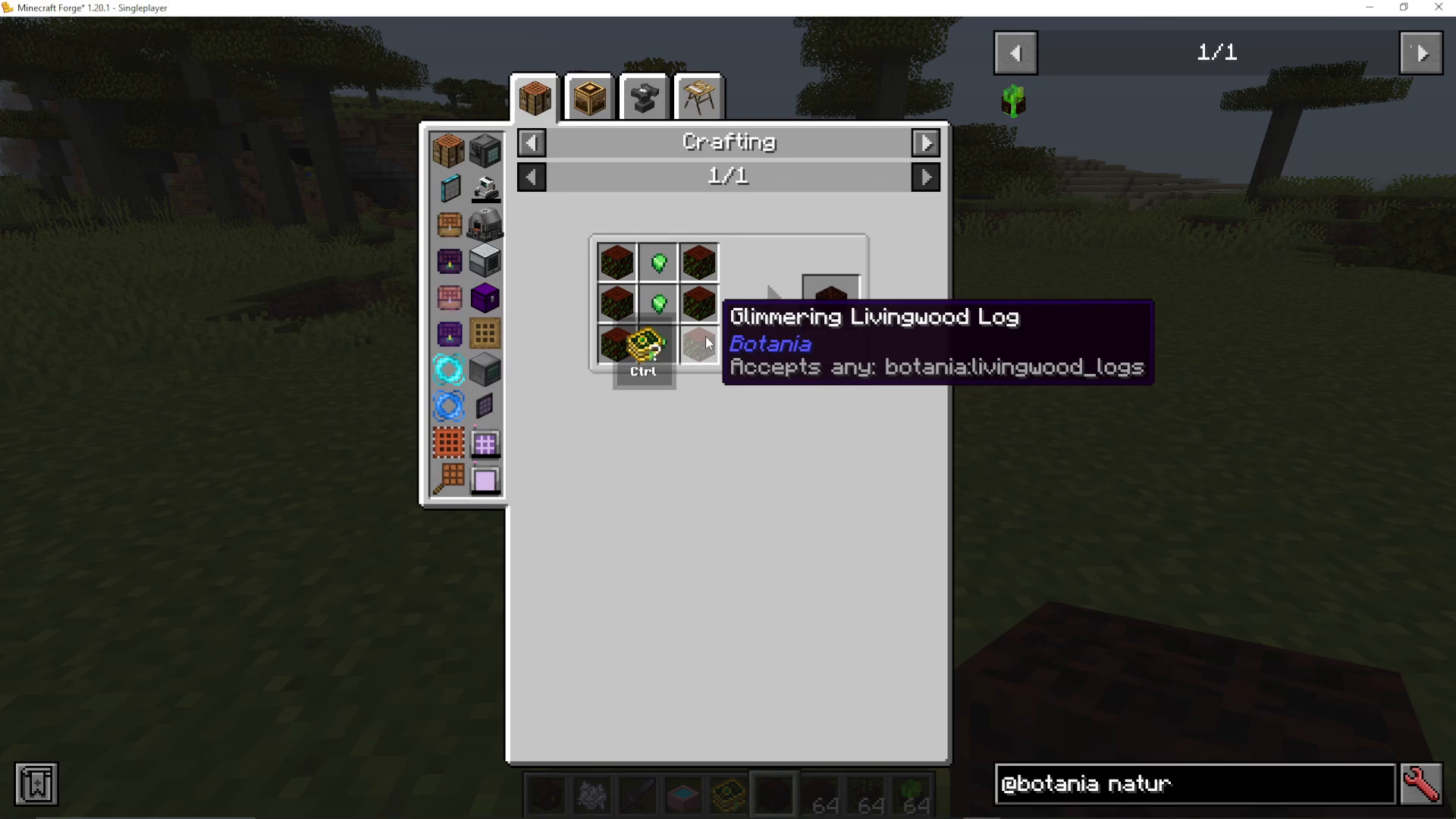
Glimmering Living Wood is crafted by combining living wood with glowstone dust.
Activating the Portal
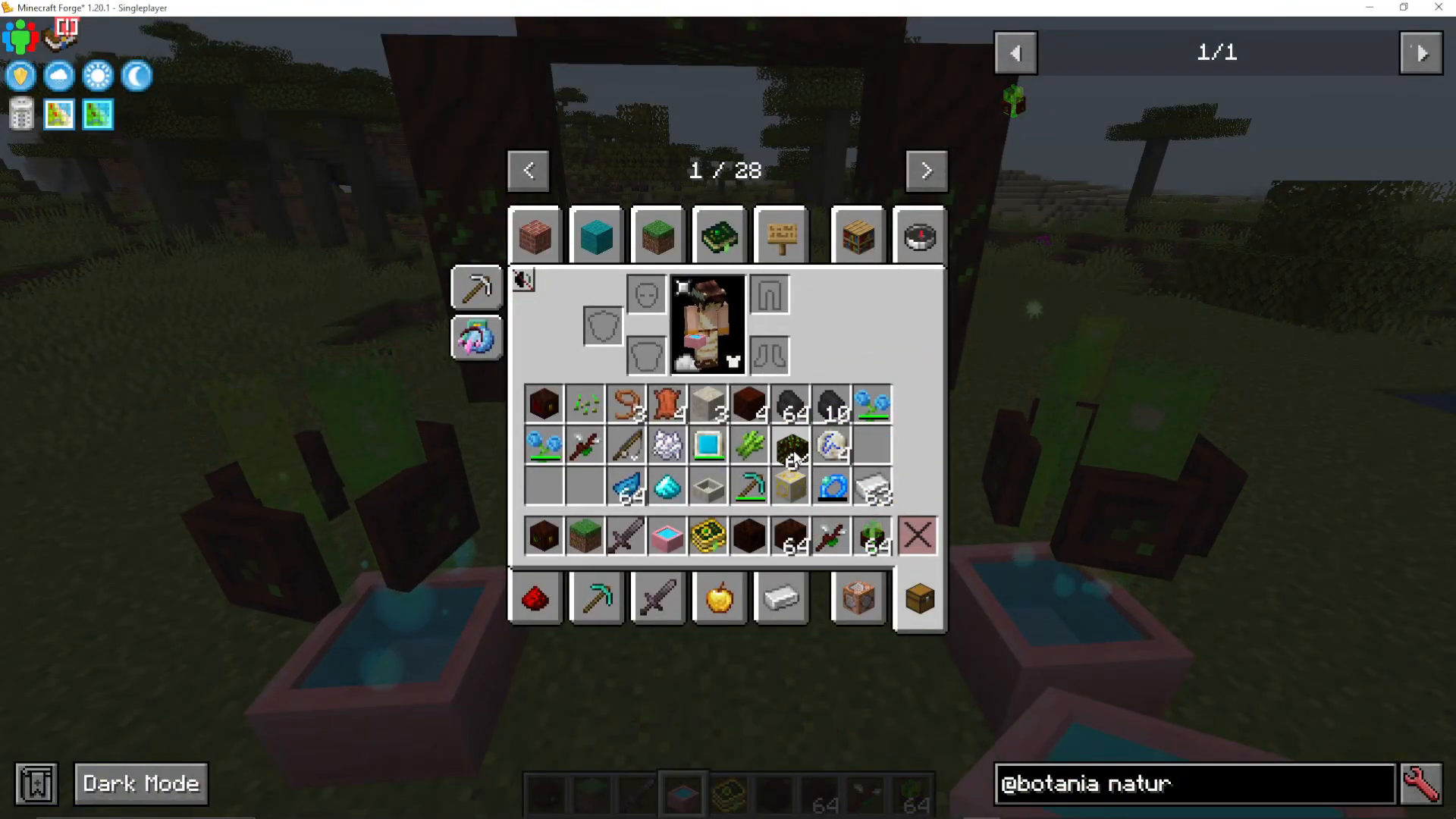
You’ll need Mana Pools filled with mana and Nature Pylons placed nearby (within an 11-block radius of the core). Right-click the core with your Wand of the Forest to activate the portal. You’ll need significant mana reserves, though the activation itself won’t consume any.
Elven Trades
Once activated, throw items through the portal to receive upgraded materials:
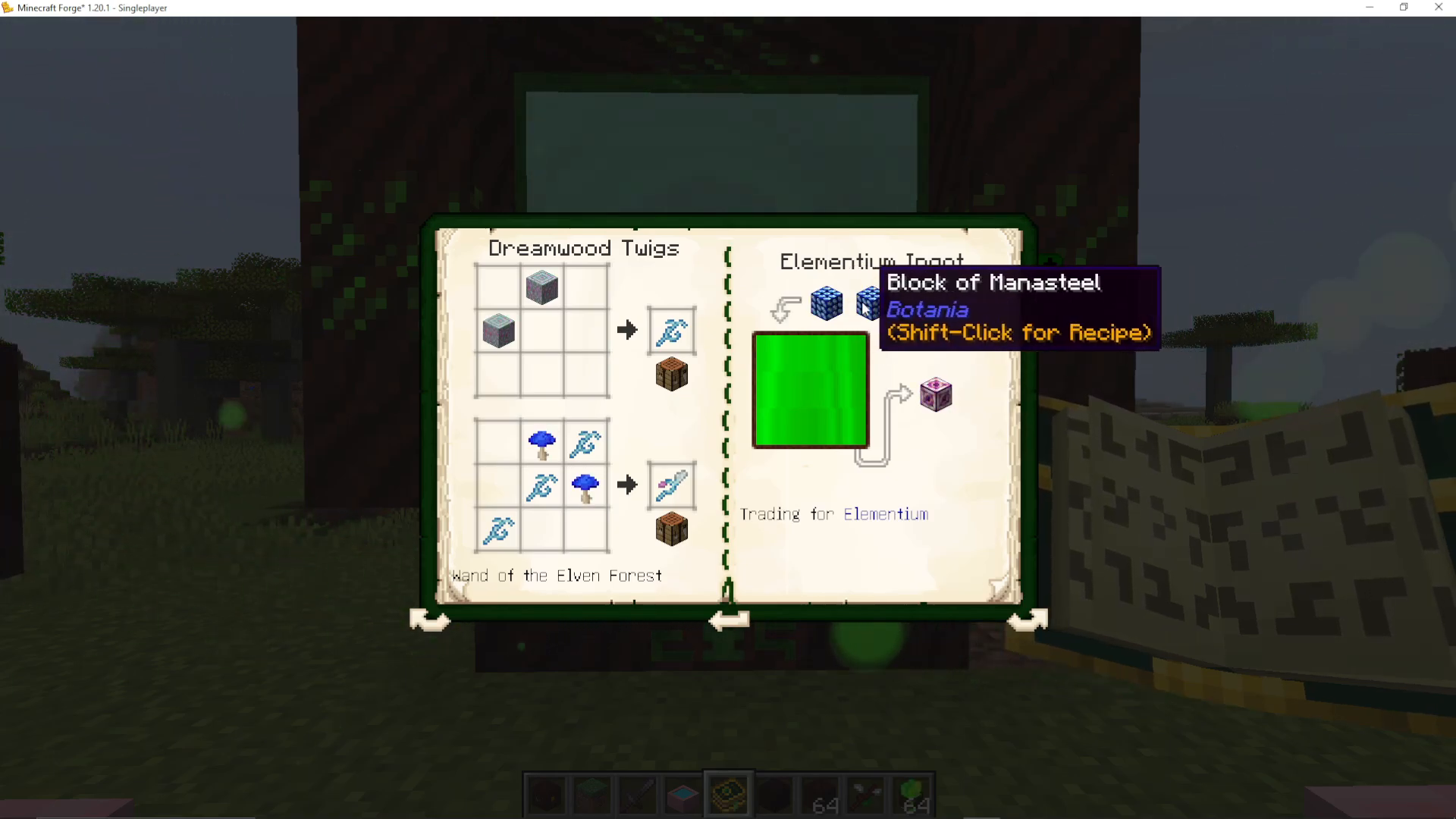
Two Mana Steel ingots → One Elementium ingot
Mana Pearl → Pixie Dust
Mana Diamond → Dragon Stone
Nether Quartz → Elf Quartz
Mana Glass → Elf Glass
Elementium and End-Game Preparation
Elementium Tools and Armor
With Elementium, you can craft powerful tools and armor with unique properties:
Elementium Pickaxe: Clears away disposable blocks, leaving only ores
Elementium Axe: Doubles as a weapon and can decapitate zombies for skull drops; supports the Looting enchantment
Elementium Hoe: Automatically moistens farmland
Elementium Shears: When drawn back like a bow, swiftly shears nearby sheep in a larger area
Armor: Drains mana to heal damage; spawns helpful pixies when struck (chance increases with more pieces equipped)
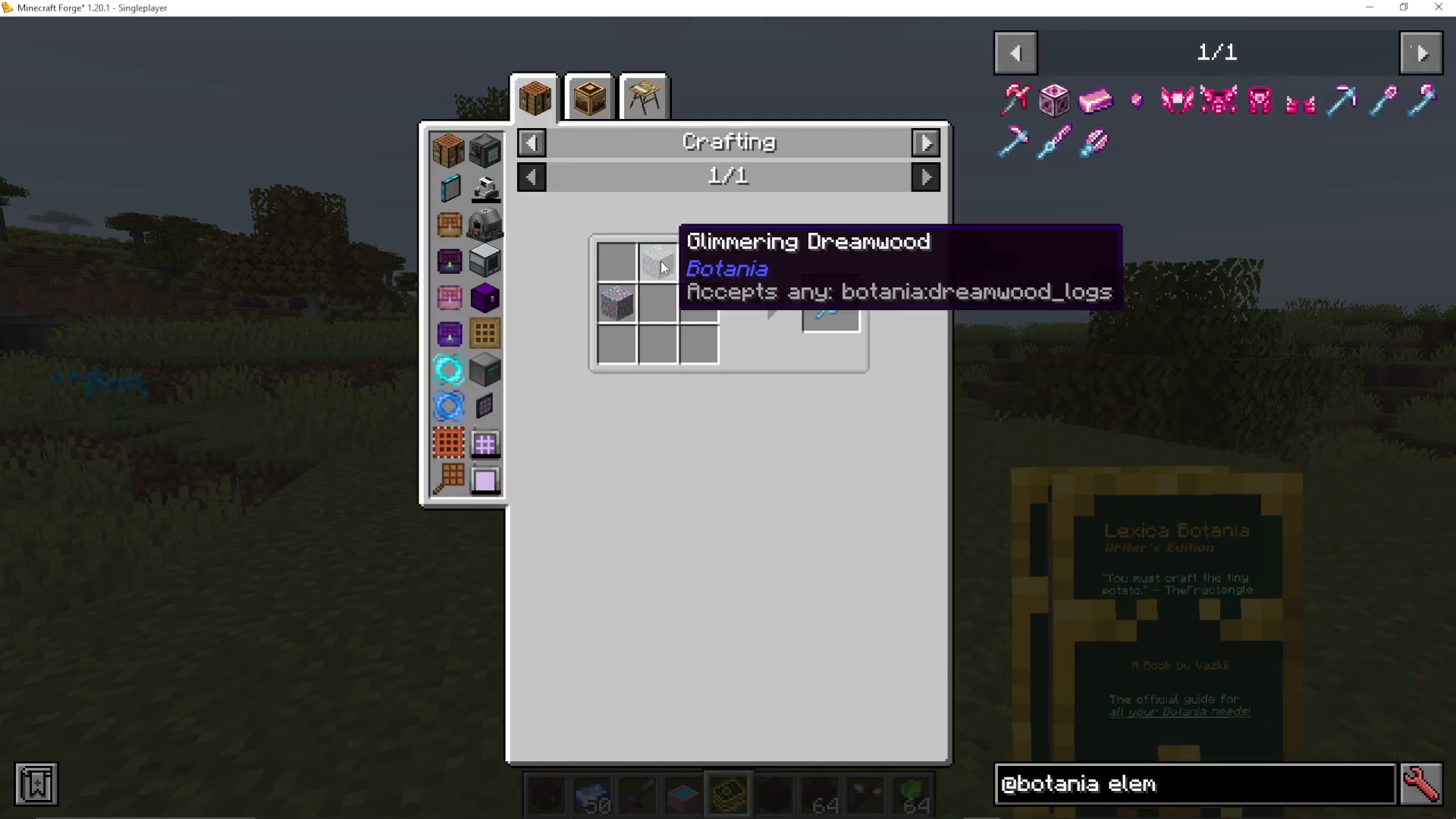
Elementium tools require Dream Wood twigs, made by trading living wood logs through the elven portal.
The Gaia Guardian: End-Game Boss
Summoning the Guardian
The Gaia Guardian is Botania’s primary boss fight. To summon it, you need to construct a Gaia Ritual setup. First, check your Lexica Botania (under the Ritual of Gaia chapter) and click the eye icon to visualize the required structure.
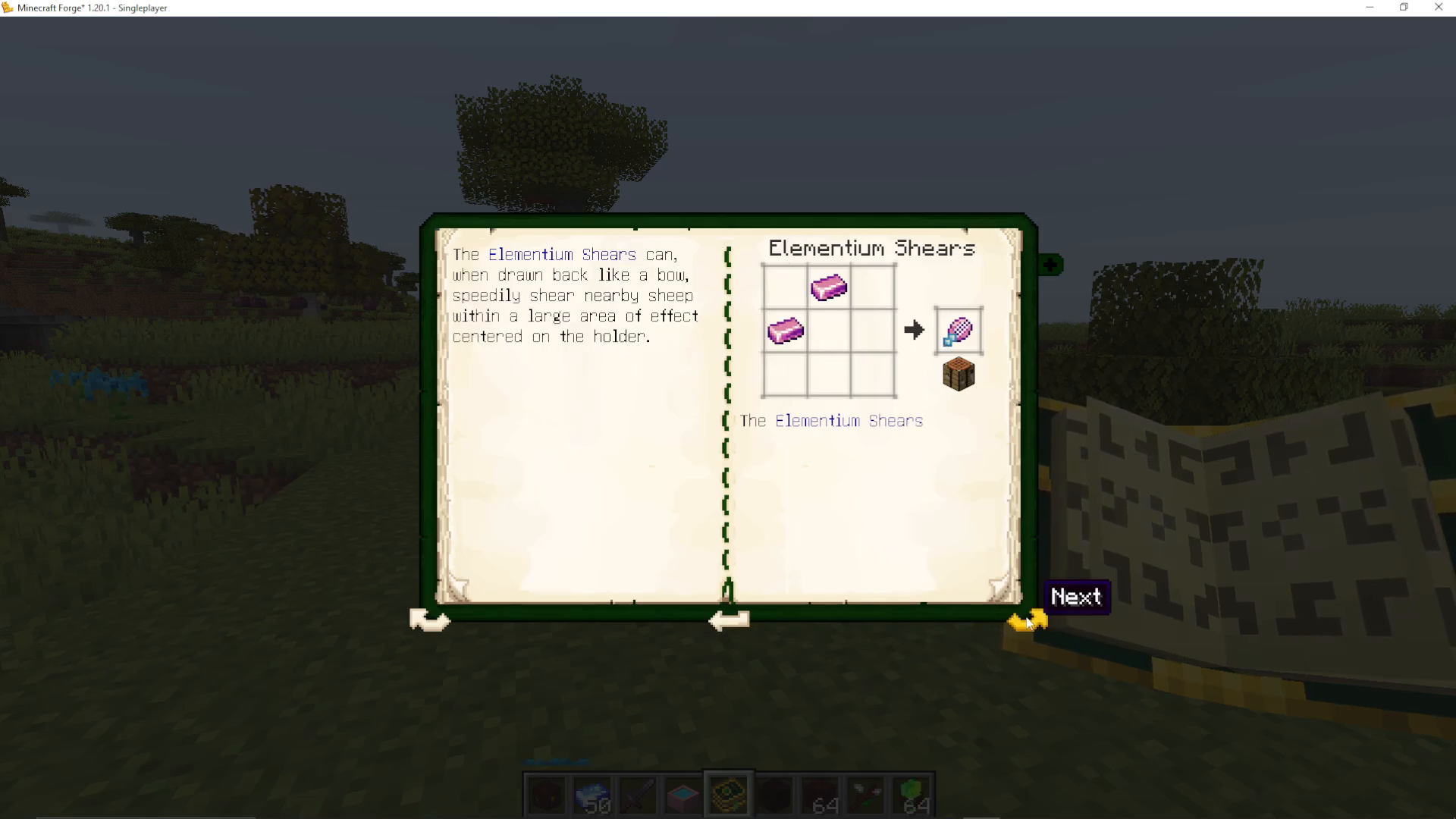
The ritual requires:
An active beacon (for aesthetic purposes)
Four Gaia Pylons placed above the beacon in a square pattern
A 35×35 block clear arena
A Terrestrial Ingot placed on the beacon
Right-click the beacon with your Wand of the Forest to activate the ritual.
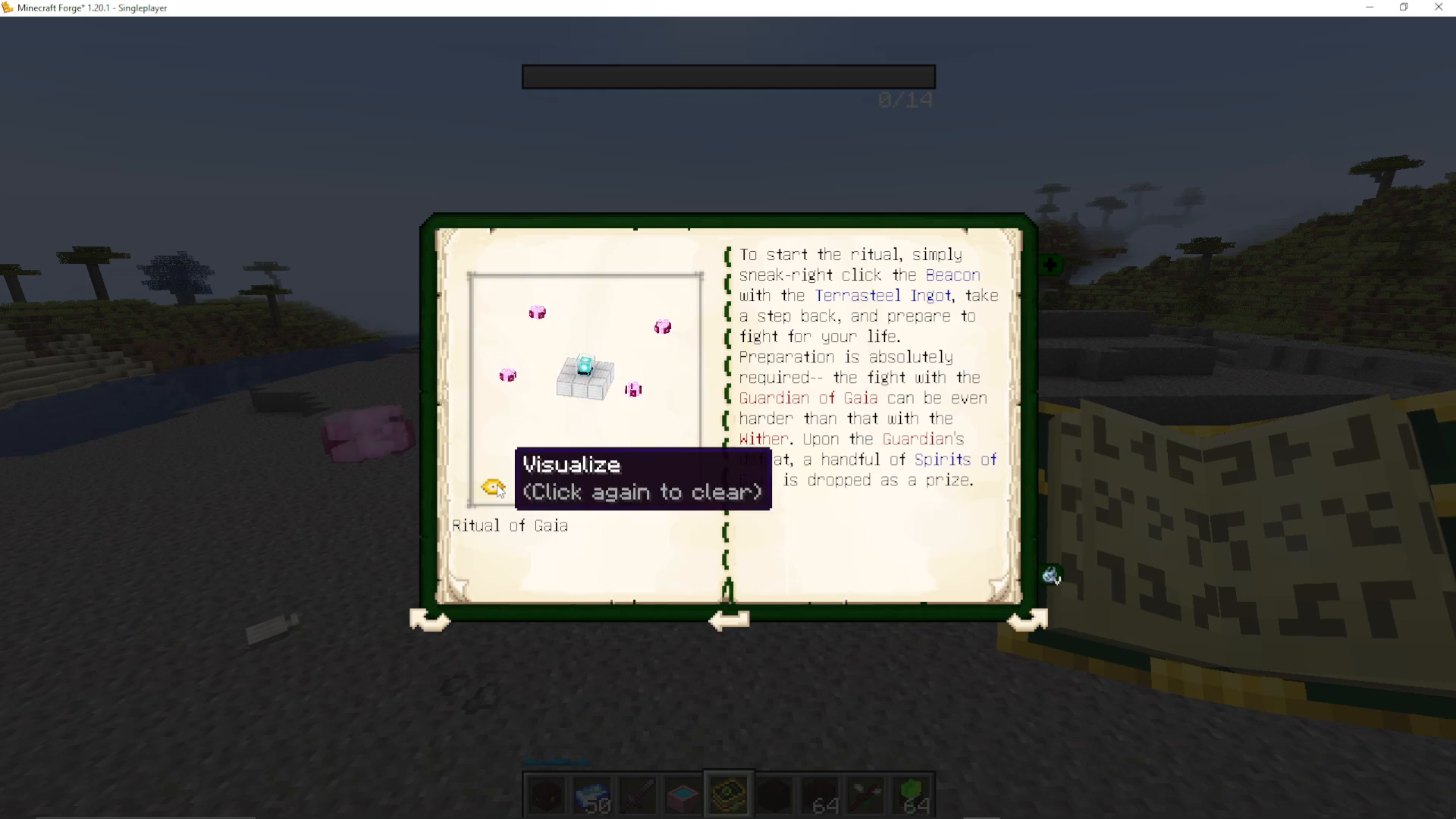
The Fight
The Gaia Guardian has two phases. In the first phase, it spawns pixies and creates explosive mana pools you must avoid. Simply attack it while dodging. The guardian will teleport around the arena.
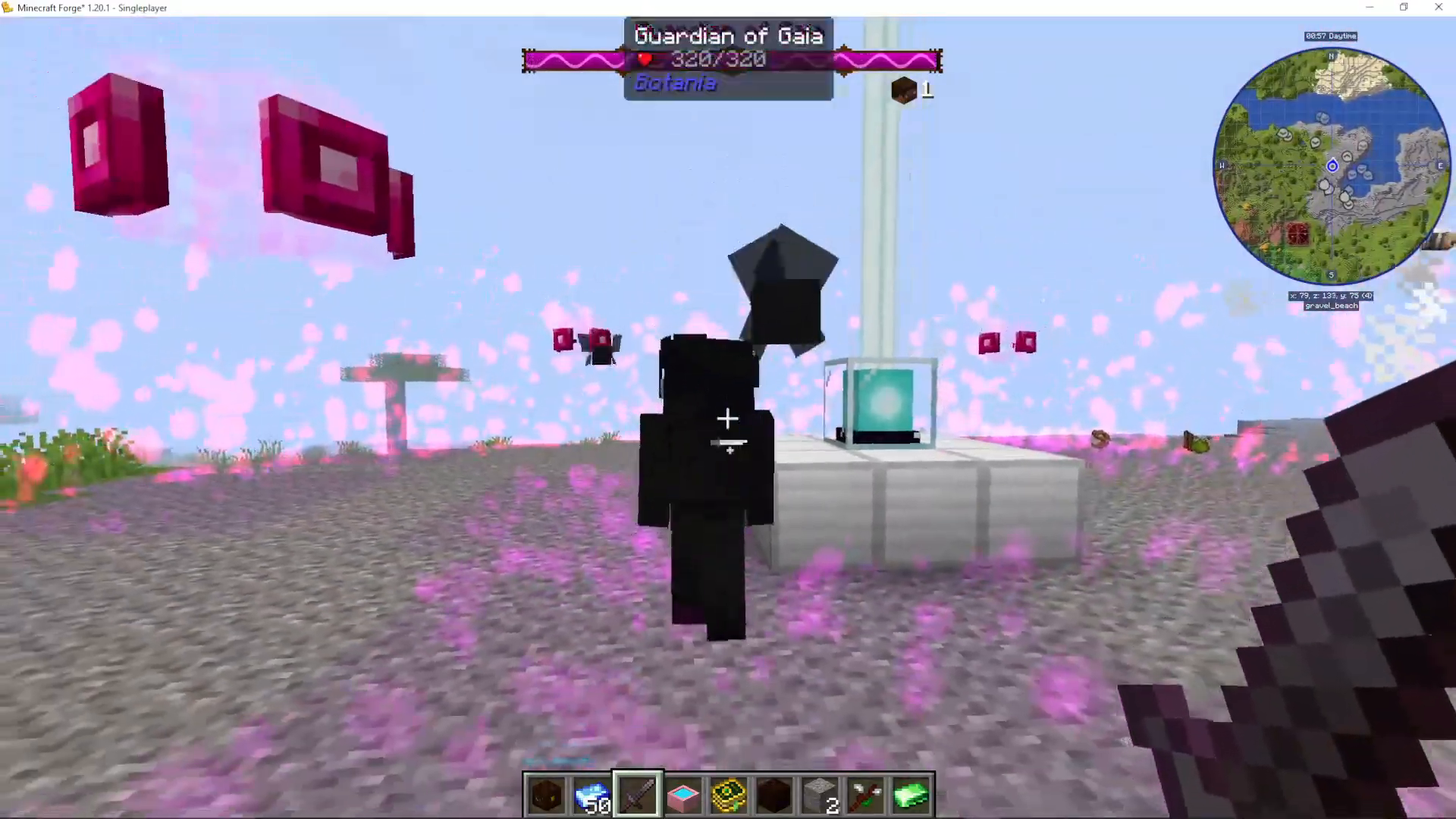
In the second phase, when health is low, it flies to the center and spawns hostile mobs. Defeat all mobs, then return to attacking the guardian until it falls.
Guardian Drops and Rewards
Defeating the guardian drops Gaia Spirits, which are used in the most advanced Botania recipes. To fight a harder version for more rewards, use Gaia Spirit Ingots (made from four Gaia Spirits and a Terrestrial Ingot) instead of a regular Terrestrial Ingot. The harder fight drops a Dice of Fate.
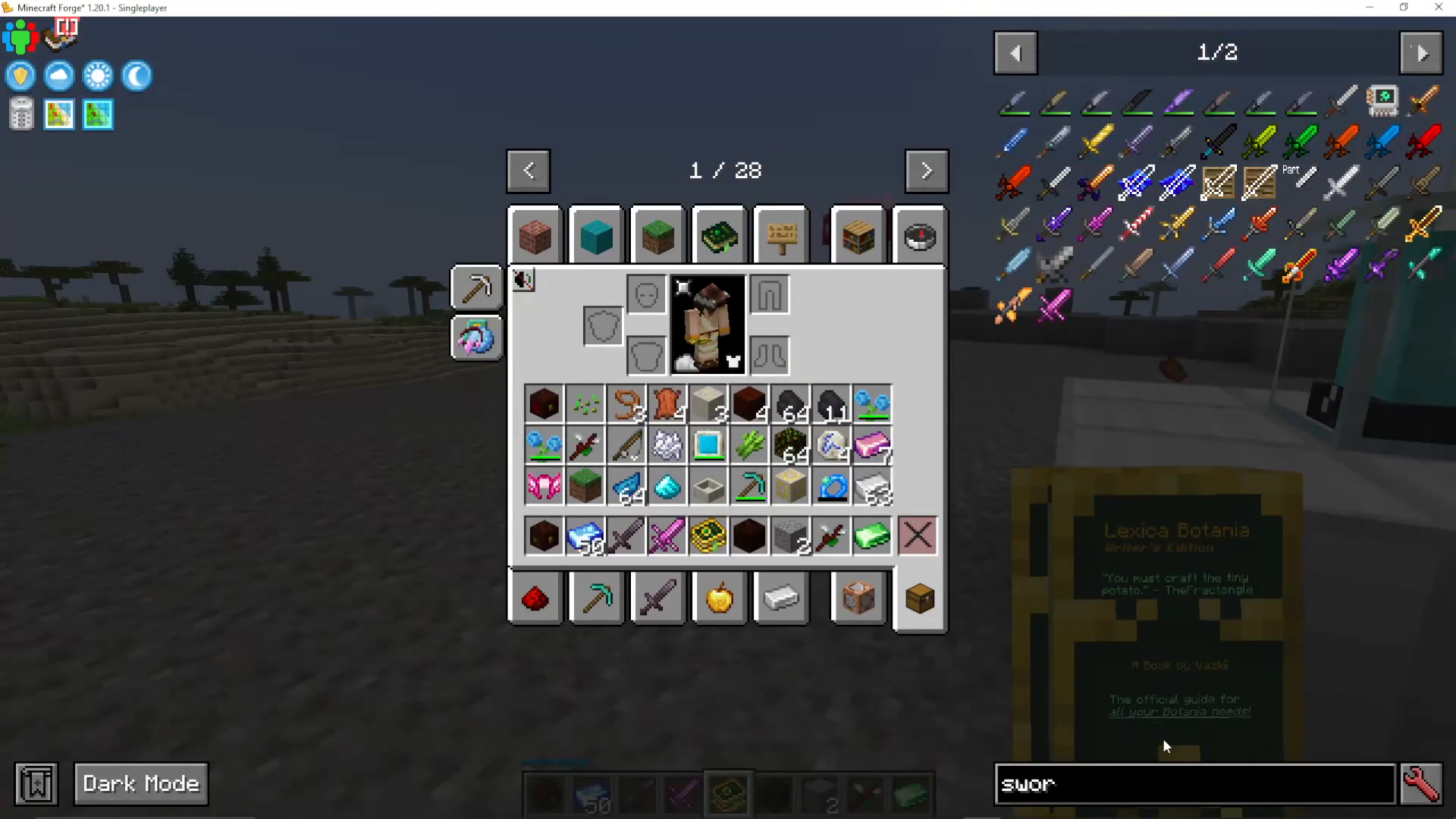
Dice of Fate Rewards
The Dice of Fate gives unique end-game items (one per use). You can obtain each item only once. Rewards include:
Cloak of Balance: Evenly splits damage between attacker and target
Cloak of Virtue: Blocks all damage from a single hit
Cloak of Sin: Damages all nearby hostile mobs for damage you would have taken
Eye of the Flugal: Allows teleportation back to a bound location
Flugal Tiara: Grants flight for ~30 seconds (requires recharge)
Key of the King’s Law: Special artifact
Fruit of Grisaia: Food that uses mana instead of hunger
Ring of Odin: Increases max health by 20 when worn
Ring of the Four: Expands Tera Shatterer’s area of effect
Ring of Loki: Allows storing block offsets for placement patterns
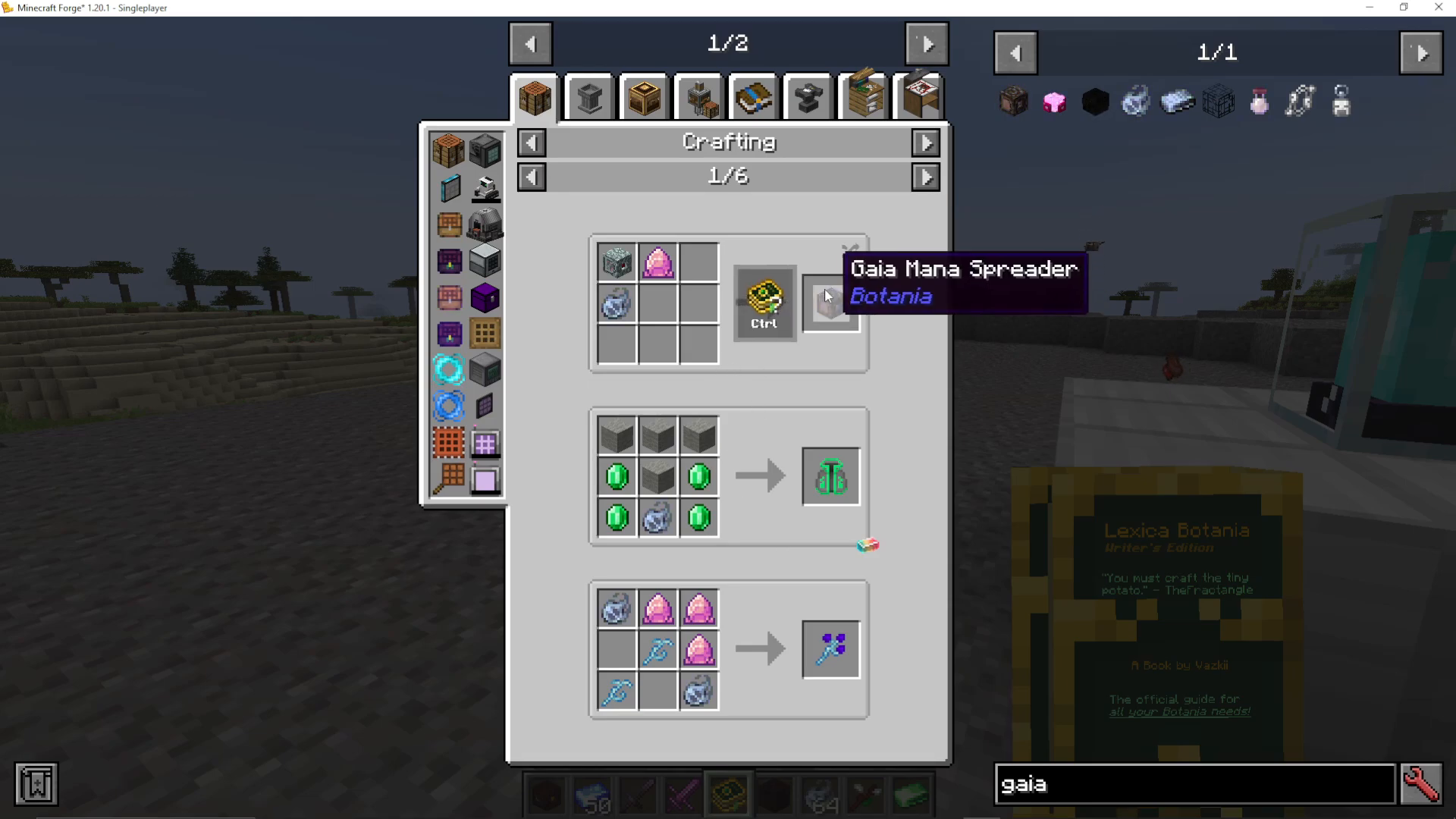
Other High-End Items
Shard of Laputa: Lifts ground in a sphere (21×21 to 33×33 depending on tier) to create floating islands. Uses more Gaia Spirits for larger radius.
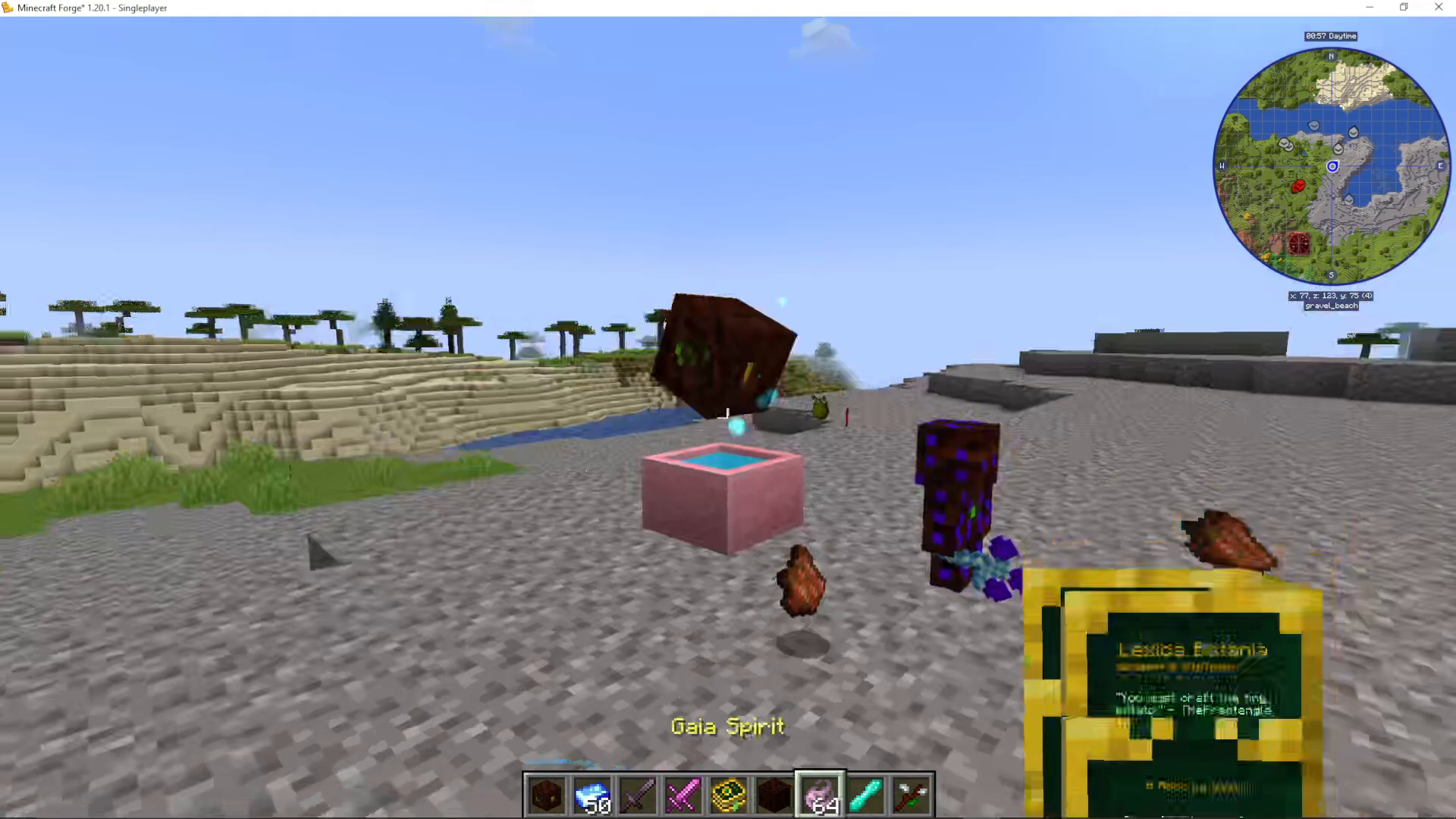
Rod of the Unstable Reservoir: Materializes mana from arcane missiles that home in on random targets.
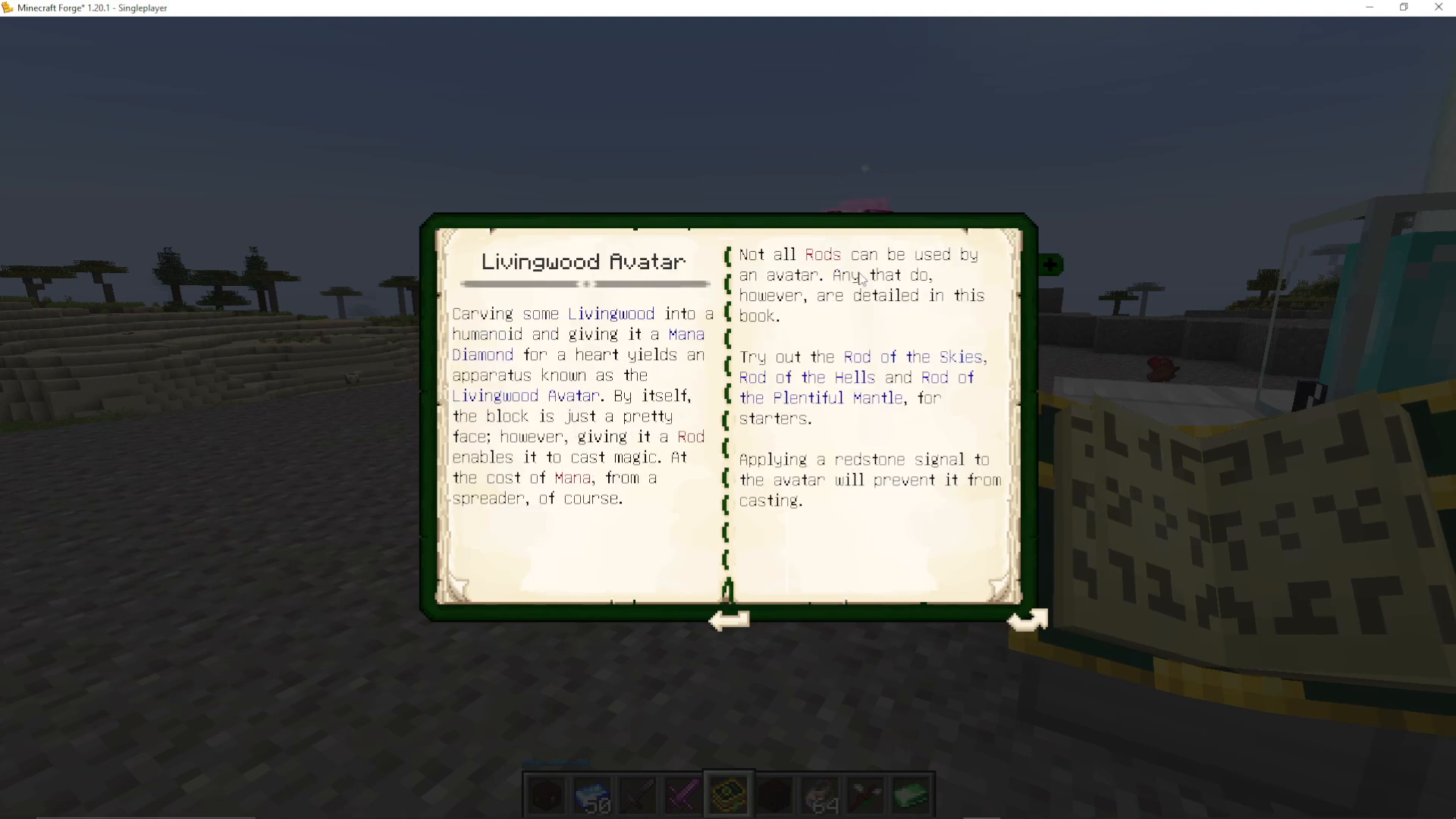
Living Wood Avatar: A small companion that uses mana to attack nearby mobs.
Functional Flora
What Are Functional Flora?
Functional flora are magical flowers that consume mana to perform useful tasks, as opposed to generating flora that produce mana.
Notable Functional Flora
Agricarnation: Speeds up growth of nearby crops
Bellethorne: Slowly inflicts harm to nearby enemies
Bergenmute: Silences nearby animals
Clayconia: Turns sand into clay using significant mana (very useful)
Daffomill: Pushes items forward like a wind turbine
Dreadthorn: Harms only adult animals (great for mob farm automation)
Hopperhock: Acts as a hopper flower for item collection
Tangleculum: Slows and damages nearby entities
Tiger Seye: Another specialized function flower
📸 [ASSISTANT: TAKE SCREENSHOT AT SCREENSHOT AT TIMESTAMP 52:34]
Many more exist in the Functional Flora chapter of your Lexica Botania.
Natural Apparatus and Useful Items
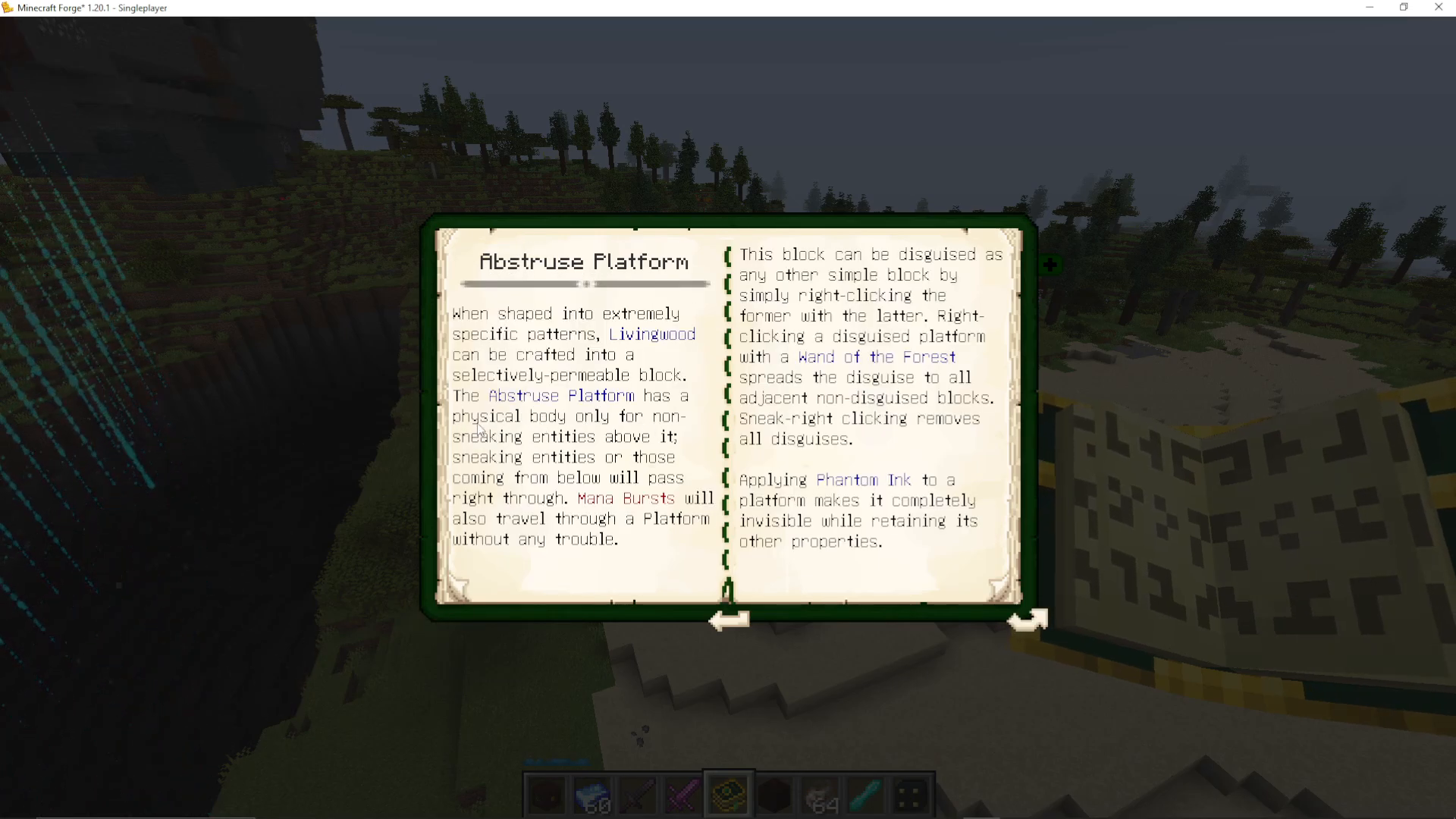
Abstruse Platform
This platform has a physical body only for non-sneaking entities. When you sneak on it, you fall through—perfect for creating multi-level bases without barriers.
Open Crate
Made from living wood planks, the Open Crate accepts items from hoppers and drops them directly below, providing precise item placement for automation.
Mana Pylons
Place these near enchanting tables to increase enchanting levels (up to level 30, like bookshelves).
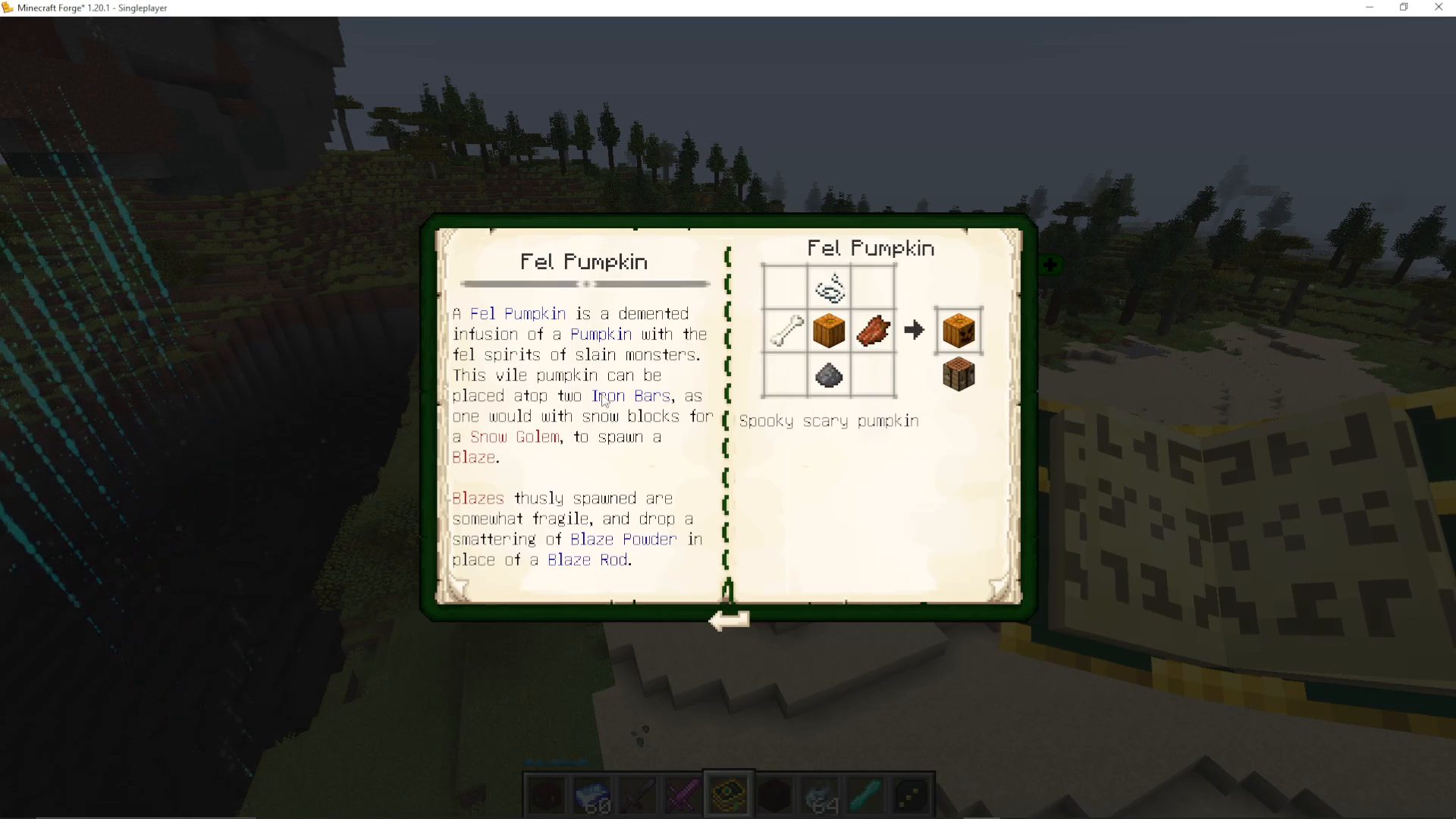
Fell Pumpkin and Blaze Farming
The Fell Pumpkin creates a snow column when placed on top of two iron bars with snow blocks. This spawns blazes that drop blaze powder instead of rods—excellent for early-game blaze powder farming.
Drums
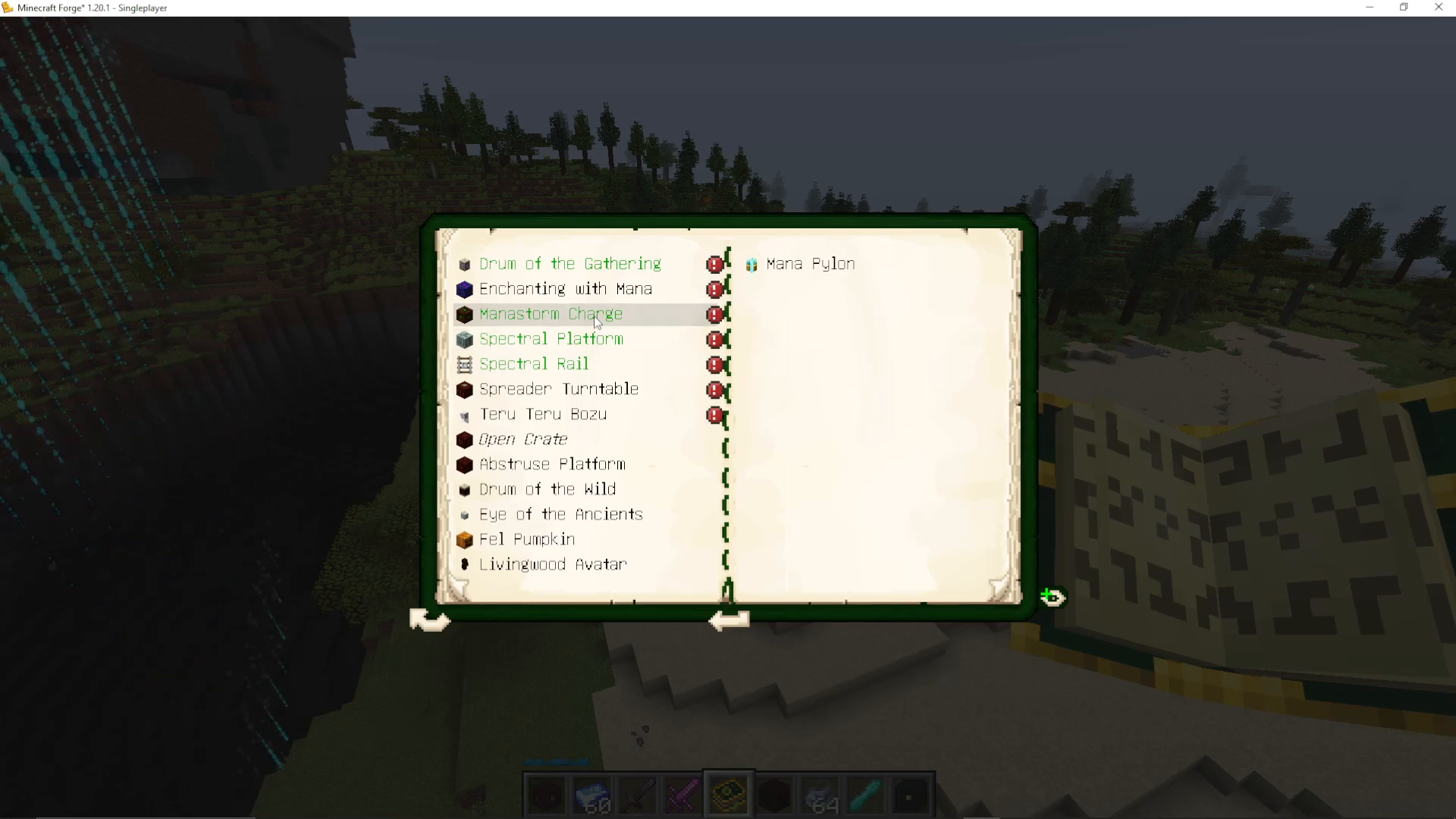
Drum of the Wild: Destroys nearby vegetation when hit by a mana burst
Drum of the Gathering: When hit by a burst, nearby sheep regrow wool and cows produce milk
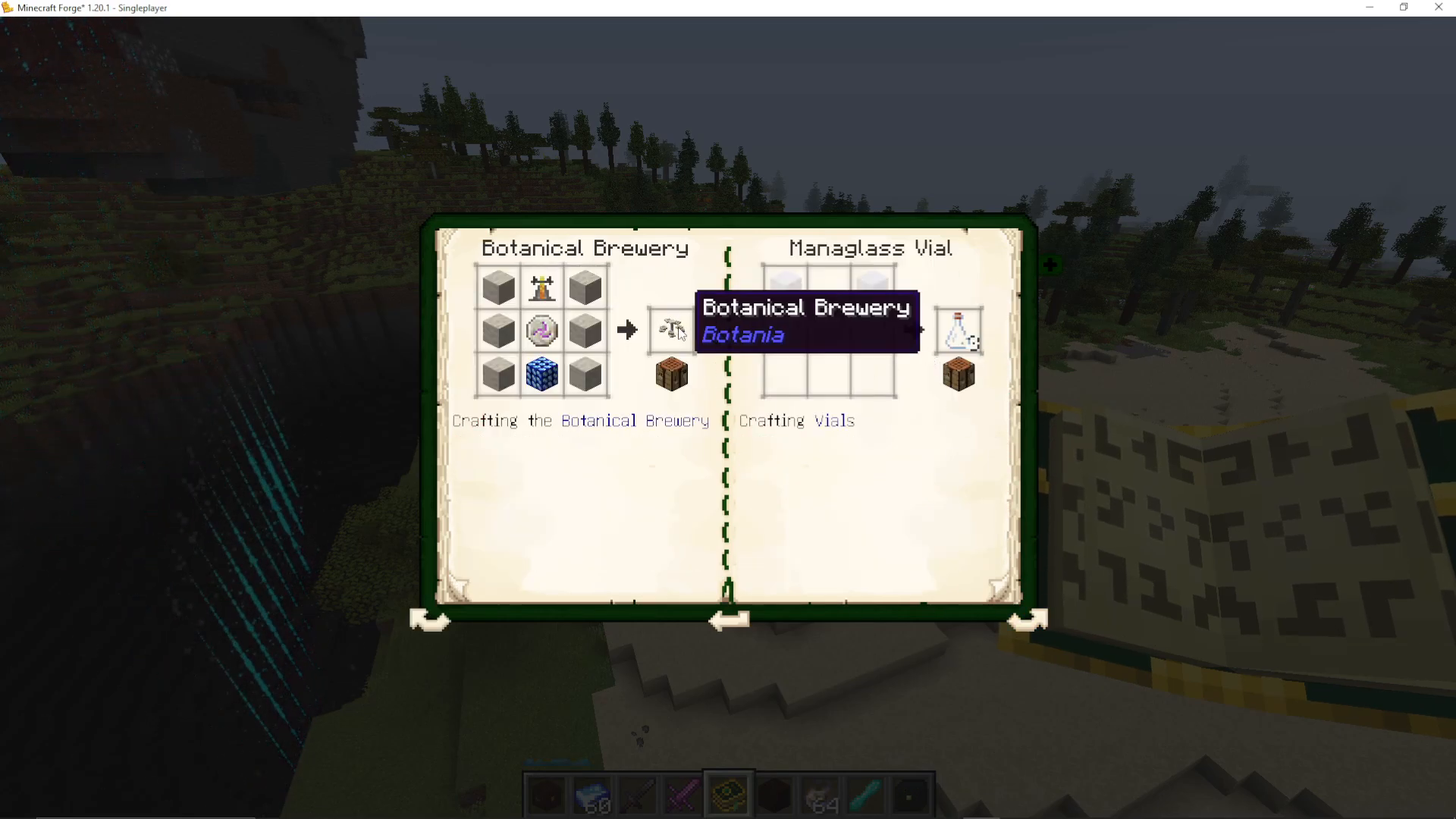
Botanical Brewery
Create magical brews using ingredients similar to potion recipes. Brews are stored in mana glass vials and offer various effects.
Brew Incenses
Infuse incense sticks with brews in an incense plate. Nearby players receive the brew’s effect (like a beacon effect) without requiring the effect to be applied directly.
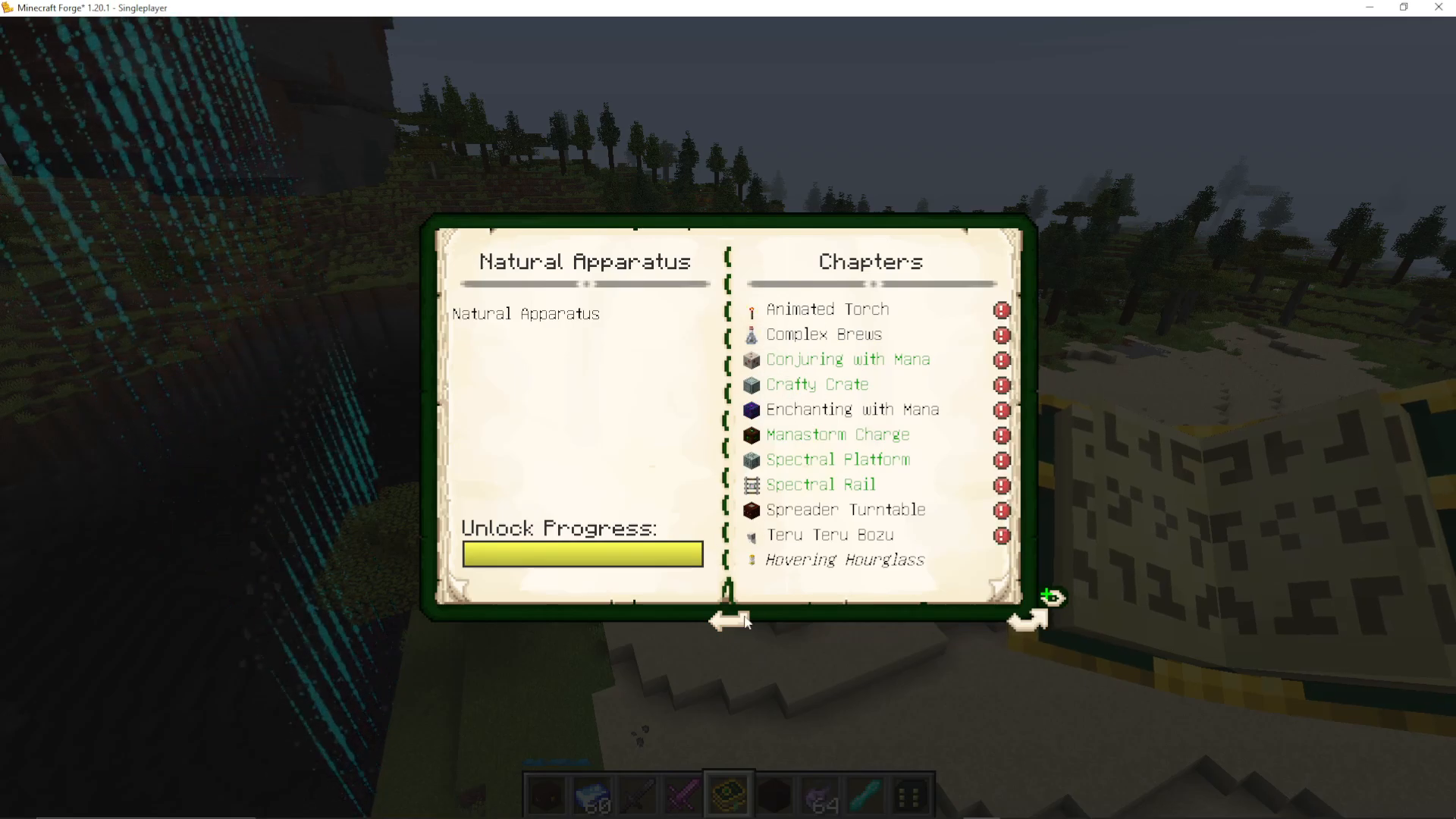
Hovering Hourglass
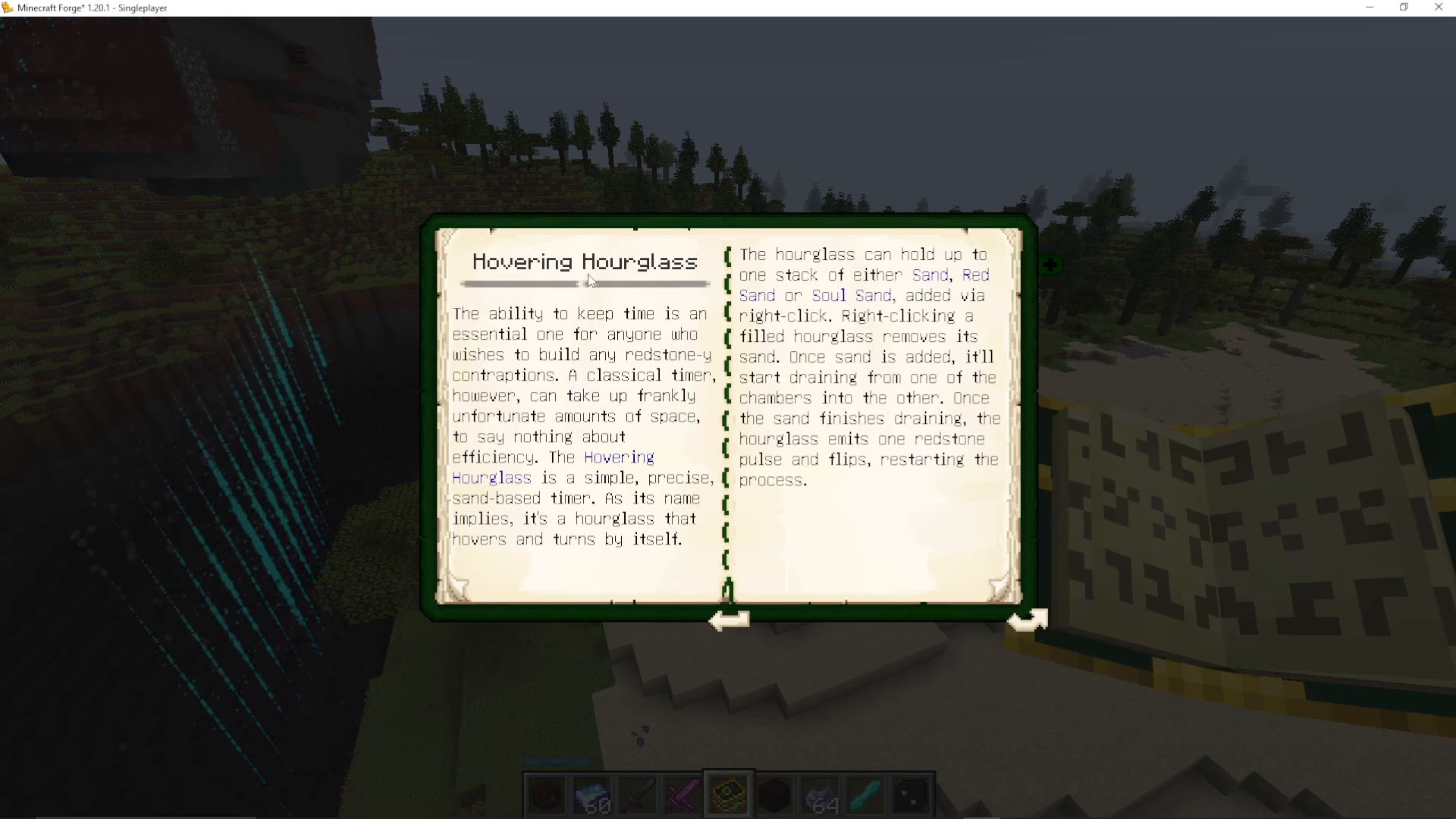
This redstone timer holds up to one stack of sand, red sand, or soul sand. With one block, it pulses every second. With a full stack, it pulses every 64 seconds. Perfect for precise redstone timing.
Mystical Items
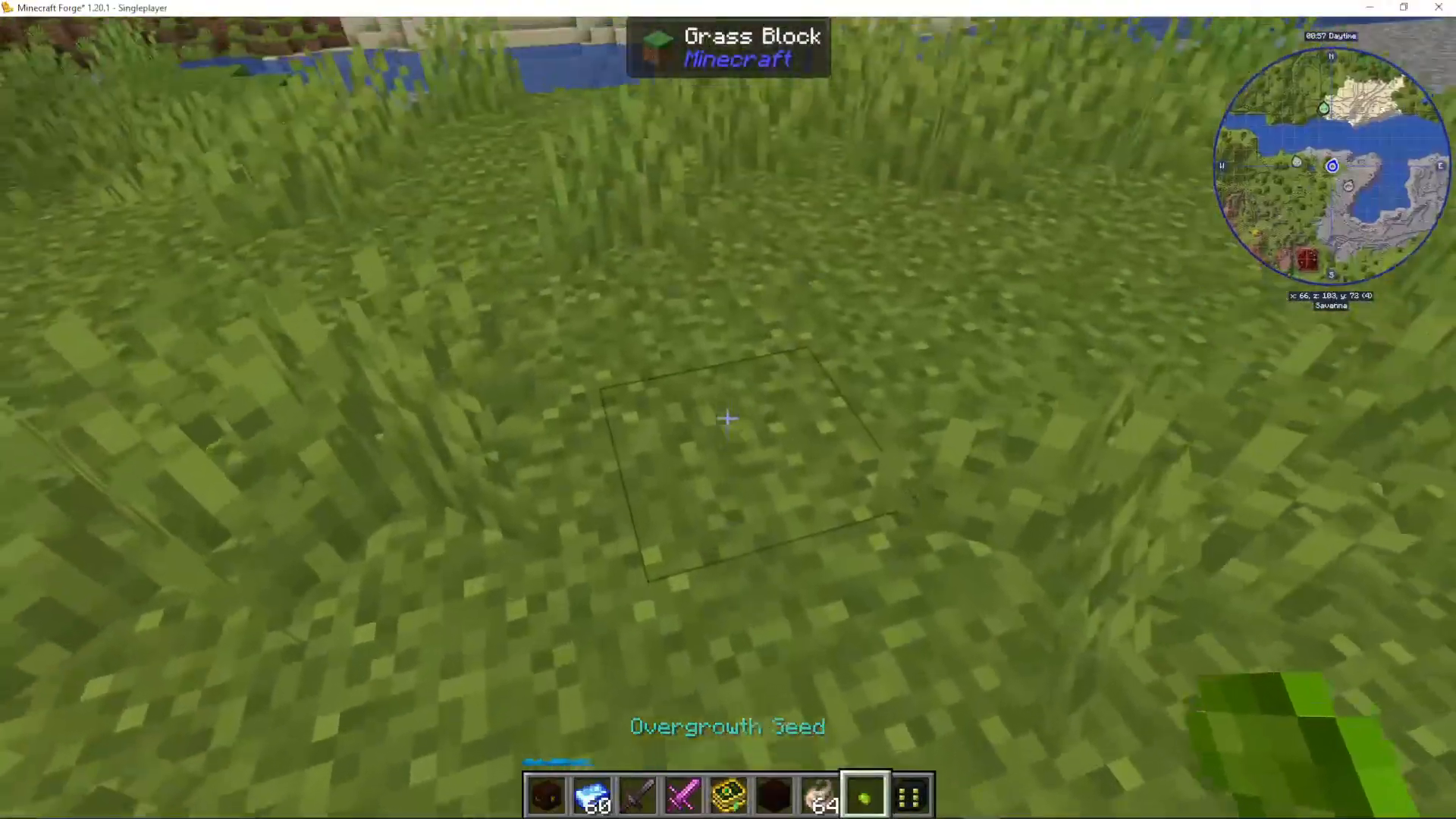
Overgrowth Seed
Plant this on grass to create enchanted soil. Flowers planted on enchanted soil function at twice normal speed—perfect for speeding up both generating and functional flora.
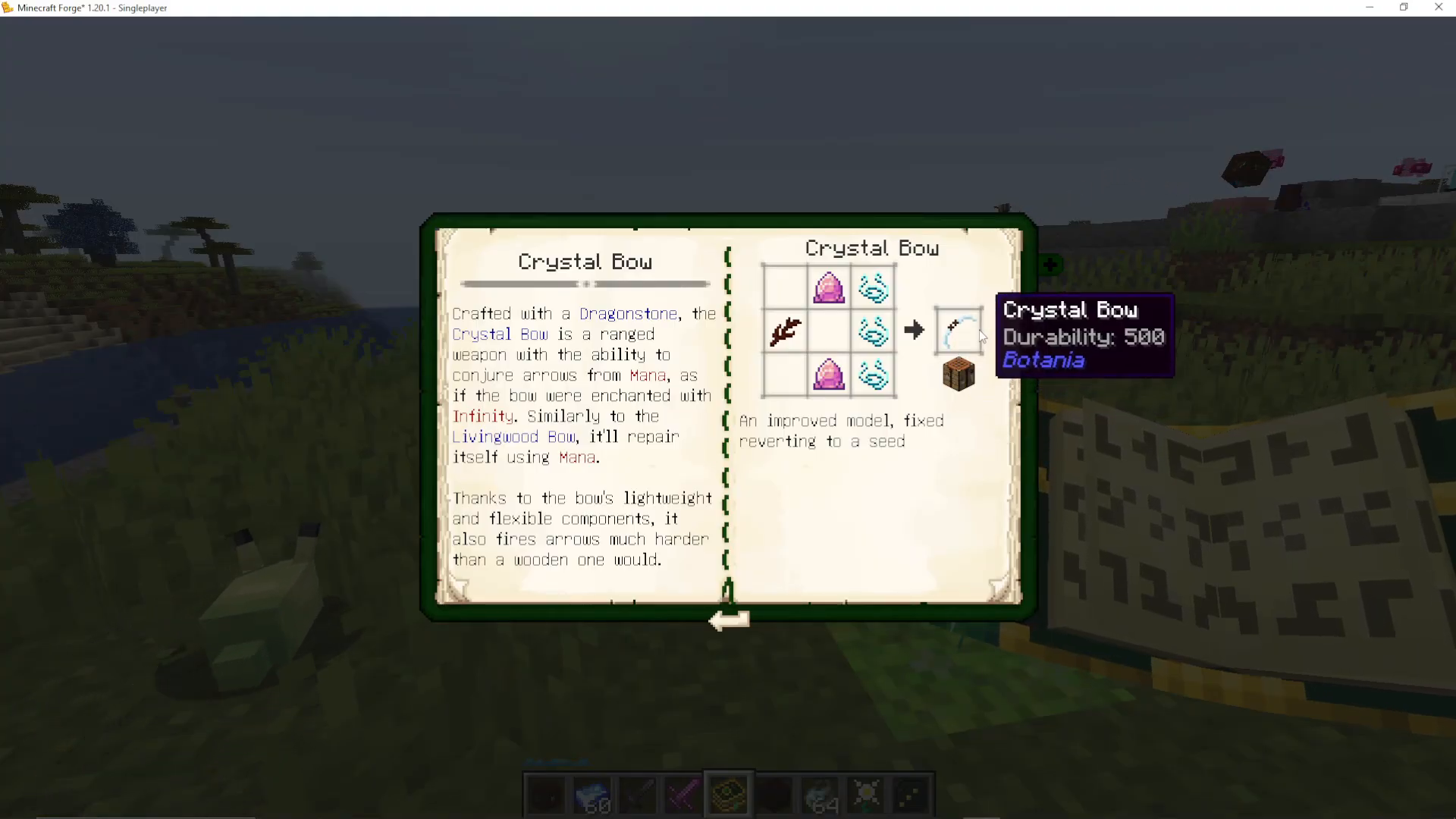
Crystal Bow
This bow generates arrows from mana in your inventory, eliminating the need to carry physical arrows.
Necroderm Virus
Apply to a horse to convert it into a zombie or skeleton horse (stronger variants). Use Pesticide Seed combined with living wood to craft.
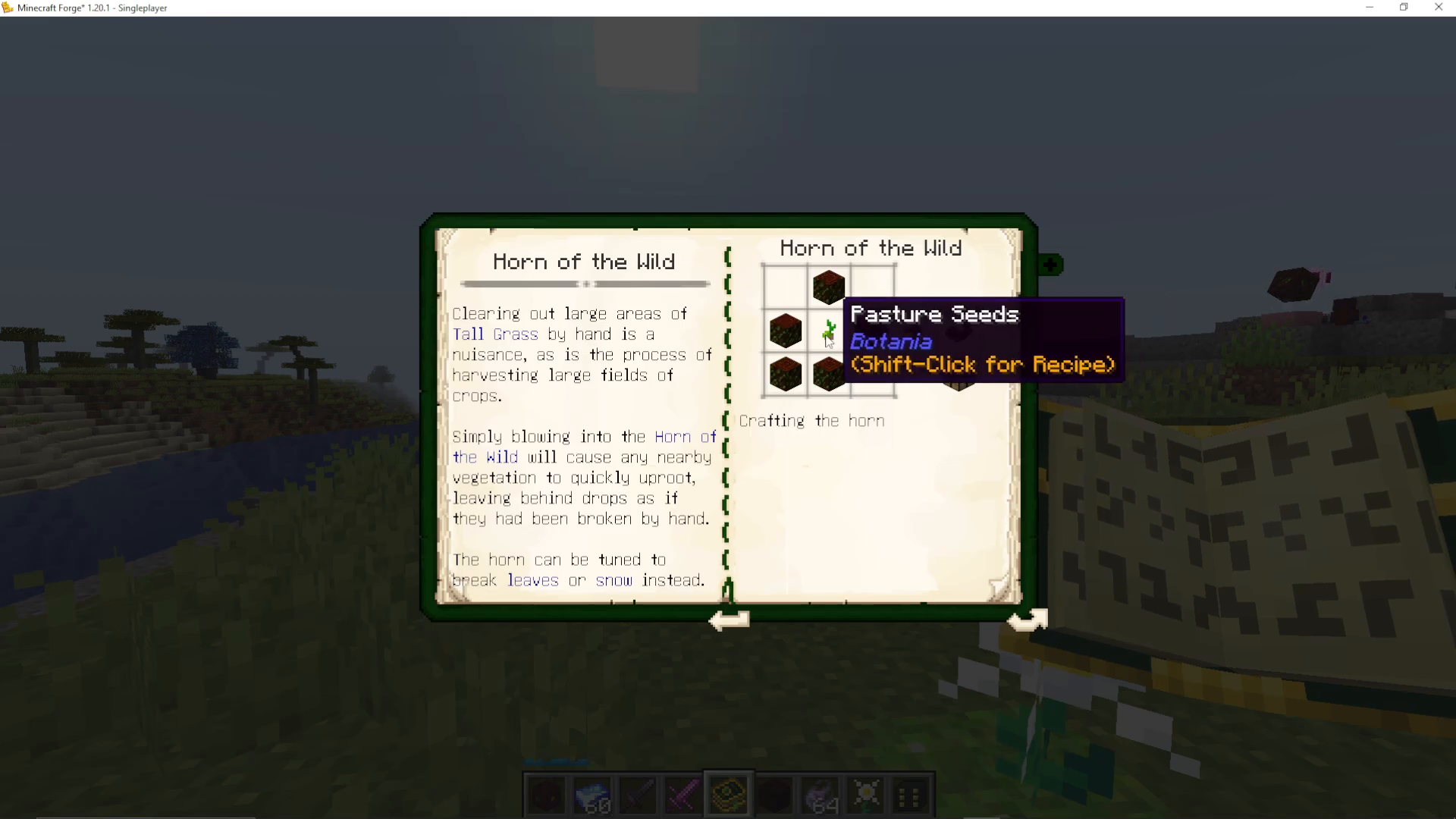
Horn of the Wild
Blow near vegetation to instantly uproot grass and similar plants—great for clearing your base area.
Magical Rods
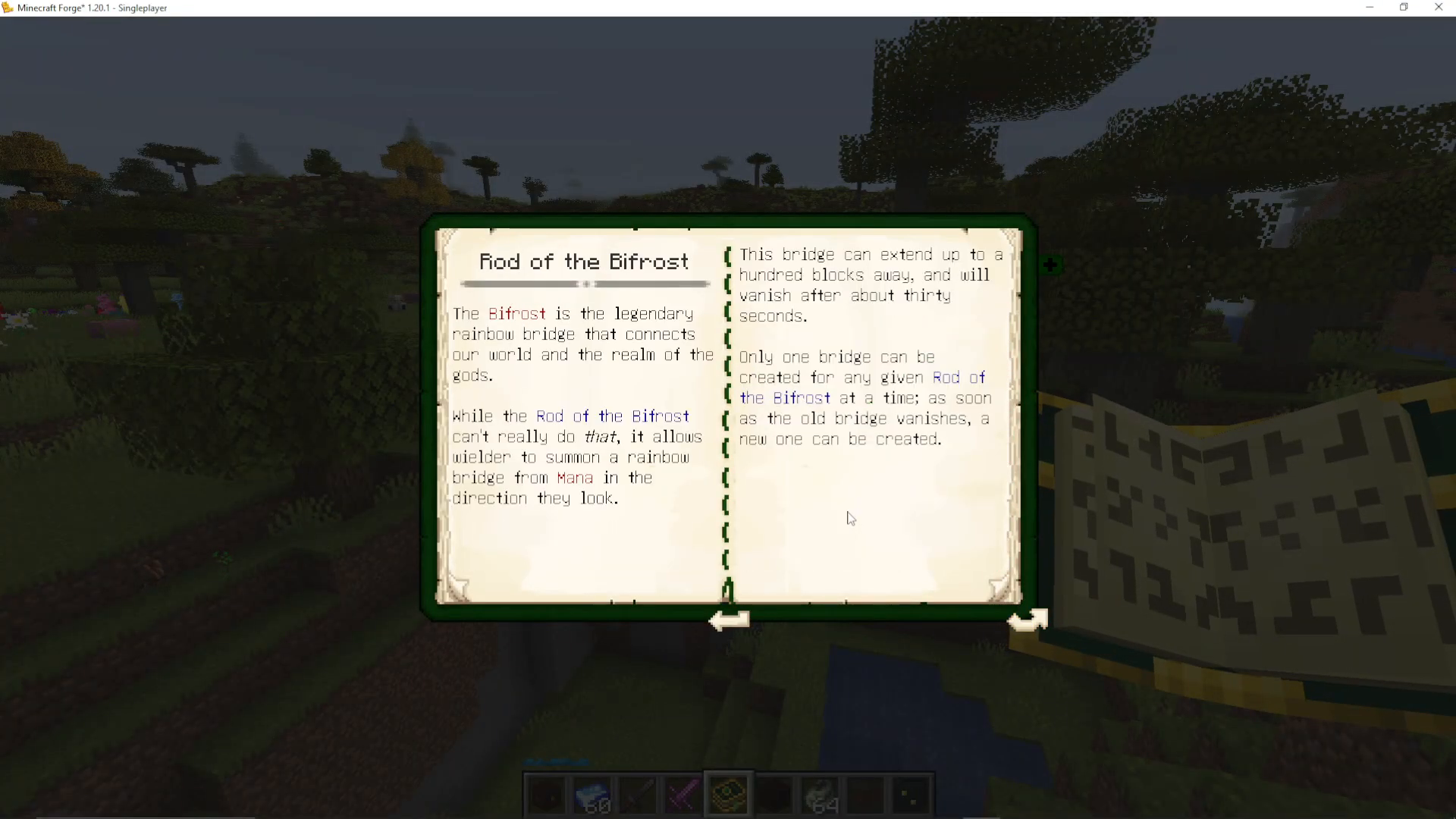
Rod of the Bifrost
Create temporary rainbow bridges using mana from your inventory. Great for crossing gaps and chasms.
Rod of the Depths and Rod of the Lands
Conjure cobblestone (Depths) or dirt (Lands) using mana. Useful for terraforming and building without resource depletion.
Rod of the Molten Core
Smelt cobblestone into stone and perform other transmutations using mana.
Rod of the Shifting Crust
Combined with the Black Hole Talisman (which stores blocks), this rod places stored blocks by right-clicking.
Many more rods exist for specialized purposes—check your Lexica Botania for a complete list.
Additional Chapters and Content
The Lexica Botania contains many more chapters beyond what we’ve covered here:
Trinkets and Accessories: Various wearable items like the Band of Mana
Alpheim: End-game dimension trading and unique items
Miscellaneous: Odds and ends that don’t fit other categories
Challenges: Fun tasks like building an animal farm using only Botania
Add-On Mods
Mythic Botania: An official add-on mod that expands Botania’s content significantly, including additional items, runes, and crafting recipes. Many modpacks (like ATM9) include this mod.
Alfheim Alternative: Some modpacks include alternative dimensions accessed through special means, though they often resemble the overworld.
Conclusion
Congratulations! You now have a comprehensive understanding of Botania, from harvesting your first petals to defeating the Gaia Guardian and crafting end-game items. This mod is incredibly deep, and there’s always more to explore. I encourage you to use your Lexica Botania as you progress and experiment with different flower combinations and setups. The beauty of Botania lies in its flexibility and the creative possibilities it offers. Whether you’re building elaborate mana generation systems or crafting powerful gear, Botania provides rewarding gameplay at every stage.
This guide is fully chaptered below for easy reference on specific topics. If you have questions, feel free to comment, and either I or the community can help you out.
Want to Support?
If you would like to help us continue making these guides – please consider joining our patreon here – https://www.patreon.com/c/JaviHeals
Alternatively – we host a group of MC Servers you can join here – https://discord.gg/zD7Gjt6MHF