



How to Make Diode’s in Gregtech CEu
How to Make Diodes in Gregtech CEu
Once you’ve built an electric blast furnace in Gregtech CEu, your next major goal should be crafting diodes. Diodes are basic electronic components that serve as a critical stepping stone toward creating good electronic circuits and eventually reaching medium voltage. While the diode crafting process is complex, this guide will help you understand the concepts and workflows needed to succeed.
Understanding the Diode Crafting Goal
Diodes are essential items in Gregtech CEu that unlock access to good electronic circuits, which in turn allow you to progress into medium voltage tier equipment. To make diodes, you’ll need to work with an assembler and understand several interconnected crafting chains.
Basic Diode Assembly Recipe
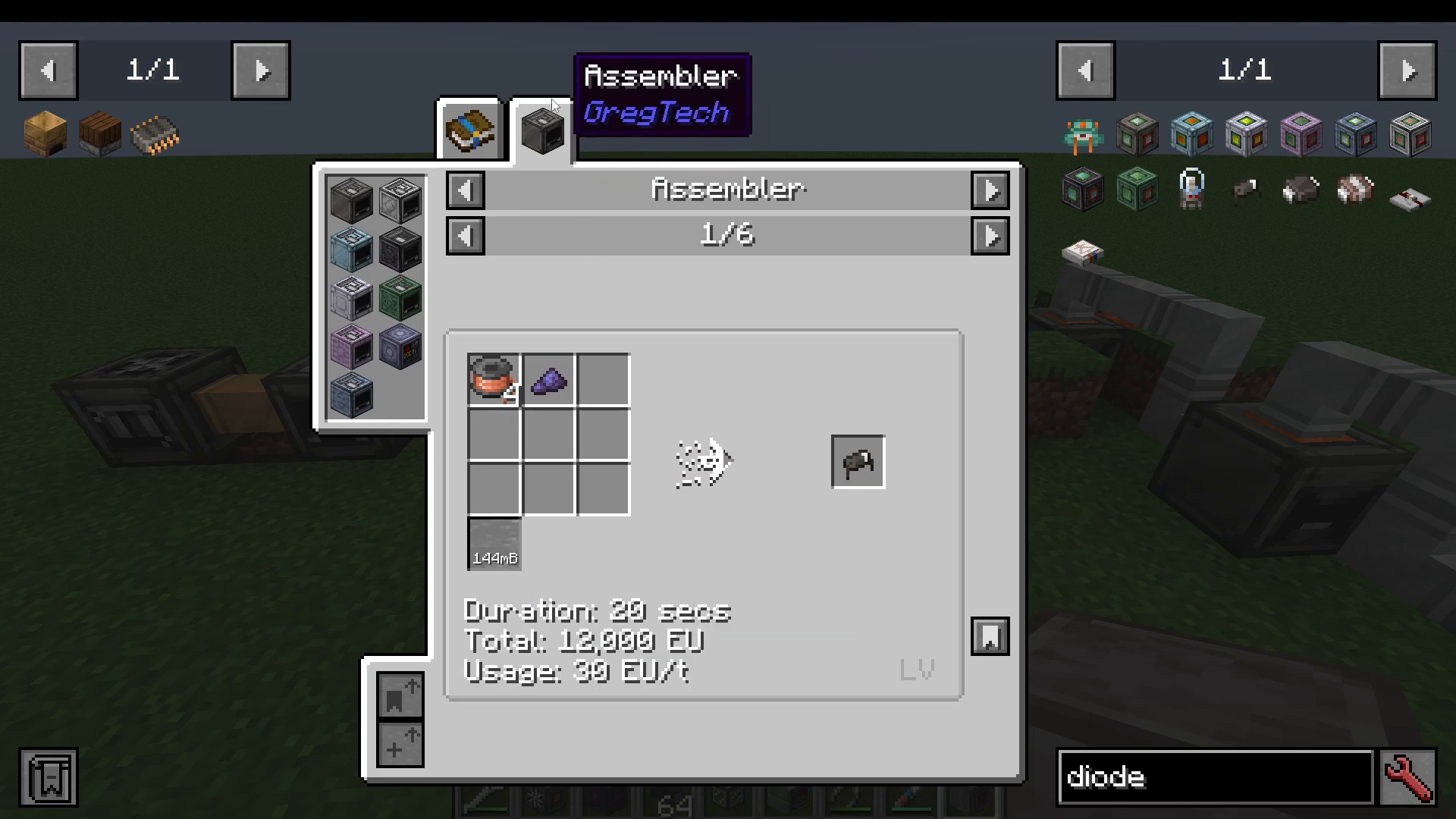
To craft a diode in your basic assembler, you’ll need four key ingredients:
A small pile of gallium arsenide dust
Fine copper wire
Liquid glass
Place an assembler at the end of your assembly line to handle diode production once you have the materials ready.
Making Liquid Glass
Liquid glass is one of the easiest components to produce. Simply use a basic extractor with glass as your input material. This will yield liquid glass with minimal effort.
Making Fine Copper Wire
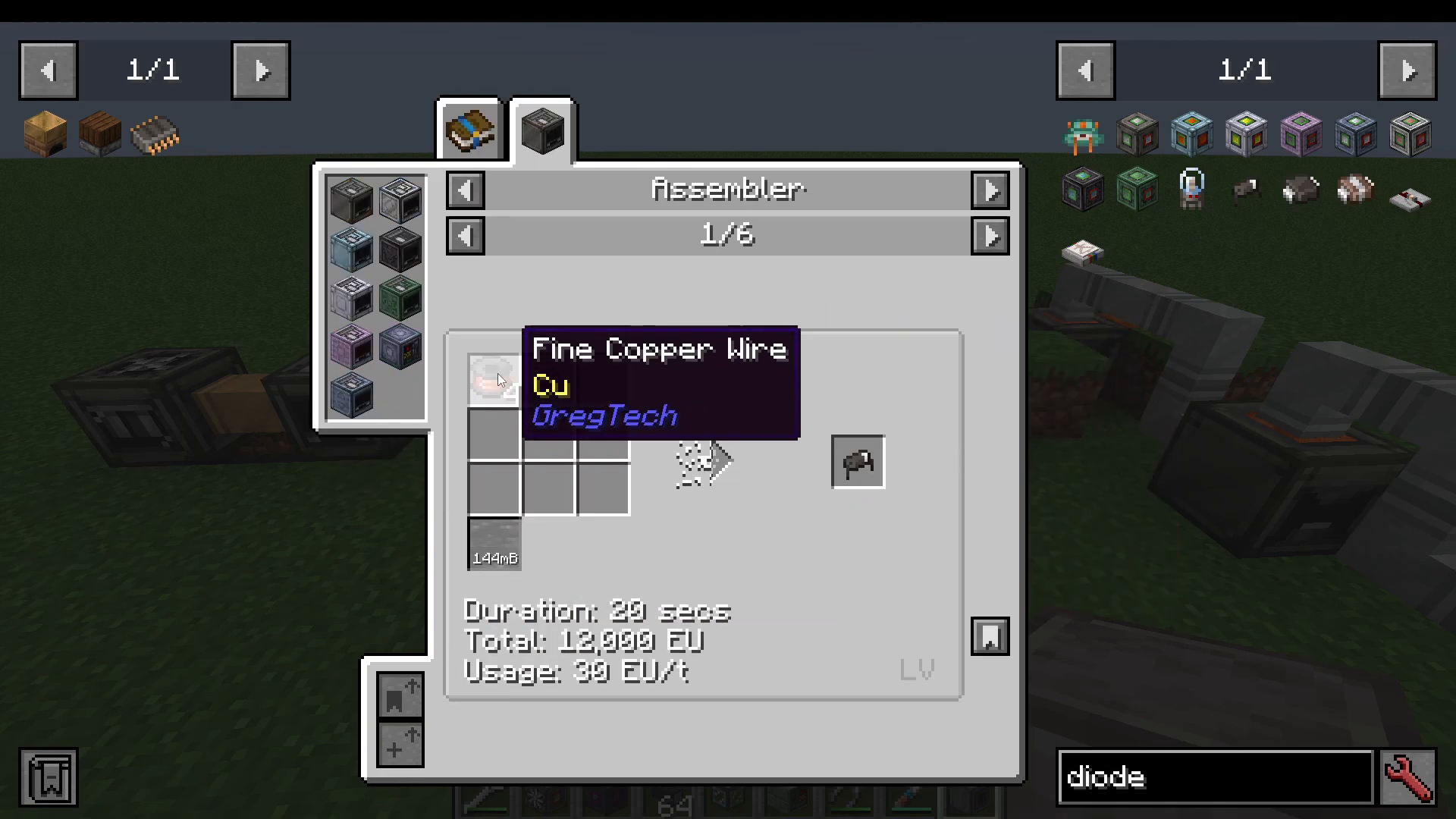
Fine copper wire is straightforward to produce. You have two options:
Use a wire cutter or wire mill with a copper ingot
Set the program circuit to “free” mode for automated production
Creating Small Pile of Gallium Arsenide Dust
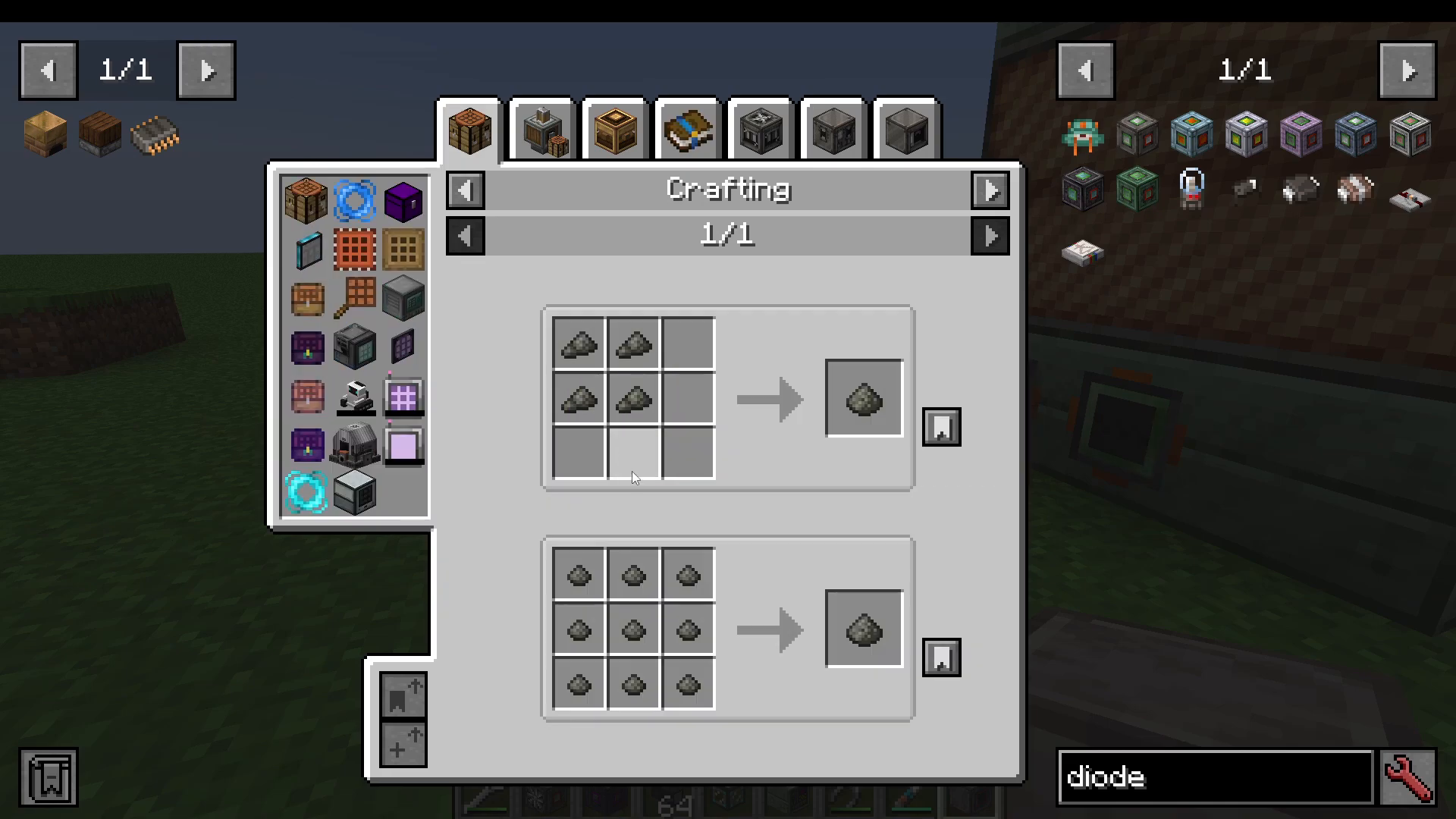
This is the most complex component of diode crafting. Gallium arsenide dust requires multiple steps and several different machines. You can automate this using a packer set to output mode two, or craft it manually in a crafting bench if needed.
The Gallium Dust Production Chain
Starting with Borksite Ore
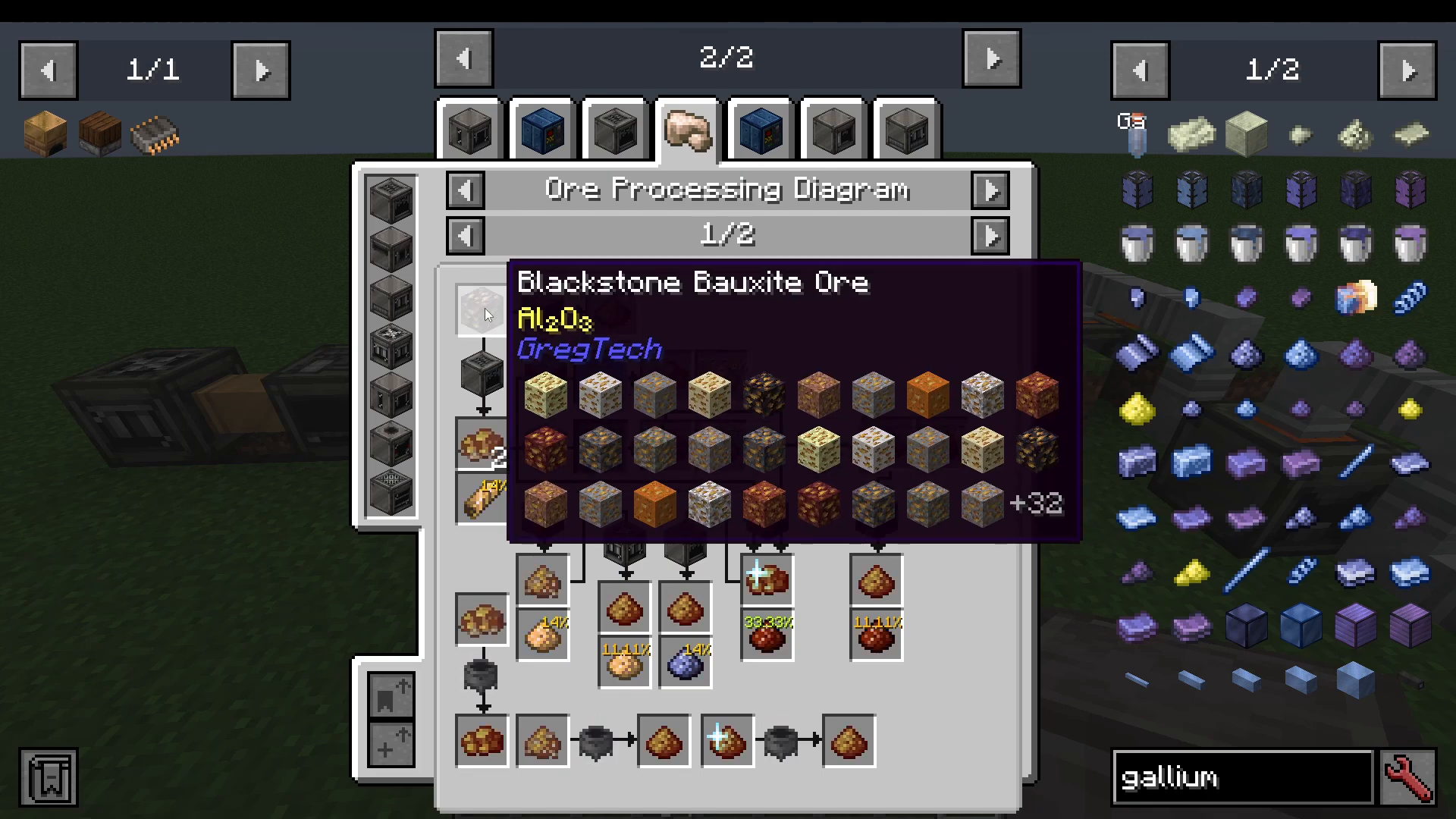
Gallium originally comes from borksite ore. When you smelt borksite ore in a furnace, you get borksite dust. However, to extract gallium efficiently, you’ll need to process it further rather than simply smelting it.
Crushing and Chemical Bath Processing
Follow these steps to extract gallium dust:
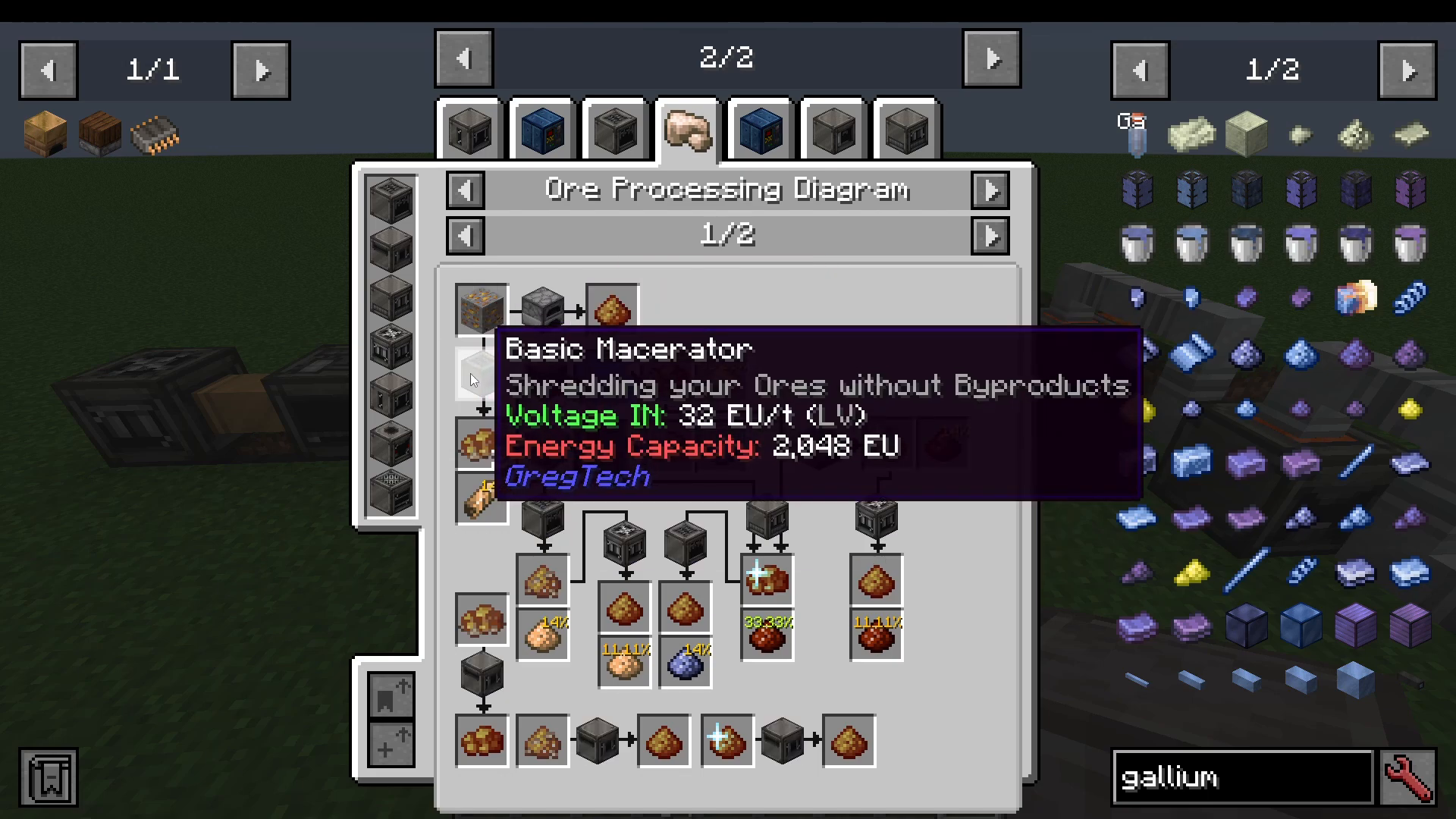
Feed crushed borksite ore into a basic macerator
Place the crushed borksite ore into a basic chemical bath with sodium perchlorate
This produces purified borksite ore and has a 70% chance to yield gallium dust
Understanding the Flow Chart Method
Rather than memorizing every recipe, learn to work backward through Gregtech recipes. Start with what you need (gallium dust), then press R to view the recipe. This shows you the immediate previous step. Continue working backward until you reach materials you can mine or easily produce. To use this method effectively:
Identify your end goal (gallium dust)
Press R to view the recipe
Look at each ingredient and determine how to make it
Work backward step by step until all ingredients are available
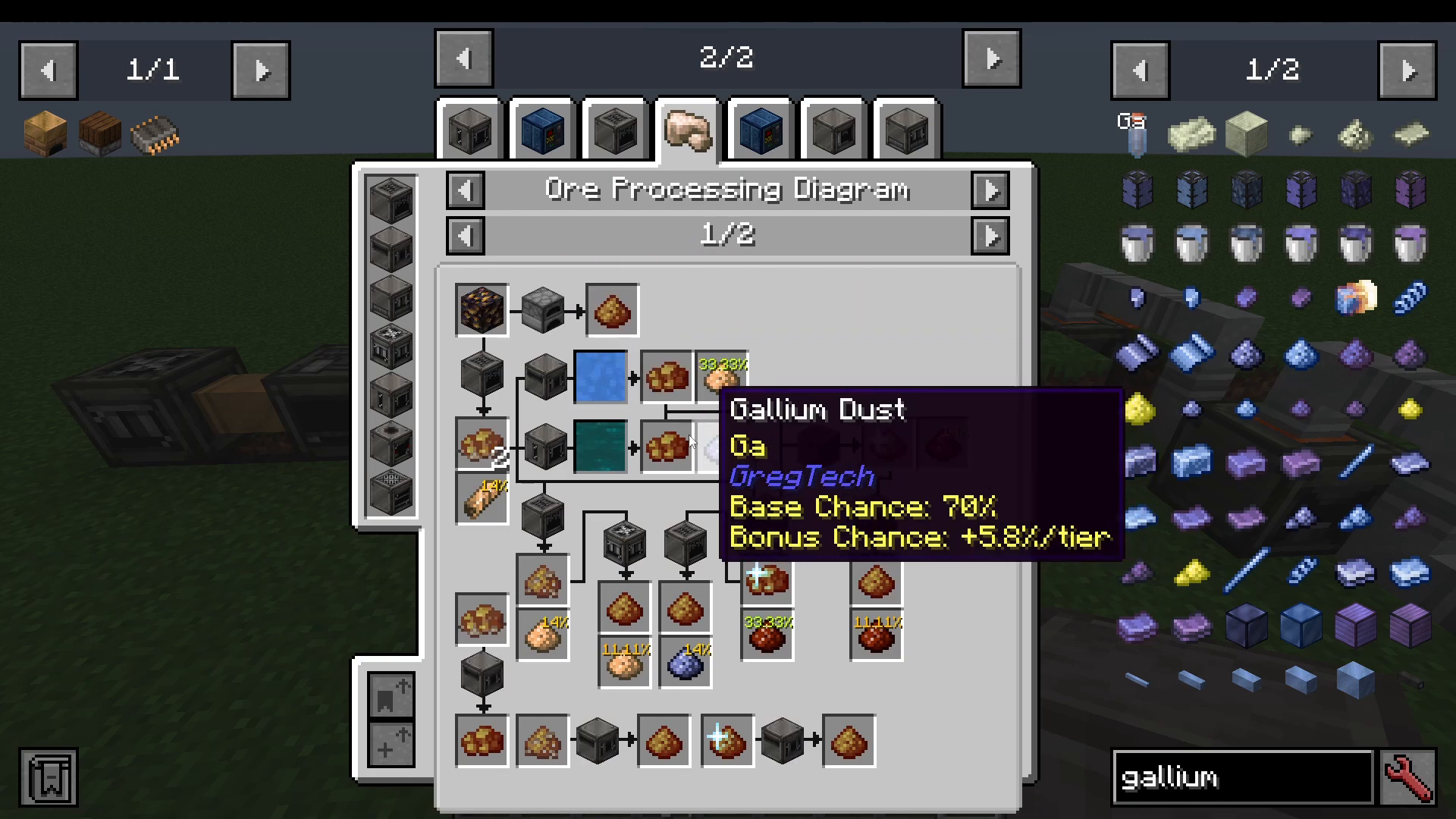
Making Sodium Perchlorate
To produce sodium perchlorate, you’ll need to follow this chain:
Step 1: Create Sodium Bisulfate Dust
Combine salt (which you can mine directly) with sulfuric acid in a chemical reactor set to program circuit one. This produces sodium bisulfate dust along with hydrochloric acid as a byproduct (which you can ignore for now).
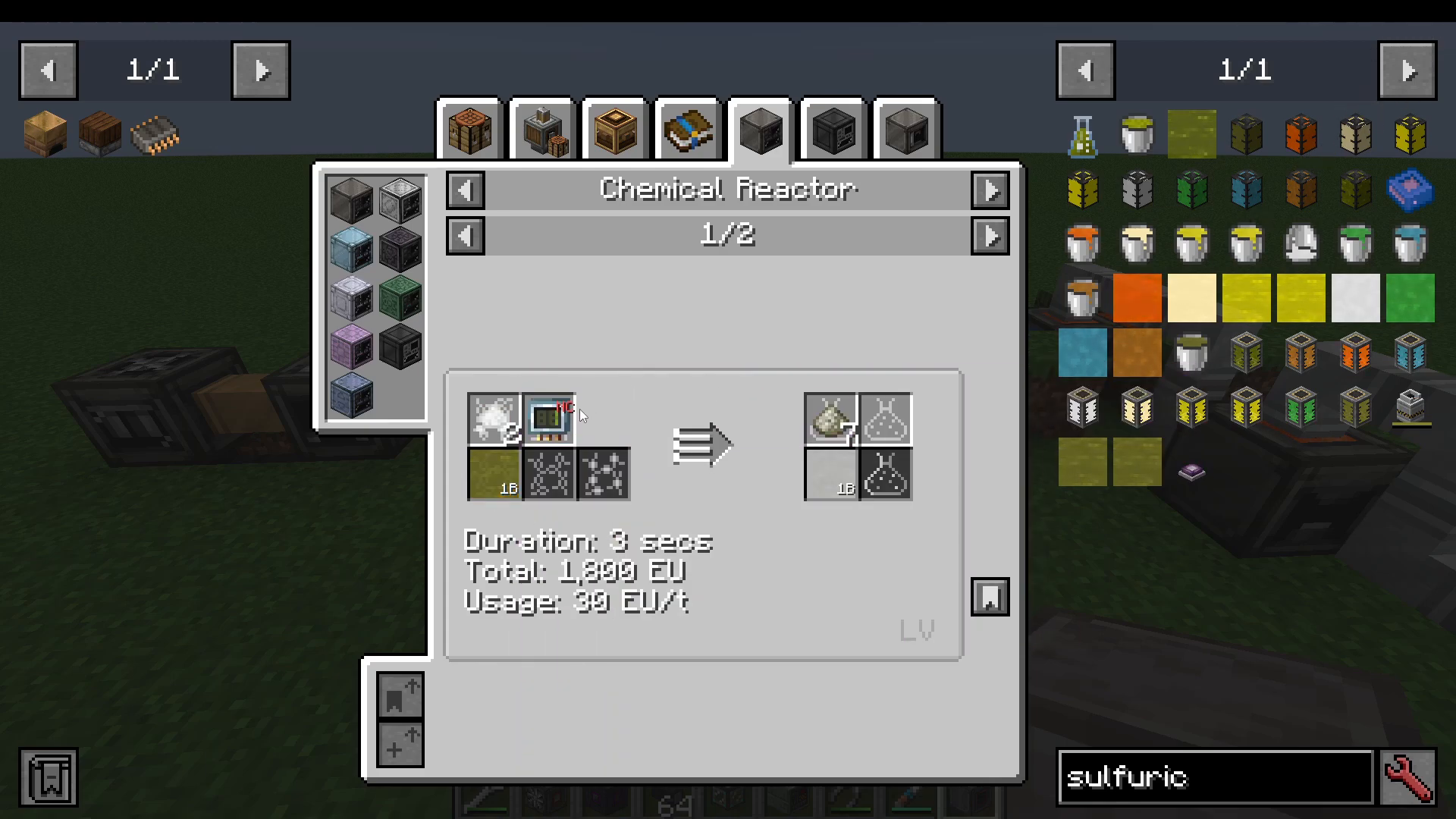
Step 2: Electrolyze to Sodium Perchlorate
Feed your sodium bisulfate dust into an electrolyzer to produce sodium perchlorate.
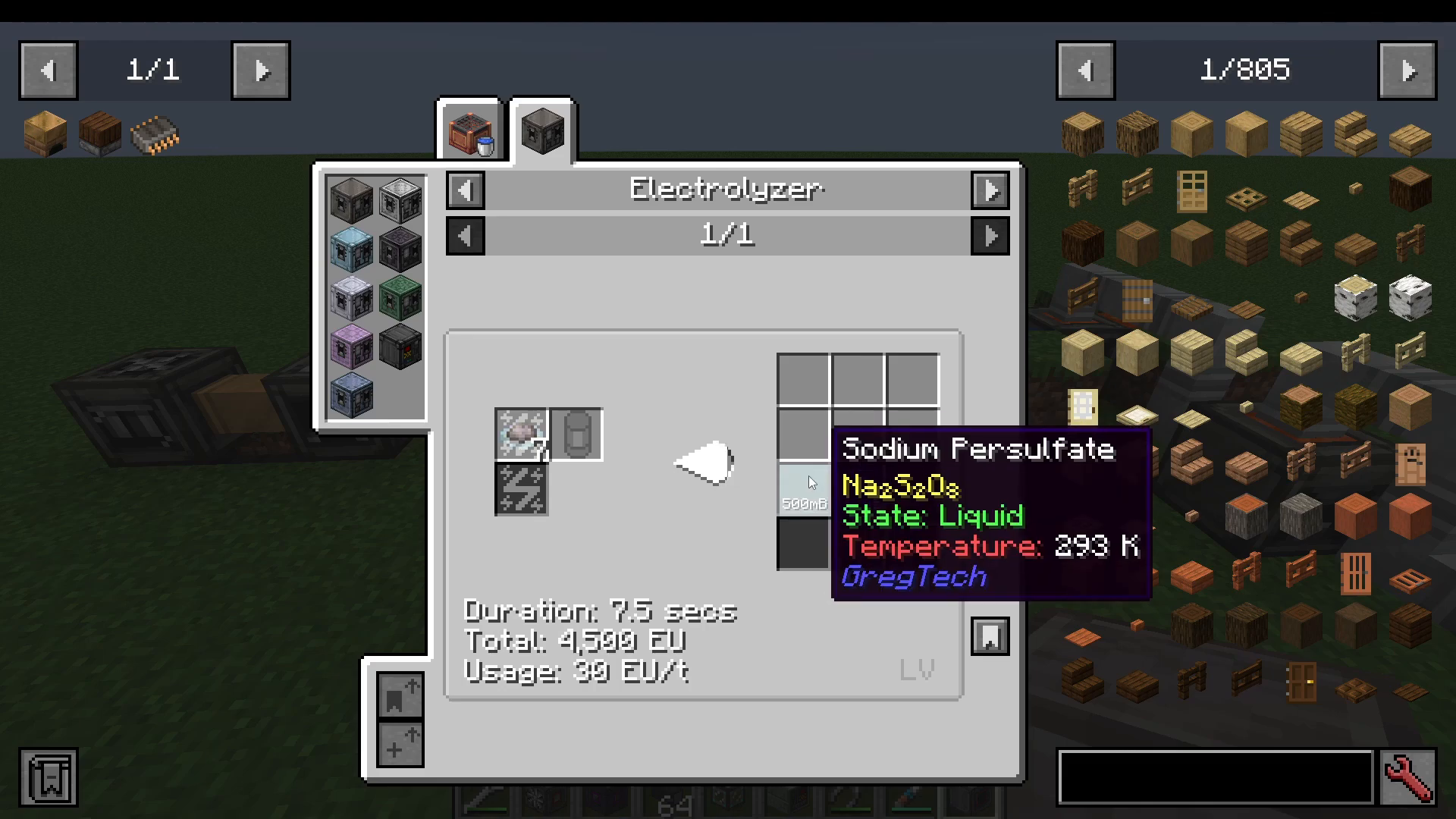
Creating Sulfuric Acid
Sulfuric acid is created through a two-stage chemical reactor process:
Stage 1: Sulfur Dioxide Production
Mine sphalerite ore and process it through an electric blast furnace with liquid oxygen. Set the furnace to require four amps of power (two LV energy hatches). This produces both sulfur dioxide and zincite dust.
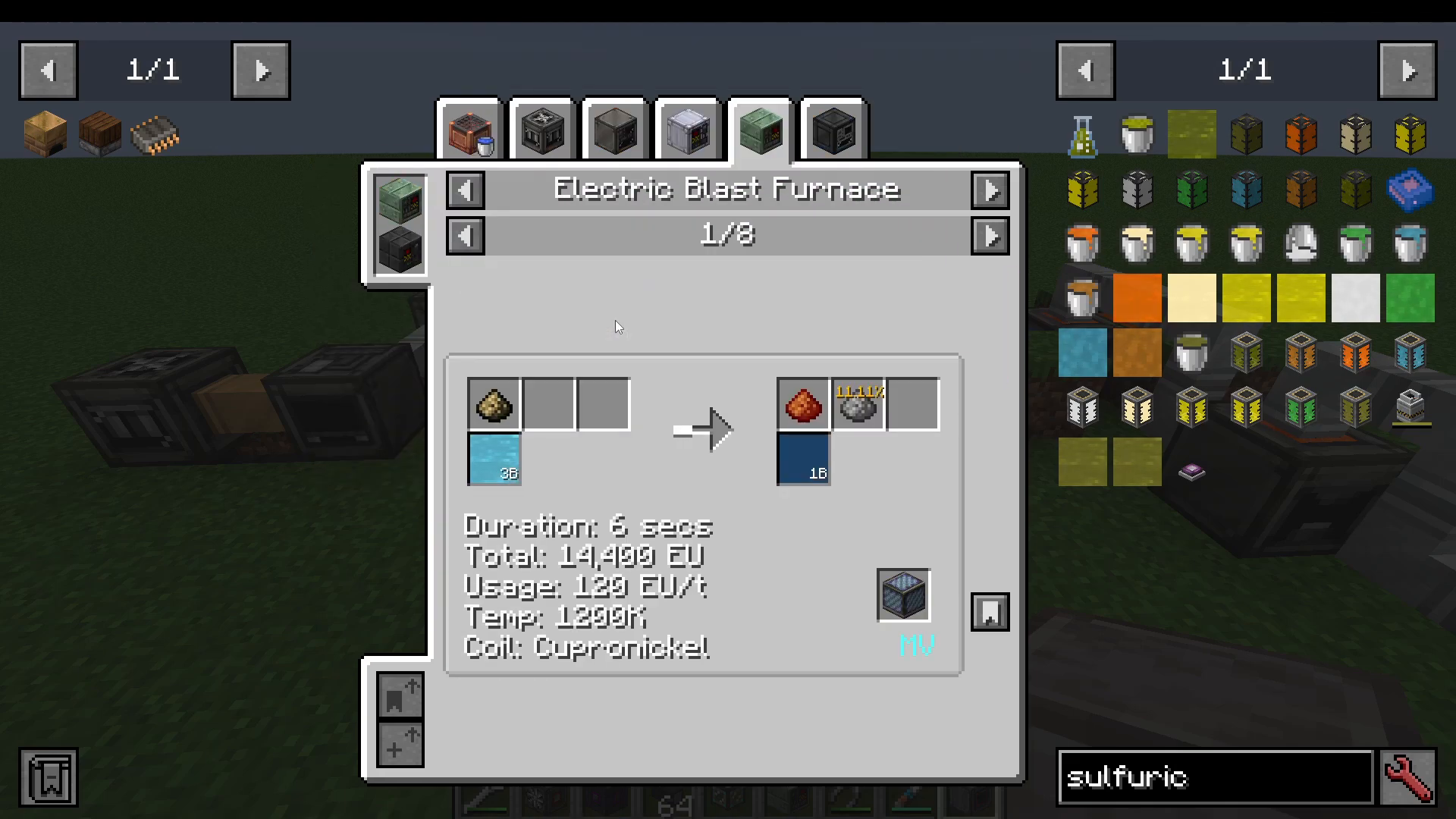
Stage 2: Sulfur Trioxide Production
Feed sulfur dioxide and oxygen into a chemical reactor to create sulfur trioxide.
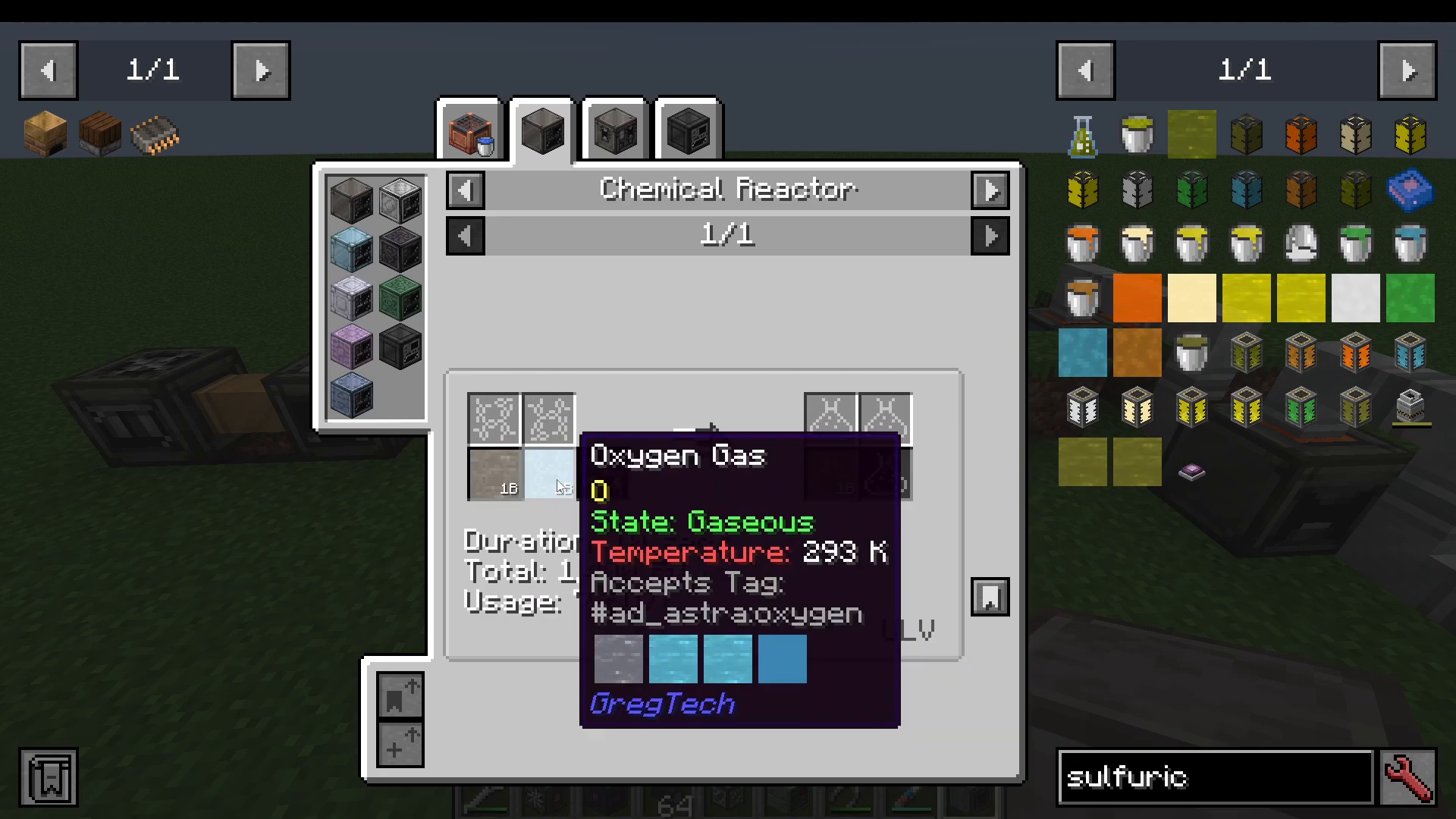
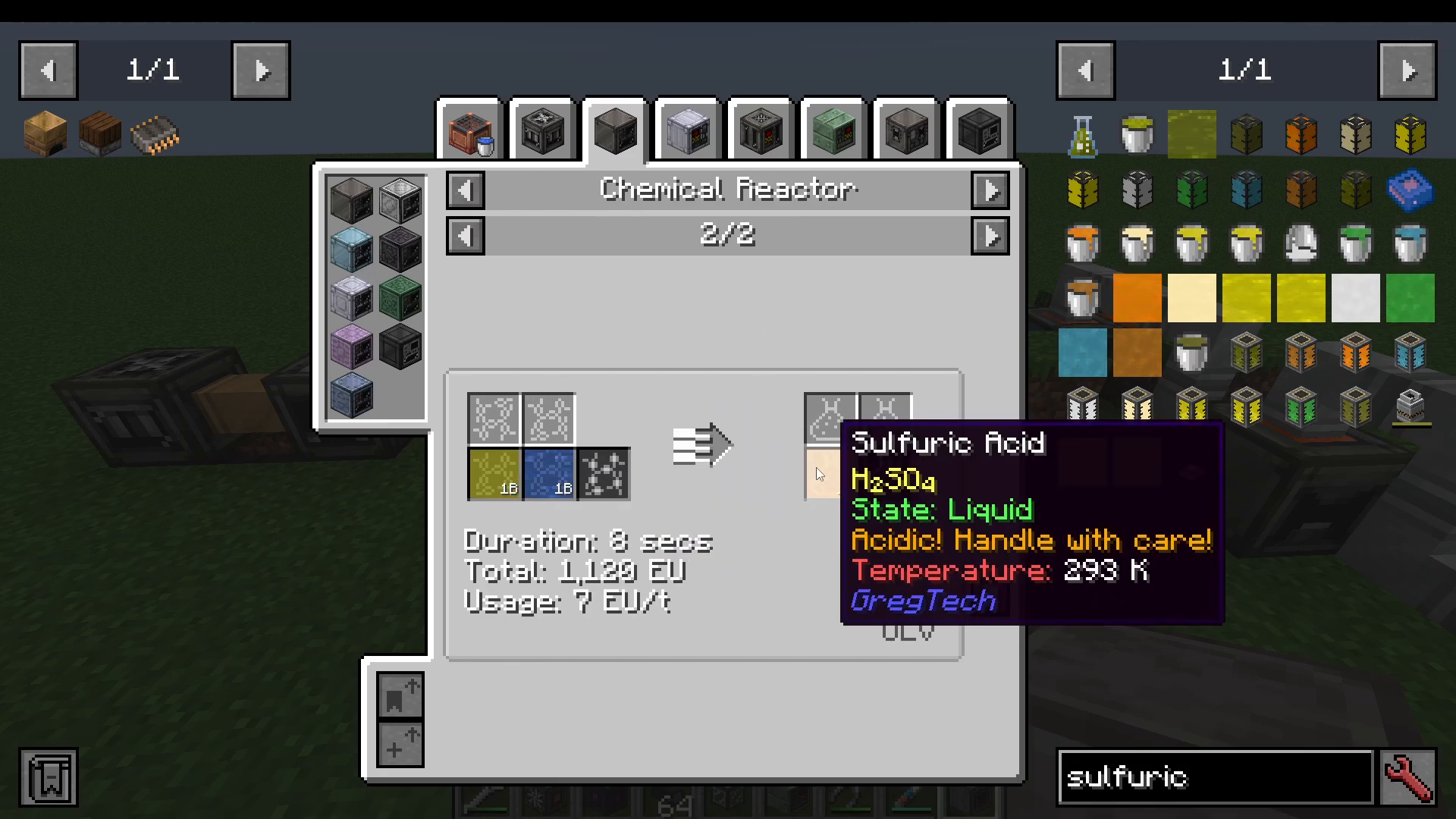
Stage 3: Final Sulfuric Acid Creation
Combine sulfur trioxide with water in another chemical reactor to produce sulfuric acid.
Extracting Arsenic Dust
Arsenic dust can be obtained through electrolyzing cobaltite dust. To get cobaltite dust:
Processing Cobaltite Ore
Crush cobaltite ore with a forge hammer to create impure cobaltite
Centrifuge the impure cobaltite to extract cobaltite dust
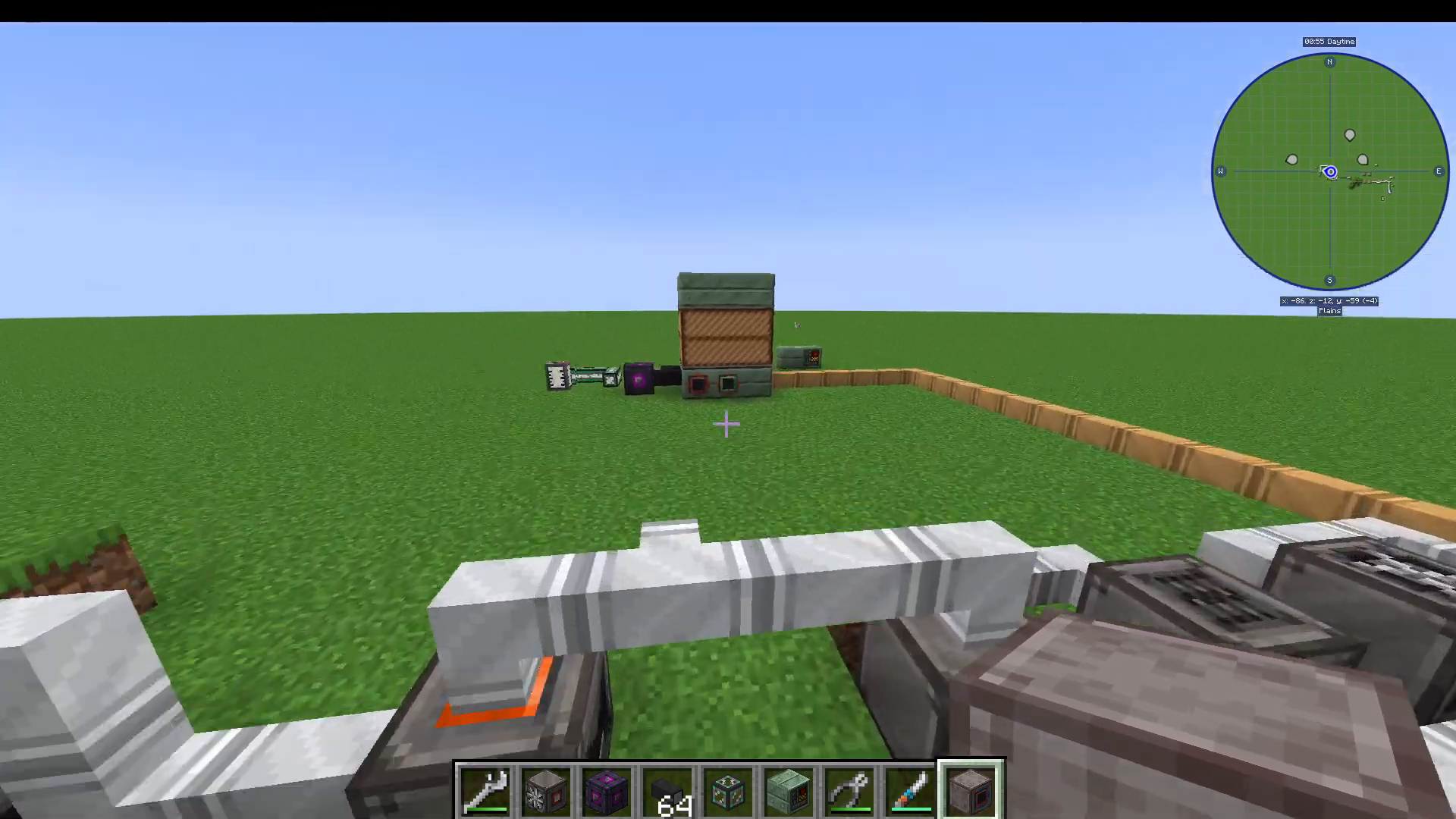
Feed cobaltite dust into an electric blast furnace with oxygen gas and four amps of power (two LV energy hatches)
This produces cobalt dust, arsenic dust, and sulfur dioxide
Alternative Arsenic Source
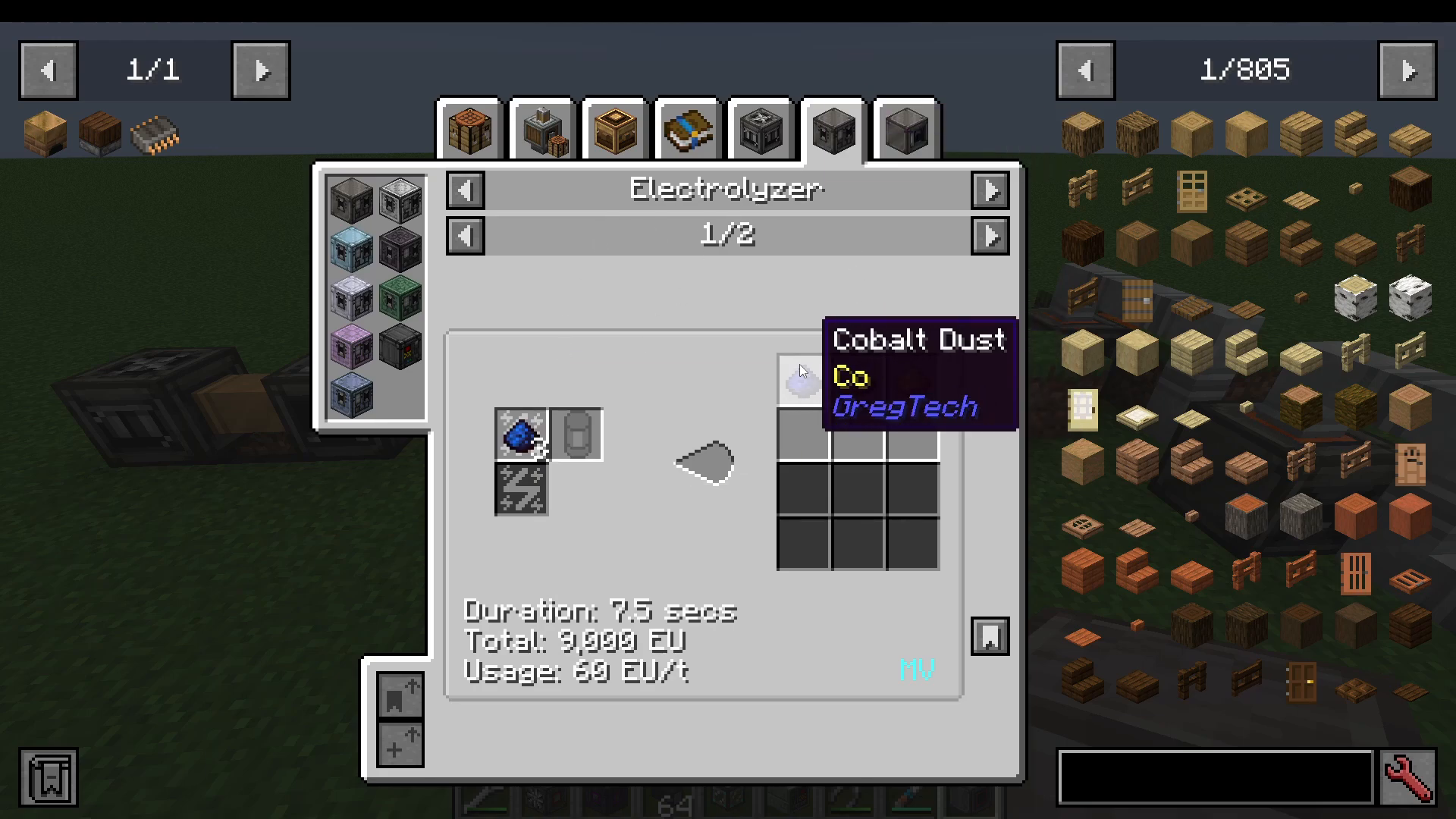
You can also obtain arsenic dust by electrolyzing cobaltite dust directly in an electrolyzer, which yields cobalt dust, arsenic dust, and sulfur dust.
Mixing Gallium Arsenide Dust
Once you have both gallium dust and arsenic dust, combine them in a basic mixer to create gallium arsenide dust. This is the final ingredient needed for your small piles of gallium arsenide.
Creating Good Electronic Circuits
Now that you can produce diodes, you’re ready to craft good electronic circuits. These circuits require:
Diodes
Phenolic printed circuit boards
Basic electronic circuits (from your LV progression)
Copper wire
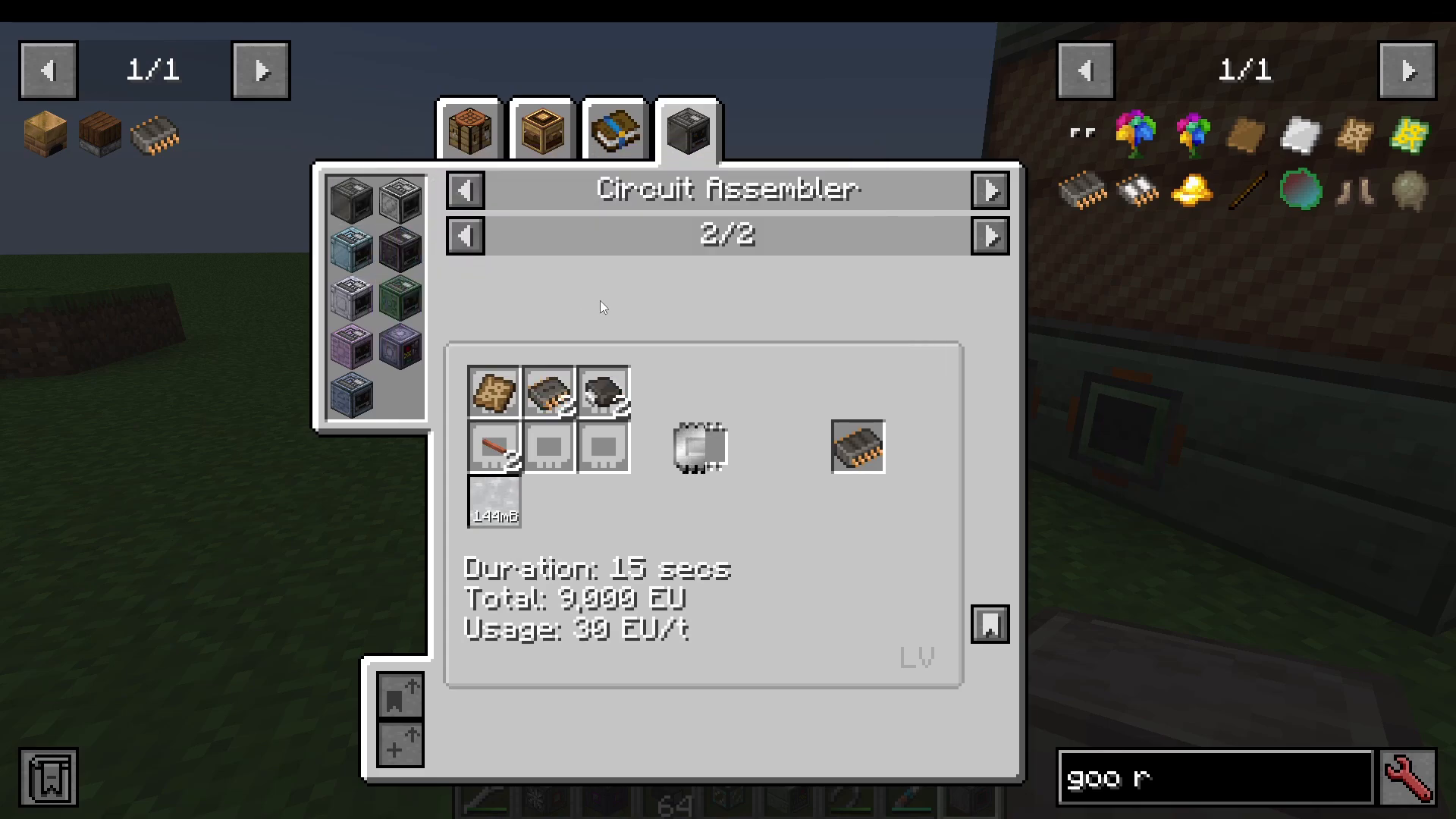
You can also use a circuit assembler (available at LV tier) to automate good electronic circuit production. Load two diodes, two phenolic printed circuit boards, one basic electronic circuit, two copper wires, and liquid tin to produce good electronic circuits automatically.
Key Takeaway: Work Backward Through Recipes
The most important lesson for progressing through Gregtech CEu is learning to work backward through crafting chains. Don’t try to memorize every recipe—instead, follow this workflow:
Identify what you need (e.g., diodes)
Press R to view the recipe
For each ingredient you don’t have, repeat the process
Continue until you reach mineable resources or simple crafts
Execute the chain from bottom to top
This method transforms what seems like an impossibly complex mod into manageable, step-by-step progression. Take it piece by piece, and you’ll reach medium voltage before you know it.
Conclusion
Crafting diodes in Gregtech CEu is challenging but achievable once you understand the underlying systems. While the production chains are lengthy and interconnected, breaking them down using the backward-recipe method makes them far more manageable. Master diode production, and you’ll unlock good electronic circuits—your gateway to medium voltage tier equipment and beyond.
Want to Support?
If you would like to help us continue making these guides – please consider joining our patreon here – https://www.patreon.com/c/JaviHeals
Alternatively – we host a group of MC Servers you can join here – https://discord.gg/zD7Gjt6MHF